


Transformador de Panel Solar: The Unsung Hero Maximizing Your Solar Harvest
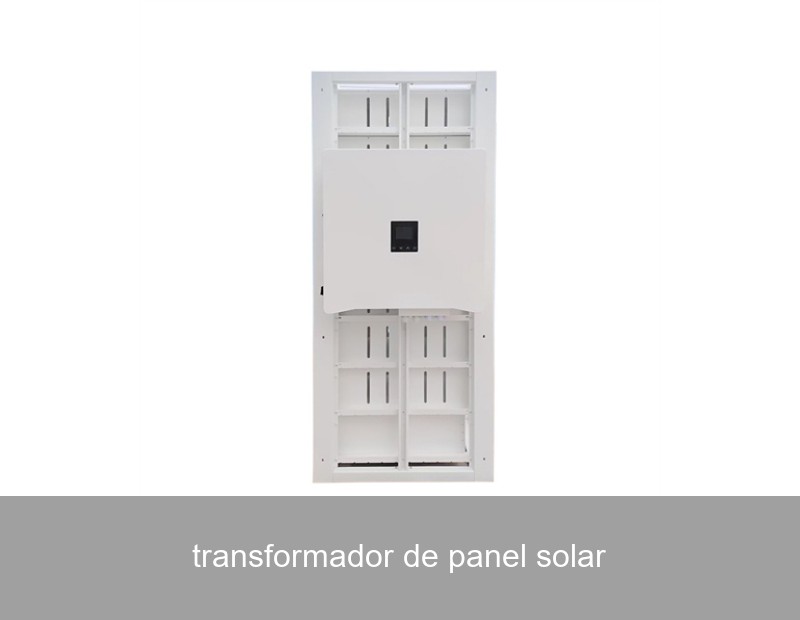
If you've ever looked at a solar installation, your eyes are naturally drawn to the sleek panels glinting in the sun. But what happens to the power they produce? The journey from your roof to your appliances involves a crucial, often overlooked component: the transformador de panel solar, or solar panel transformer. Think of it as the diligent translator and voltage regulator of your entire photovoltaic (PV) system. While the panels capture sunlight, it's this device that ensures the energy is perfectly suited for your home's grid or your business's heavy machinery. Without an efficient transformer, a significant portion of your carefully harvested solar energy could be lost in translation.
This phenomenon is more common than you might think. Many system owners focus solely on panel wattage, only to find their overall energy yield and return on investment falling short. The culprit? Inefficiencies in the balance of system (BOS) components, with the power conversion stage being a primary suspect. According to a report by the National Renewable Energy Lab (NREL), optimizing BOS components is key to driving down the levelized cost of solar electricity. The transformer plays a starring role in this optimization.
The Critical Role in Your Solar Energy System
So, what does a solar transformer actually do? Its core function is voltage transformation and isolation. Let's break that down:
- Voltage Step-Up: Solar panels generate direct current (DC) at a relatively low voltage (e.g., 600V to 1500V for commercial arrays). To transmit this power efficiently over distances to the grid connection point or within a large facility, the voltage needs to be increased. The transformer steps up the inverter's output AC voltage to a medium voltage level (like 11kV or 33kV), drastically reducing current and thus minimizing power losses in the cables.
- Electrical Isolation: It provides a physical barrier between the inverter's output and the grid, enhancing safety for both equipment and personnel. This galvanic isolation protects sensitive electronics from grid-side surges and faults.
- Grid Compliance: Modern transformers help ensure the smooth, stable injection of solar power into the utility grid, adhering to strict grid codes concerning voltage and harmonic distortion.
In essence, the transformer is the final, critical gatekeeper before your self-generated power joins the wider energy ecosystem.

Image Source: Unsplash - A solar farm's power conversion station, where transformers play a vital role.
Choosing the Right Transformer: Key Considerations
Not all transformers are created equal. Selecting the wrong type or an inefficient model can silently eat into your solar profits. Here are the main factors to weigh:
| Type | Best For | Key Advantage | Efficiency Consideration |
|---|---|---|---|
| Liquid-Filled | Large utility-scale solar farms, harsh environments | Excellent cooling, long lifespan, robust | High load efficiency, but consider fluid maintenance |
| Dry-Type / Cast Resin | Commercial & Industrial rooftops, indoor substations | Fire-resistant, environmentally friendly (no oil), lower maintenance | High efficiency at partial loads, ideal for variable solar output |
| Amorphous Metal Core | Projects where maximizing lifetime ROI is critical | Ultra-low no-load losses (core losses) | Superior overall efficiency, especially during low-irradiation periods |
The choice heavily depends on your specific application. For a commercial warehouse with a 500kW rooftop array, a dry-type transformer is often the safest and most practical choice. For a 100MW solar plant in a desert, liquid-filled units might be preferred. The key is to look beyond just the price tag and calculate the Total Cost of Ownership (TCO), factoring in efficiency losses over the system's 25+ year lifespan.
A Real-World Case Study: Efficiency in Action
Let's move from theory to practice with a concrete example from the European market. A mid-sized food processing plant in southern Spain was experiencing lower-than-expected returns from its 1.2 MWp solar carport installation. While the panels were performing well, system-level losses were higher than modeled.
The Problem: The original, standard-efficiency dry-type transformer had no-load losses (core losses) of 1.2 kW and load losses of 8.5 kW at full capacity. Since the transformer is energized whenever the system is connected to the grid, it consumed power 24/7, even at night when the plant was closed. Over a year, this represented a significant drain on the system's net yield.
The Solution & Data: The plant partnered with Highjoule to replace the transformer with a high-efficiency, amorphous metal core model. The new unit's no-load losses were reduced to a mere 0.4 kW. Let's look at the annual savings calculation:
- No-load loss reduction: 1.2 kW - 0.4 kW = 0.8 kW saved continuously.
- Annual hours: 8,760 hours (24/7 grid connection).
- Annual energy saved from no-load losses: 0.8 kW * 8,760 h = 7,008 kWh.
- Additional load loss improvement: Saved approximately 1,200 kWh during operation.
- Total Annual Energy Saved: ~8,200 kWh.
With an average industrial electricity price in Spain of €0.18/kWh (data from IRENA), this translates to nearly €1,500 in annual savings from the transformer upgrade alone. The project achieved a simple payback period of under 5 years on the transformer investment, and it will continue to deliver "free" extra energy for the remaining life of the solar plant. This case perfectly illustrates why the transformador de panel solar is a critical component for ROI.
The Future of Solar Power Conversion
The technology behind these essential components is not standing still. The trend is moving towards smarter, more integrated solutions. We are seeing the emergence of:
- Smart Transformers: Equipped with sensors and communication capabilities for real-time monitoring of health, load, and temperature, enabling predictive maintenance.
- Solid-State Transformers (SST): A revolutionary technology using power semiconductors to perform voltage conversion. SSTs offer ultra-fast control, can manage power flow bidirectionally with ease, and are ideal for future DC microgrids. While still emerging for large-scale solar, they represent the cutting edge.
- Direct Integration: Some advanced inverter manufacturers are working on designs that can connect to medium voltage grids without a traditional low-frequency transformer, though grid compliance often still requires one.
These advancements point to a future where the transformer is not a passive box but an intelligent node in a responsive energy network.

Image Source: Unsplash - The future of energy involves intelligent monitoring and control.
Highjoule's Intelligent Solutions: Beyond the Basic Transformer
At Highjoule, we understand that every component in your energy storage and solar system must work in perfect harmony to deliver on the promise of clean, reliable, and cost-effective power. That's why our approach goes beyond simply supplying a transformer.
For our commercial and industrial clients, we integrate high-efficiency, low-loss transformers—often dry-type or amorphous core based on the specific need—into our comprehensive Highjoule BESS (Battery Energy Storage System) and solar hybrid solutions. Our energy management system (EMS) intelligently orchestrates solar production, battery charging/discharging, and grid interaction, with the transformer as a key, optimized link in the chain. For microgrid applications, our transformers are selected for robustness and ability to handle variable loads and bidirectional power flows, ensuring stability whether the grid is connected or not.
Our product philosophy is centered on Total System Efficiency. By optimizing the entire chain from DC to grid AC, including the critical transformer step, we ensure that a higher percentage of the sunlight hitting your panels becomes usable, bill-saving energy for your home or business.
Ready to Optimize Your Solar Harvest?
Has your solar project accounted for the silent energy drain of an inefficient transformador de panel solar? What step could you take this quarter to audit your system's balance-of-components and ensure you're not leaving savings on the table?
 Inquiry
 Online Chat