


Two BESS, One Battery Bank: A Smarter Architecture for Energy Resilience
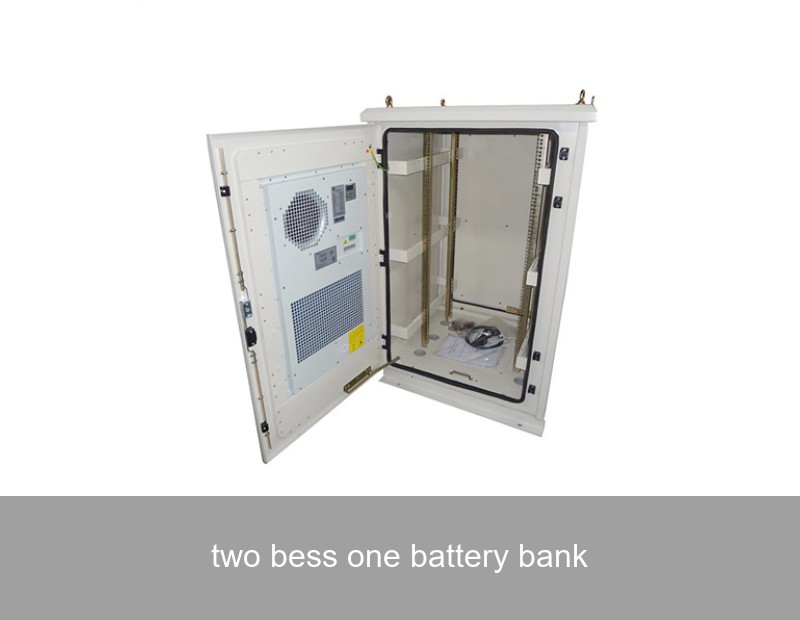
Have you ever wondered if there's a more intelligent way to structure your energy storage, especially when reliability is non-negotiable? In the world of commercial and industrial power, a compelling concept is gaining traction: operating two Battery Energy Storage Systems (BESS) from a single, unified battery bank. This isn't just a technical curiosity; it's a strategic architecture that addresses the core challenges of uptime, scalability, and cost. Let's demystify this approach and explore why it might be the future-proof solution your operations need.
Table of Contents
- The Challenge: Single Point of Failure in Critical Power
- What Does "Two BESS, One Battery Bank" Actually Mean?
- Key Benefits of a Dual-Inverter, Single-Bank Architecture
- A Real-World Case Study: Manufacturing Plant in Bavaria
- How Highjoule Enables This Advanced Architecture
- Key Considerations for Implementation
The Challenge: Single Point of Failure in Critical Power
Traditional energy storage systems often follow a straightforward design: one battery bank connected to one power conversion system (PCS) or inverter. This setup works, but it has a critical vulnerability—the inverter itself. If that single inverter fails or requires maintenance, the entire storage system goes offline. For a factory running 24/7, a hospital maintaining life-saving equipment, or a data center hosting cloud services, this downtime is unacceptable and costly. The quest for greater resilience has led engineers to rethink the fundamental architecture.
What Does "Two BESS, One Battery Bank" Actually Mean?
Imagine your battery storage as a powerful reservoir of energy. The "two BESS, one battery bank" model connects this single reservoir to two separate "gates" or inverters. Each inverter can operate independently, managing power flow to and from the shared battery bank.

Image: A conceptual visualization of multiple power conversion units serving a centralized energy source. (Credit: Unsplash, illustrative)
Technically, this involves:
- A Unified Battery Bank: A single, large-scale lithium-ion battery array (e.g., using LFP chemistry) with a centralized Battery Management System (BMS).
- Dual Power Conversion Systems (PCS): Two independent inverters connected in parallel to the DC bus of the battery bank.
- Advanced Control System: A master controller that orchestrates both inverters, ensuring they work in harmony without conflicting, balancing loads, and enabling seamless failover.
Key Benefits of a Dual-Inverter, Single-Bank Architecture
This architecture isn't just about redundancy; it unlocks multiple operational advantages.
- Enhanced Resilience & N+1 Redundancy: The primary benefit. If Inverter A fails, Inverter B instantly takes over the full load, ensuring continuous operation. Maintenance can be performed on one system without shutting down storage.
- Improved Scalability: Need more power output? You can upgrade or add inverters without replacing the entire, costly battery bank. It decouples power (inverter) and energy (battery) capacity planning.
- Operational Flexibility: You can assign different tasks to each inverter. For example, one handles peak shaving and demand charge management, while the other manages solar integration or provides backup power for specific critical loads.
- Potential for Higher Efficiency: Advanced systems can load-follow, operating inverters in their most efficient load range and shutting down unnecessary units during low demand, reducing parasitic losses.
A Real-World Case Study: Manufacturing Plant in Bavaria
Let's look at concrete data. A mid-sized automotive parts manufacturer in Bavaria, Germany, faced volatile energy costs and required flawless power for its robotic assembly lines. In 2023, they deployed a two BESS, one battery bank system.
| Component | Specification |
|---|---|
| Unified Battery Bank | 700 kWh, Lithium Iron Phosphate (LFP) |
| Inverters (x2) | 250 kW each, grid-forming capable |
| Primary Function | Peak Shaving (Inverter A) & Critical Load Backup (Inverter B) |
| Solar Integration | 500 kWp rooftop PV |
- Demand Charge Reduction: Achieved 22% savings on monthly power costs through precise peak shaving.
- Uptime: Maintained 99.99% uptime for critical loads. A scheduled maintenance on Inverter A in Q4 caused zero disruption, as Inverter B provided full backup.
- Self-Consumption: Increased solar self-consumption from 55% to over 80%, maximizing their renewable investment.
- ROI: Projected payback period reduced to 5.2 years, factoring in avoided downtime losses estimated at €150,000 per incident.
This case illustrates the tangible financial and operational resilience this architecture delivers. For more on grid-forming inverter benefits, see this NREL report on advanced inverter functions.
How Highjoule Enables This Advanced Architecture
Implementing a cohesive "two BESS, one battery bank" system requires more than just hardware—it demands intelligent, integrated design. This is where Highjoule's expertise as a global provider of advanced storage systems comes into play. Our H-Series Commercial & Industrial ESS is engineered with modularity and resilience at its core.
Highjoule's platform utilizes a centralized, high-voltage LFP battery bank designed for high-cycle life and safety. It is seamlessly compatible with multiple, parallel-connected Highjoule PowerHub Inverters. The true intelligence lies in our Adaptive Core Controller (ACC), a proprietary software layer that acts as the master conductor. The ACC dynamically manages power flow between the two inverters, ensures state-of-charge (SOC) balance, executes failover protocols in milliseconds, and allows for customizable operational modes via an intuitive interface.

Image: Centralized control is key to managing complex energy architectures. (Credit: Unsplash, illustrative)
For clients, this means a single-vendor solution for a complex architecture. Highjoule provides the complete ecosystem—battery, dual inverters, controls, and ongoing performance optimization—ensuring all components communicate flawlessly and deliver on the promise of resilience. Explore the fundamentals of BESS safety, a critical consideration in such designs, at the U.S. Department of Energy's Energy Storage Safety portal.
Key Considerations for Implementation
Is this architecture right for every project? Not necessarily. It shines in applications where redundancy, scalability, and high utilization are paramount. Key factors to discuss with your provider include:
- System Sizing: The battery bank must be sized to support the combined load and duration requirements of both inverters simultaneously.
- DC Bus Protection: Robust protection systems (fusing, DC breakers) are crucial on the common DC link to isolate faults.
- Control Logic Sophistication: The control software is the "brain." It must prevent circulating currents between inverters and manage complex grid-interactive functions.
- Initial Investment vs. TCO: While upfront costs may be higher than a single-inverter system, the Total Cost of Ownership (TCO) is often lower due to avoided downtime and flexible future expansion.
The transition towards such sophisticated energy architectures underscores the importance of system-level thinking, moving beyond simple components to integrated, intelligent solutions. For a deeper dive into storage valuation in markets like the US, the Lazard Levelized Cost of Storage analysis provides valuable context.
Ready to Explore Your Resilience Strategy?
Could a "two BESS, one battery bank" architecture be the key to unlocking greater energy independence and operational stability for your business? What single point of failure in your current energy setup keeps you up at night?
 Inquiry
 Online Chat