


Uninterruptible Power Supply Commercial: The Essential Guide for Modern Businesses
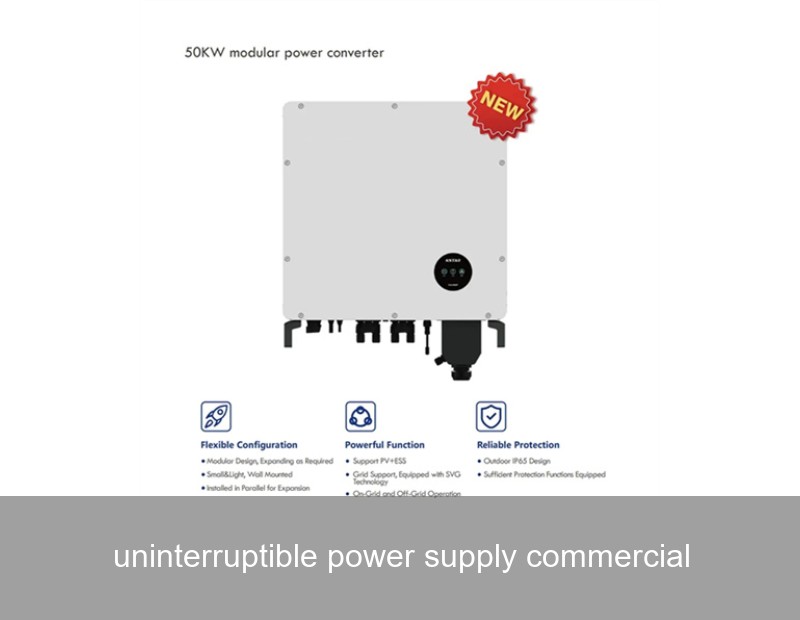
Imagine this: you're finalizing a critical financial transaction, a delicate manufacturing process is at its peak, or your data center is humming along. Suddenly, the lights flicker and go out. In that moment, your entire operation grinds to a halt. This isn't just an inconvenience; it's a direct threat to your revenue, reputation, and operational integrity. For commercial and industrial entities, a reliable uninterruptible power supply commercial system is no longer a luxury—it's the bedrock of resilience. This article delves into why modern UPS solutions have evolved beyond simple battery backups into intelligent energy management systems critical for businesses across Europe and the US.
Table of Contents
- The Real Cost of a Power Blip: More Than Just Downtime
- The Evolution of Commercial UPS: From Battery Box to Energy Hub
- Key Components of a Modern Uninterruptible Power Supply Commercial System
- Case Study: A European Automotive Manufacturer's Journey to Resilience
- Choosing the Right Commercial UPS: A Strategic Decision
- The Future of Uninterruptible Power: Integration with Renewables and AI
The Real Cost of a Power Blip: More Than Just Downtime
Let's talk numbers. According to a Ponemon Institute study, the average cost of a data center outage has soared to nearly $9,000 per minute. But it's not just tech giants at risk. A voltage sag—a brief dip in power—can corrupt data, damage sensitive equipment on a production line, and trigger hours of recalibration. The phenomenon is clear: our reliance on flawless, digital, and automated processes has made power quality a top-tier business concern.
The data is stark. The U.S. Energy Information Administration notes that commercial customers experience an average of over five hours of power interruptions annually. In Europe, grid modernization efforts are ongoing, but aging infrastructure and the growing integration of variable renewable sources can introduce instability. The insight? Proactive protection isn't an IT expense; it's a strategic investment in continuity.
The Evolution of Commercial UPS: From Battery Box to Energy Hub
Gone are the days when a UPS was merely a clunky box that kept servers running for 10 minutes during an outage. Today's uninterruptible power supply commercial solutions are sophisticated energy ecosystems. They address the full spectrum of power problems: total blackouts, micro-outages, sags, surges, and frequency variations.
The logical progression has been from isolation to integration. Early systems protected single loads. Modern systems, like those developed by Highjoule, protect entire facilities and can integrate with on-site generation, including solar PV and wind. This transforms the UPS from a cost center into a potential revenue-enabling asset, capable of participating in grid services like frequency response in some markets.

Highjoule, with nearly two decades of expertise since 2005, embodies this evolution. Our commercial and industrial energy storage systems (ESS) are designed with this integrated philosophy. We don't just sell battery cabinets; we provide intelligent, software-driven platforms that ensure uninterruptible power while optimizing energy consumption and enabling sustainability goals.
Key Components of a Modern Uninterruptible Power Supply Commercial System
Understanding the anatomy of a robust system helps in making informed decisions. Here are the core pillars:
- Power Conversion System (PCS): The heart of the UPS. High-quality, bidirectional inverters ensure clean, stable AC power from DC batteries, with near-instantaneous switchover during grid failure.
- Advanced Battery Bank: Typically lithium-ion (like LFP chemistry) for its longevity, density, and rapid discharge capabilities. This is the energy reservoir.
- Intelligent Monitoring & Control Software: The brain. This software provides real-time visibility, predictive diagnostics, and remote management. Highjoule's proprietary platform allows facility managers to see system status, energy flows, and savings metrics from any device.
- Thermal Management System: Crucial for safety and battery life, ensuring optimal operating temperatures.
- Grid & Generator Integration Interface: Seamlessly coordinates between the grid, backup generators, and on-site renewables to ensure smooth transitions and optimal fuel savings.
| Topology | Best For | Protection Level | Efficiency |
|---|---|---|---|
| Standby (Offline) | Small offices, non-critical equipment | Basic (blackouts only) | High |
| Line-Interactive | Small businesses, network rooms | Good (handles sags/surges) | High |
| Online Double-Conversion | Critical commercial & industrial loads (Data Centers, Manufacturing) | Excellent (full isolation) | Good (continuously improving) |
Case Study: A European Automotive Manufacturer's Journey to Resilience
Let's look at a real-world application. A major automotive component supplier in Germany faced a dual challenge: frequent, brief grid fluctuations were damaging their precision robotic welding cells, causing costly scrap and downtime. Furthermore, they had ambitious corporate carbon reduction targets.
The Solution: They partnered with Highjoule to deploy a containerized, 1 MWh battery energy storage system (BESS) integrated with their existing facility infrastructure. This system was configured to provide a millisecond-fast uninterruptible power supply commercial function to the critical production line.
- 100% Power Quality Mitigation: The system eliminated all production stoppages due to power events within the first quarter of operation.
- Scrap Reduction: A 15% decrease in welding-related scrap parts, directly boosting product yield.
- Energy Cost Savings: By using the system for peak shaving (drawing battery power during expensive peak tariff periods), the facility reduced its monthly demand charges by an average of 18%.
- Sustainability Win: The BESS was programmed to store excess energy from the plant's rooftop solar PV system, increasing self-consumption of renewable energy by 30%.

This case exemplifies the modern UPS: not just preventing loss, but creating value through increased efficiency, sustainability, and operational intelligence.
Choosing the Right Commercial UPS: A Strategic Decision
Selecting a system requires a thorough assessment. Ask yourself and your team:
- What are my critical loads? (e.g., IT servers, PLCs, refrigeration, safety systems)
- What is the required runtime? Is it to bridge to generator start (5-10 minutes) or to provide extended backup?
- What are my local power quality issues? (Consult historical data or a power quality audit).
- What are my future goals? Do I plan to add solar? Do I want to participate in demand response programs?
This is where a partner like Highjoule adds immense value. Our technical experts work with you to conduct a detailed site assessment, model your load profiles, and design a system that fits your precise technical and financial parameters. Our solutions are scalable, allowing you to start with core protection and expand into full microgrid capabilities over time.
The Future of Uninterruptible Power: Integration with Renewables and AI
The frontier of uninterruptible power supply commercial technology is intelligent integration. The next-generation systems will be predictive, not just reactive. Imagine a UPS that communicates with the grid in real-time, anticipates a potential instability event based on weather data (like a storm) or grid load forecasts, and proactively pre-charges its batteries. Artificial Intelligence and machine learning will optimize every cycle of the battery, extending its life and maximizing economic value.
Furthermore, as businesses accelerate their renewable energy adoption, the role of the BESS as a buffer and manager becomes paramount. Highjoule's systems are already designed for this future, acting as the stabilizing core for solar and wind, ensuring that your clean energy is also your most reliable energy.
For more on grid trends and reliability data, you can refer to resources from the U.S. Department of Energy and ENTSO-E in Europe.
Ready to Transform Your Power from a Vulnerability into a Strategic Asset?
The conversation around power has fundamentally shifted. It's no longer just about keeping the lights on; it's about ensuring the uninterrupted flow of your business operations, safeguarding your data, and enabling a sustainable energy transition. What is the single most critical process in your operation that you cannot afford to leave unprotected for even a fraction of a second?
 Inquiry
 Online Chat