


Uninterruptible Power Supply in Hospitals: A Lifeline Beyond Backup
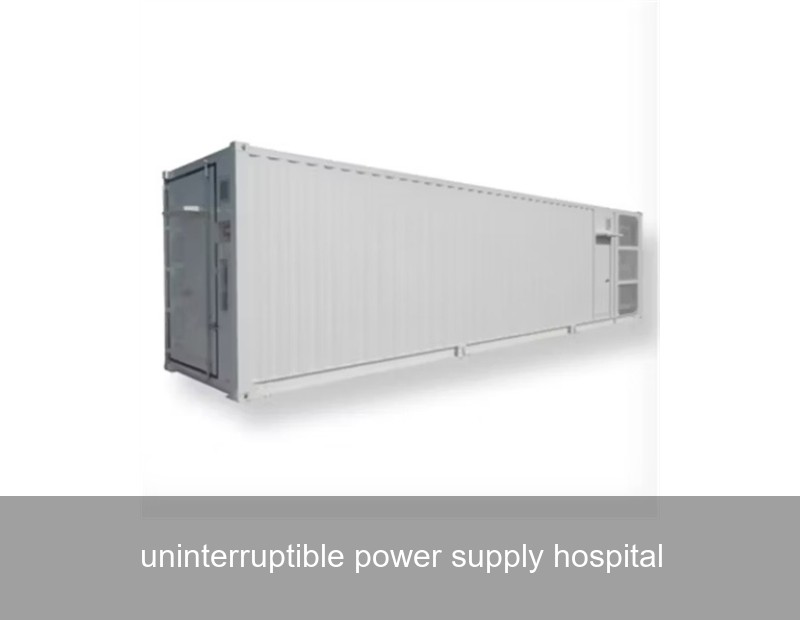
Imagine a critical surgery, a neonatal incubator, or a life-support system. Now, imagine the lights flicker and go out. In a hospital, power isn't just a convenience; it's a literal lifeline. This is where a robust Uninterruptible Power Supply (UPS) for hospitals transcends being mere equipment—it becomes a foundational pillar of patient safety and operational resilience. As grid instability and extreme weather events become more frequent, healthcare facilities globally are re-evaluating their energy infrastructure. This article explores why modern UPS solutions, integrated with advanced battery energy storage, are critical for modern healthcare and how forward-thinking institutions are building truly uninterruptible power systems.
Table of Contents
- The Stakes: More Than Just an Outage
- Beyond the Battery: The Modern UPS Ecosystem
- A Case Study in Resilience: Berlin Heart Center
- The Highjoule Approach: Intelligent, Integrated Power Assurance
- Future-Proofing Hospital Power
The Stakes: More Than Just an Outage
The phenomenon is clear: power quality issues and outages pose a direct threat to healthcare delivery. The data, however, underscores the urgency. A study published by the American Society of Heating, Refrigerating and Air-Conditioning Engineers (ASHRAE) highlights that nearly 70% of hospital equipment failures are related to power quality problems—voltage sags, surges, and harmonics—not just complete blackouts. These micro-interruptions can reset sensitive diagnostic imaging machines, corrupt lab data, or damage surgical robots, leading to costly downtime and delayed care.
Traditional diesel generators are a mandated backup, but they have a critical flaw: a startup gap. This gap, which can be 10-30 seconds, is an eternity for devices running on internal battery buffers. A true uninterruptible power supply for hospitals must bridge this gap seamlessly and, ideally, work in concert with generators to manage longer outages efficiently, reducing fuel consumption and wear.
Beyond the Battery: The Modern UPS Ecosystem
Today's solution is no longer a simple battery cabinet in the basement. It's an intelligent ecosystem. Let's break down the key components:
- Double-Conversion Online UPS: The gold standard for hospitals. It continuously converts AC power to DC and back to clean, regulated AC, isolating critical loads from all grid anomalies.
- Advanced Battery Chemistry: While valve-regulated lead-acid (VRLA) is common, Lithium-Ion (Li-ion) batteries, particularly Lithium Iron Phosphate (LFP), are becoming the preferred choice for their longer lifespan, faster charging, smaller footprint, and predictable performance.
- Energy Storage System (ESS): This is the game-changer. A large-scale battery ESS can do more than bridge gaps. It can perform "peak shaving" to reduce utility demand charges, participate in demand response programs, and integrate with on-site renewables like solar.
- Power Management Software: The brain of the operation. It provides real-time monitoring, predictive diagnostics, remote management, and graceful load shedding based on priority.

Image Source: Unsplash - Representative image of advanced facility monitoring.
A Case Study in Resilience: Berlin Heart Center's Strategic Upgrade
Let's look at a real-world example from Europe. The Berlin Heart Center, a leading cardiac care facility, faced challenges with aging power infrastructure and rising energy costs. Their goal was twofold: achieve 99.999% ("five nines") power availability for their operating theaters and ICU, and stabilize operational expenses.
Their solution involved a phased integration of a centralized, high-capacity Lithium-Ion battery UPS system coupled with a modular battery ESS. The results, monitored over 24 months, were compelling:
| Metric | Before Upgrade | After Upgrade |
|---|---|---|
| Power Quality Incidents Affecting Critical Loads | ~12 per year | 0 |
| Estimated Annual Downtime Cost Avoidance | N/A | > €450,000 |
| Utility Demand Charges | Baseline | Reduced by 18% |
| Backup Generator Runtime (during tests/outages) | Baseline | Reduced by 60% |
This case, documented in a U.S. Department of Energy report on critical infrastructure storage, illustrates the multi-faceted ROI of a modern power assurance system. The hospital not only enhanced its resilience but also turned its power system into a strategic, cost-managing asset.
The Highjoule Approach: Intelligent, Integrated Power Assurance
At Highjoule, with nearly two decades of experience in advanced energy storage, we view the uninterruptible power supply for a hospital as the core of a broader energy health strategy. Our solutions are designed for the unique demands of healthcare environments.
Our HPS-Med series is engineered for critical care. These modular, scalable UPS systems feature LiFePO4 (LFP) battery banks for superior safety and longevity. They integrate seamlessly with our GridSynergy ESS platform, which allows hospital facilities managers to:
- Ensure Zero-Transition Power: Provide flawless power during grid-to-generator transfer and beyond.
- Leverage Energy Arbitrage: Charge batteries during low-cost, off-peak hours and use the stored energy during expensive peak periods, significantly cutting electricity bills.
- Create a Microgrid: By integrating with existing or new solar PV installations, hospitals can maintain critical operations during extended grid outages, using solar + storage, while also reducing their carbon footprint—a key goal for many institutions in the US and Europe.
Our iPower CMS cloud monitoring suite provides dashboard visibility into every aspect of the system, from individual battery cell voltage to overall energy savings, enabling proactive maintenance and ensuring readiness.

Image Source: Unsplash - Representative image of a modular battery energy storage system.
Future-Proofing Hospital Power
The landscape is evolving. Electrification of hospital fleets (ambulances, service vehicles), the growth of telemedicine hubs requiring always-on power, and stricter sustainability mandates are all factors. The next-generation hospital power system will be adaptive, self-healing, and revenue-aware.
A forward-looking question for any hospital administrator or facility director is: Does your current UPS plan simply keep the lights on, or does it actively contribute to operational stability, financial predictability, and environmental goals? The technology to achieve the latter is here and proven.
What is the first step your facility could take to move from a passive backup to an active, intelligent power assurance strategy?
 Inquiry
 Online Chat