


Uninterruptible Power Supply Lithium Battery: The Heart of Modern Energy Security
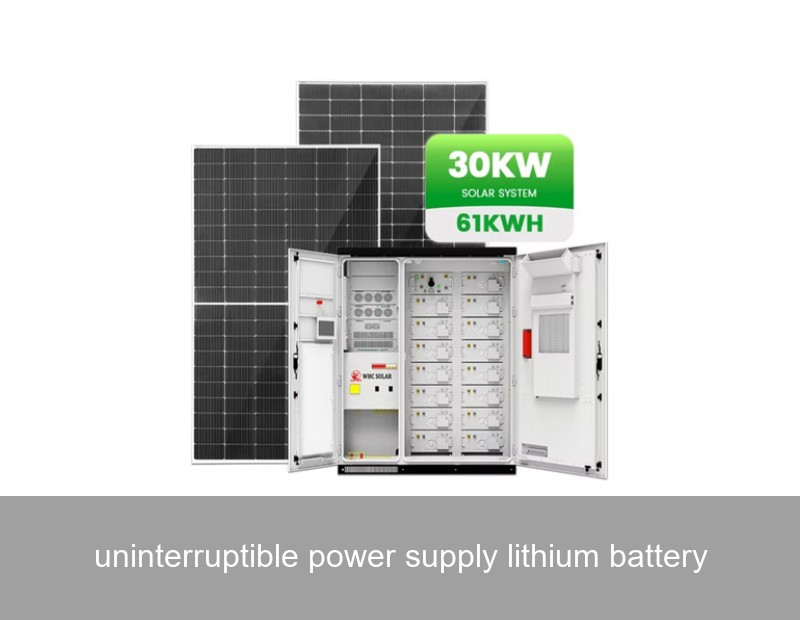
Imagine you're in the middle of a critical video conference, a complex data analysis, or a life-saving medical procedure. Suddenly, the lights flicker. In that split second, your heart skips a beat. For most of us, a power outage is a nuisance. For businesses, hospitals, and critical infrastructure, it can mean catastrophic data loss, operational shutdown, and significant financial damage. This is where the modern uninterruptible power supply lithium battery system steps in, not just as a backup, but as the intelligent guardian of continuity. Gone are the days of bulky, short-lived lead-acid batteries. Today's solution is smarter, denser, and built for the demands of our digital and decarbonized world. Let's explore why this technology has become the undisputed core of reliable power protection.
The Phenomenon: Why "Uninterruptible" is Non-Negotiable
Our reliance on seamless, high-quality electricity has skyrocketed. From cloud computing and IoT devices to precision manufacturing and telehealth, even a millisecond's interruption can trigger a cascade of failures. The traditional response—the Uninterruptible Power Supply (UPS)—has been around for decades. But its weakest link was often the battery. Enter the lithium-ion revolution.
Think of the old lead-acid batteries in your UPS like a heavy, aging gas-guzzler. They take up lots of space, need frequent maintenance and "tune-ups" (equalization charges), and have a relatively short lifespan, often needing replacement every 3-5 years. Now, picture a lithium battery for UPS as a sleek electric vehicle: it's compact, requires minimal upkeep, charges rapidly, and delivers consistent performance over a much longer lifetime. The shift isn't just an upgrade; it's a complete reimagining of power resilience, enabling systems that are not only backup solutions but also strategic energy assets.

Image: A modern data center rack utilizing space-saving lithium battery UPS units. Credit: Unsplash.
The Data: The Lithium Battery Advantage in UPS Systems
Let's move beyond analogy and look at the hard numbers. The superiority of lithium-ion chemistry in UPS applications is quantifiable across several key performance indicators (KPIs).
| Performance Metric | Traditional VRLA Lead-Acid | Modern Lithium-Ion (LFP) | Advantage |
|---|---|---|---|
| Energy Density | ~50-100 Wh/L | ~200-300 Wh/L | 2-3x more compact, saving critical floor space. |
| Cycle Life (to 80% capacity) | 200-500 cycles | 3,000-6,000+ cycles | Up to 10x longer lifespan, reducing TCO. |
| Charge Rate | 0.2C (5+ hours to full) | 0.5-1C (1-2 hours to full) | Faster recharge, improving system availability. |
| Operating Temperature Range | Narrow (20-25°C ideal) | Wide (-20 to 60°C possible) | Reduces cooling costs and enhances reliability. |
| Maintenance Needs | Regular required | Minimal to none | Lowers operational overhead and risk. |
According to a report by the U.S. Department of Energy, advancements in lithium-ion, particularly Lithium Iron Phosphate (LFP), have dramatically improved safety and cycle life, making them "increasingly viable for stationary storage" including UPS applications (source). This data isn't just technical specs; it translates directly to lower total cost of ownership (TCO), greater design flexibility, and enhanced sustainability due to longer replacement intervals.
A Real-World Case: Securing a European Data Center
Let's make this concrete. A major colocation data center in Frankfurt, Germany—a hub for European financial transactions—faced a critical challenge. Their existing lead-acid UPS systems occupied valuable white space that could be rented to clients. Battery replacements were frequent and costly, and the cooling demands for the battery rooms were significant.
The Solution & Outcome: The facility undertook a phased retrofit, replacing legacy battery banks with modular, high-density uninterruptible power supply lithium battery systems. The results were transformative:
- Space Recovery: A 70% reduction in footprint for the same runtime, freeing up over 30 square meters of revenue-generating rack space.
- Cost Savings: Projected battery lifecycle costs fell by an estimated 40% over 10 years, factoring in fewer replacements and lower cooling energy use.
- Enhanced Resilience: The new system's advanced Battery Management System (BMS) provides real-time health monitoring and predictive alerts, moving from reactive to proactive maintenance. The faster recharge capability also ensures the system is "ready" more quickly after an event.
This case, reflective of a growing trend documented by industry analysts, shows that upgrading to lithium is not merely a component swap but a strategic infrastructure decision (source).
Expert Insights: Choosing Your Uninterruptible Power Supply Lithium Battery System
So, you're convinced of the "why." But how do you navigate the "how"? Not all lithium battery UPS solutions are created equal. Here’s what we at Highjoule, with nearly two decades in advanced energy storage, advise our clients to look for:
- Chemistry Matters: Prioritize Lithium Iron Phosphate (LFP). It offers superior thermal and chemical stability, meaning enhanced safety and a longer cycle life compared to other lithium chemistries—a critical factor for 24/7 stationary storage.
- Intelligence is Key: The BMS is the brain. It must go beyond basic monitoring to offer state-of-charge (SOC) and state-of-health (SOH) estimation, cell balancing, and thermal management. Look for systems that integrate seamlessly with your facility management software.
- Modular Design: The future is scalable. Modular systems allow you to incrementally increase capacity or runtime as your needs grow, protecting your initial investment and providing unparalleled flexibility.
- Total Ecosystem Compatibility: Ensure the battery system is fully compatible and communication-ready with your existing or new UPS inverters. Proprietary lock-ins can create future headaches.
How Highjoule Powers Reliability
At Highjoule, we've engineered our HPS Series lithium battery energy storage systems specifically to meet these exacting demands for critical backup power. Our systems are built on stable LFP chemistry and feature a multi-layer, intelligent BMS that provides military-grade protection and precise monitoring. Designed with modularity at their core, they allow commercial and industrial clients to start with what they need and scale effortlessly.
But we see our role as going beyond just supplying hardware. For a manufacturing plant in Ohio, we didn't just provide a UPS lithium battery bank. Our team conducted a full site audit, modeled their critical load profiles, and designed a system that provided not only seamless backup during grid sags but also the potential for future cost savings through peak shaving—showcasing how a modern UPS battery can be a dual-purpose asset. This integrated approach to uninterruptible power supply solutions—combining superior technology with deep application expertise—is what defines the Highjoule advantage.

Image: Technician monitoring a modular lithium battery storage system. Credit: Unsplash.
Looking Ahead: The Intelligent Grid Partner
The evolution of the uninterruptible power supply lithium battery is converging with the broader energy transition. What if your UPS could do more than just wait for a failure? With the right intelligence and grid-interactive capabilities, these systems can participate in demand response programs, store excess solar energy, and stabilize the local grid—turning a cost center into a potential revenue stream. The line between a backup battery and a front-line grid asset is blurring.
This leads us to a pivotal question for any facility manager or business leader: Is your current power protection system a passive cost, or is it ready to become an active, intelligent participant in your energy and sustainability strategy? The technology to make the leap is here. The question is one of vision and partnership.
 Inquiry
 Online Chat