


Unlocking Unlimited Renewable Solutions: The Critical Role of Advanced Energy Storage
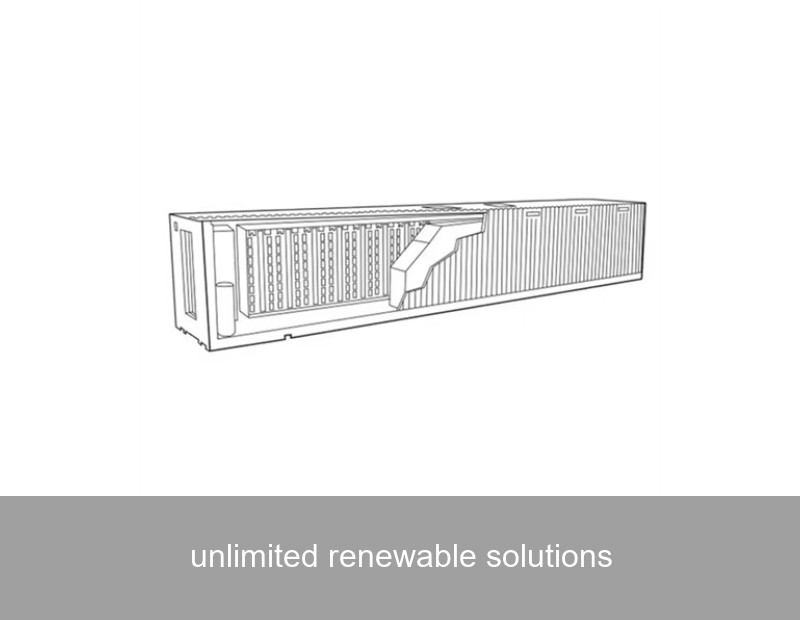
Imagine a world where the sun doesn't set on solar power, and the wind never stops turning turbines. This vision of unlimited renewable solutions is closer than we think, but it hinges on one pivotal technology: energy storage. For businesses, communities, and homeowners across Europe and the US, the shift to renewables is no longer just an ideal—it's an economic and operational imperative. Yet, the intermittent nature of sun and wind creates a real challenge. How do we capture today's surplus to power tomorrow's needs? The answer lies in intelligent battery energy storage systems (BESS), the cornerstone that transforms variable renewable generation into a reliable, 24/7 power source.
Table of Contents
- The Green Energy Gap: Phenomenon vs. Promise
- The Data Reality: Why Intermittency Demands Storage
- Case Study: A German Industrial Park's Journey to Resilience
- Beyond the Battery: The Intelligence Behind Unlimited Solutions
- Highjoule's Role: Engineering Trust in Your Energy Transition
- What Does the Future Grid Look Like, and Are You Ready to Shape It?
The Green Energy Gap: Phenomenon vs. Promise
We've all seen the headlines: "Solar Generation Breaks Records!" followed, perhaps a week later, by concerns about grid stability during a calm, cloudy period. This is the green energy gap in action. The phenomenon is simple: renewable sources generate power on their own schedule, not necessarily when demand is highest. A homeowner's solar panels might peak at noon while the family is at work and school, only for energy needs to soar in the evening. On a larger scale, this mismatch can strain national grids, lead to curtailment (wasting perfectly good renewable energy), and force reliance on fossil-fuel peaker plants.
This gap between generation and consumption is the single biggest barrier to achieving truly unlimited renewable solutions. Without a means to store and time-shift energy, we are limited to using renewables only when nature provides. The promise of energy independence, price stability, and deep decarbonization remains just out of reach.
The Data Reality: Why Intermittency Demands Storage
Let's look at the numbers. According to the International Energy Agency (IEA), to meet global net-zero targets, the world needs approximately 680 GW of grid-scale battery storage capacity by 2030—a staggering increase from the capacity available today. In the US, the Department of Energy's "Pathways to Commercial Liftoff" report highlights that over 100 GW of new energy storage could be needed to support a renewables-dominated grid by 2030. These aren't arbitrary goals; they are calculated necessities based on the physics of our energy systems.
Consider this illustrative table showing the typical daily mismatch for a commercial site:
| Time of Day | Solar Generation | Building Demand | Grid Reliance Without Storage |
|---|---|---|---|
| 10:00 - 14:00 | High | Medium | Excess energy exported or curtailed |
| 18:00 - 22:00 | Zero (Night) | High (Peak) | 100% drawn from grid, often at peak rates |
| 04:00 - 06:00 | Zero | Low (Baseload) | 100% drawn from grid |
This data pattern, repeated across millions of sites, is what creates systemic volatility. The solution isn't to build more solar panels that will go unused at noon; it's to build smarter systems that capture that noon-time energy for later.

Modern solar farms are increasingly paired with on-site battery storage to smooth out generation and provide grid services. (Image source: Unsplash, American Public Power Association)
Case Study: A German Industrial Park's Journey to Resilience
Let's move from theory to a tangible example. A mid-sized manufacturing park in Bavaria, Germany, faced a dual challenge: rising electricity costs and corporate sustainability mandates. They had installed a 2 MW rooftop solar array, but it only covered about 30% of their total annual consumption due to nighttime and winter shortfalls. Their grid dependency remained high, exposing them to volatile European energy markets.
Their pivot to an unlimited renewable solution involved integrating a 1.5 MW / 3 MWh battery energy storage system. Here's what happened:
- Self-Consumption Boost: The system stores excess solar generation from midday. This stored energy is then discharged during the evening production shift and early morning hours, increasing the share of self-consumed solar power from 30% to over 75%.
- Peak Shaving: The intelligent control system monitors total facility demand. When consumption approaches a pre-set peak threshold (which triggers high demand charges from the utility), the battery discharges to "shave" the peak, saving thousands of euros monthly.
- Revenue Stream: The park participates in Germany's primary control reserve market. During periods of high grid frequency, the system can inject power in milliseconds, providing a stabilizing service and generating additional revenue. Fraunhofer ISE studies confirm the economic viability of such multi-use applications.
The Result? Within two years, the park achieved a 40% reduction in net energy costs, secured its operations against short-term grid outages, and is on track to meet its 100% renewable operational target five years ahead of schedule. This is the blueprint for industrial energy transformation.
Beyond the Battery: The Intelligence Behind Unlimited Solutions
A common misconception is that a storage solution is just a box of batteries. In reality, the hardware is only half the story. The true enabler of unlimited renewable solutions is the software and system integration—the "brain" of the operation.
An advanced BESS requires:
- Predictive Analytics: Using weather forecasts and historical load data to optimize charge/discharge cycles.
- Multi-Mode Operation: Seamlessly switching between self-consumption, peak shaving, backup power, and grid service modes based on economics and need.
- Safety-Centric Design: Incorporating advanced thermal management, state-of-health monitoring, and failsafe mechanisms at the system level.
This is where expertise matters. Designing a system that can safely and profitably perform multiple value streams over a 15+ year lifespan is a complex engineering challenge.
Highjoule's Role: Engineering Trust in Your Energy Transition
Since 2005, Highjoule has been at the forefront of this intelligent energy storage revolution. We understand that our customers aren't just buying batteries; they are investing in energy resilience, predictability, and sustainability. Our approach is to provide integrated, turnkey unlimited renewable solutions that are as reliable as they are intelligent.
Our flagship product line, the H-Series Modular Storage Platform, is designed for commercial and industrial applications. Its containerized or skid-mounted design allows for scalable deployment from 500 kWh to multi-MWh projects. What sets it apart is the Highjoule Energy Operating System (HEOS), a proprietary AI-driven platform that continuously optimizes system performance for maximum financial return and operational reliability.
For residential and smaller commercial sites, our Eclipse Home & Business Energy Hub integrates solar, storage, and EV charging into a single, user-friendly system. Managed via an intuitive app, it gives users direct control over their energy destiny, maximizing self-consumption and providing peace of mind during outages.
Our services extend beyond installation. We offer comprehensive Energy-as-a-Service (EaaS) models, where we finance, own, and operate the storage system on the client's site, allowing them to benefit from immediate savings with no upfront capital. We also provide ongoing performance monitoring, maintenance, and software updates to ensure our systems deliver value for decades.

Expert monitoring and control are essential for maximizing the safety and value of large-scale energy storage. (Image source: Unsplash, ThisisEngineering RAEng)
What Does the Future Grid Look Like, and Are You Ready to Shape It?
The trajectory is clear. The future grid will be decentralized, digitalized, and decarbonized. It will be composed of millions of interconnected nodes—homes, factories, schools—each generating, storing, and sharing clean energy. This network, often called a "virtual power plant," will be more resilient and efficient than our current centralized model. Your facility or community can be an active participant in this future, moving from being a passive consumer to a proactive "prosumer."
The technology to build this future exists today. The question is no longer "if" storage is needed, but "how" and "when" to integrate it into your energy strategy. As you contemplate your next step towards energy independence, consider this: What specific energy challenge—be it cost volatility, sustainability goals, or reliability concerns—is holding your organization back, and what would achieving control over that challenge be worth to you?
 Inquiry
 Online Chat