


Urban Green Energy Wind Turbine: Powering Our Cities from Within
Imagine looking out over a cityscape. The usual sights are there—skyscrapers, bustling streets, and flowing traffic. But now, look closer at the rooftops. Among the HVAC units and solar panels, a new, elegant silhouette is turning gently in the breeze: the urban green energy wind turbine. This isn't science fiction; it's the emerging reality of distributed energy. For cities across Europe and the U.S., the quest for sustainability is moving beyond the grid's edge, tapping into the very wind that funnels between buildings. But harnessing this chaotic urban wind is a complex engineering puzzle. The real question isn't just about generating power—it's about creating a reliable, integrated system that turns sporadic gusts into steadfast, usable electricity for homes, offices, and factories.
The Urban Wind Challenge: More Than Meets the Eye
Urban environments are notoriously difficult for wind energy. Unlike open plains or coastal areas, city wind is turbulent, unpredictable, and multidirectional. It gets squeezed between structures, creating vortices and sudden gusts. Traditional, large-scale horizontal-axis turbines, the ones you see in vast wind farms, struggle here. They require steady, laminar flow and significant space, which cities simply don't offer. This is where innovative urban green energy wind turbine designs come in. We're talking primarily about vertical-axis wind turbines (VAWTs). Their egg-beater or helical designs can capture wind from any direction, handle turbulence better, operate at lower wind speeds, and generate less noise and vibration—a critical factor for rooftop installations.

Image Source: Unsplash - Example of modern VAWT design in an urban setting.
Data Powering the Change: The Viability of Urban Wind
So, is it worth it? The data is promising. According to a study by the U.S. Department of Energy's National Renewable Energy Laboratory (NREL), distributed wind energy, which includes urban applications, has the potential to provide significant portions of a nation's electricity demand when combined with other renewables. In Europe, the WindEurope 2023 report highlights that while onshore wind leads, innovation in small-scale and urban wind is growing, driven by policy and technology advances. The key metric is "capacity factor" – how much power a turbine actually produces versus its maximum potential. While urban turbines may have a lower capacity factor than their rural cousins, their value lies in location. They generate power right where it's consumed, drastically reducing transmission losses and grid strain. This "behind-the-meter" generation is a game-changer for building owners looking to hedge against volatile energy prices and increase resilience.
Key Advantages of Modern Urban Wind Systems:
- Grid Independence: Reduces reliance on the central grid, especially during peak demand or outages.
- Complementary to Solar: Wind often peaks at different times (e.g., evenings, storms), creating a more consistent renewable generation profile when paired with solar PV.
- Decarbonization of Dense Areas: Directly reduces the carbon footprint of energy-intensive urban buildings.
- Educational & Symbolic Value: Serves as a visible commitment to sustainability for businesses and communities.
Case Study: Rotterdam's Rooftop Revolution
Let's ground this in a real-world example. The city of Rotterdam, Netherlands, known for its innovative architecture and climate adaptation, has become a testbed for urban wind. One flagship project is the installation of multiple helical-shaped VAWTs on the roof of the Stadskantoor (City Hall), a large municipal office building. The project, initiated in 2021, involved a detailed wind mapping study to identify the optimal placement on the complex roof structure.
| Project Metric | Data |
|---|---|
| Number of Turbines | 6 |
| Turbine Type | Helical Vertical-Axis (VAWT) |
| Total Rated Capacity | 15 kW |
| Estimated Annual Production | ~18,000 kWh |
| Primary Use Case | Directly powering municipal office lighting and IT systems |
| Key Outcome | ~5% reduction in the building's grid electricity draw, with higher yields during autumn/winter months, complementing its existing solar array. |
This case illustrates a crucial point: the success of an urban green energy wind turbine project hinges not just on the turbine itself, but on its integration into the building's energy ecosystem. The intermittent nature of wind means the energy generated needs to be stored or used intelligently to maximize value.
Beyond the Turbine: The Critical Role of Smart Storage
This is where the conversation about urban wind gets truly powerful. A turbine spinning on a roof is only one piece of the urban energy puzzle. What happens when the wind blows at 3 AM, but the office building's energy demand is at its lowest? Without storage, that precious green energy is often fed back to the grid at low value or, in worst-case scenarios, curtailed (wasted). To truly unlock the potential of urban wind, it must be part of a smart, hybrid system. This is the core of what we at Highjoule have focused on since 2005.
An urban green energy wind turbine paired with a sophisticated battery energy storage system (BESS) transforms sporadic generation into a dispatchable, reliable power source. The battery acts as a buffer, storing excess wind (and solar) energy for use when the building needs it most—during peak tariff periods or when the grid is unstable. This turns a renewable source from a passive supplier into an active asset for energy cost management and resilience.
Highjoule's Integrated Approach: Making Urban Wind Work
At Highjoule, we don't just see a turbine; we see a node in an intelligent energy network. Our expertise lies in designing and deploying the storage and control systems that make distributed generation like urban wind not just feasible, but financially and operationally superior. For a commercial building integrating wind turbines, our H-Series Commercial BESS provides the perfect backbone.
Imagine this integrated setup: The rooftop VAWTs generate AC power. This power is first used to meet the building's immediate load. Any surplus is directed to charge the Highjoule H-Series battery. Our proprietary Adaptive Grid Management (AGM) software then makes real-time decisions: should we store the energy for the evening peak, use it to offset the most expensive grid power, or provide grid services? This system ensures every kilowatt-hour of wind energy delivers maximum value. For larger-scale applications like microgrids for industrial parks or university campuses, our Microgrid Controller can seamlessly orchestrate a mix of wind, solar, diesel generators, and large-scale storage, ensuring stability and optimizing renewable usage.

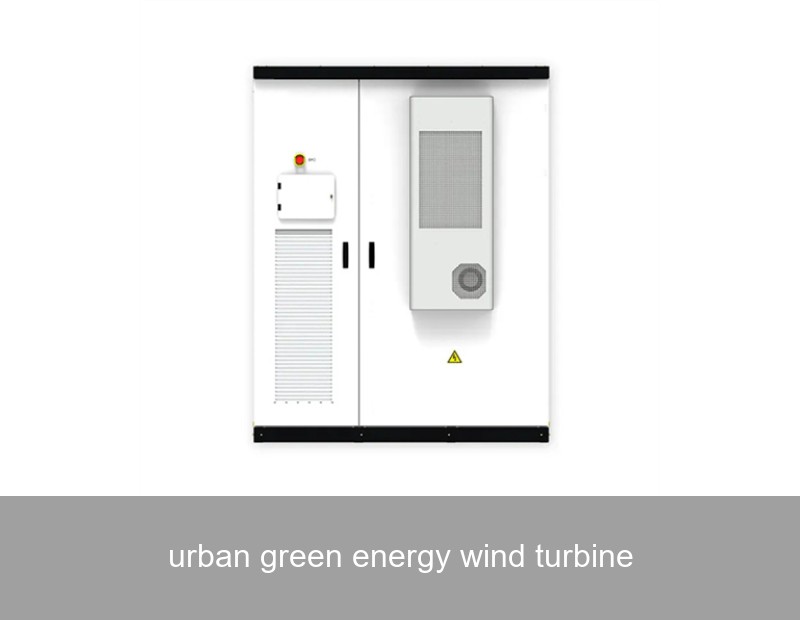
Image Source: Unsplash - Representative image of a commercial battery storage system.
Our systems are designed with the European and North American markets in mind, complying with strict grid codes (like UL 9540 in the U.S. and CE/IEC standards in Europe) and featuring advanced safety protocols. We provide a full suite of services—from initial feasibility and energy modeling to installation, grid integration, and 24/7 remote monitoring—ensuring that your investment in urban wind is supported by world-class storage technology.
The Future of City Skylines
The vision of cities powered from within is becoming tangible. The urban green energy wind turbine is evolving from a conceptual novelty into a viable component of a decentralized, resilient energy grid. When combined with solar, smart storage, and AI-driven energy management, it empowers businesses, municipalities, and communities to take genuine control of their energy destiny. The technology is here. The economic drivers—energy security, price volatility, climate goals—are more pressing than ever.
What unique wind patterns flow around your building, and what could they power if harnessed and stored intelligently?
 Inquiry
 Online Chat