


Utility Interactive Battery Systems: The Intelligent Bridge Between Your Power and the Grid
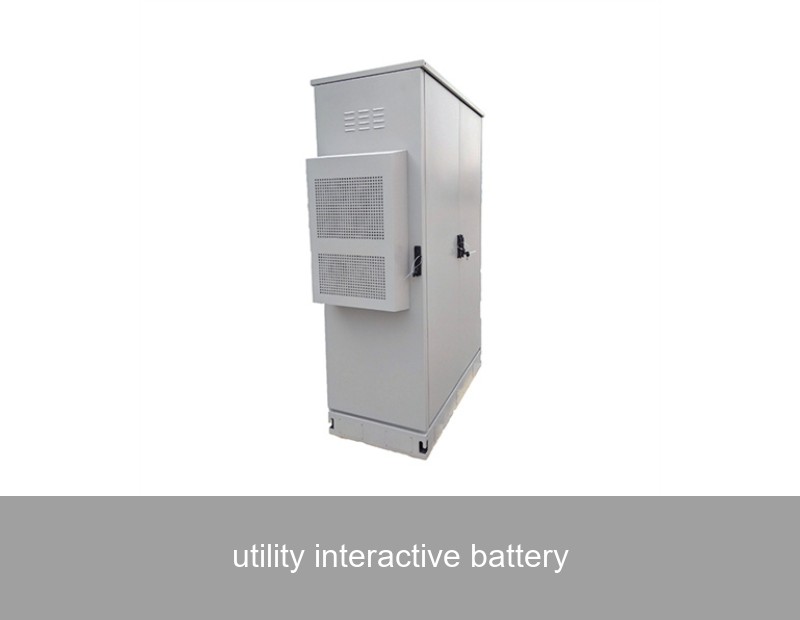
Imagine a battery system that does more than just sit quietly in your basement waiting for a blackout. What if it could actively communicate with your utility company, make intelligent decisions to save you money, and even help stabilize the community's power grid? This isn't future speculation—it's the reality of today's utility interactive battery technology. For businesses, industries, and forward-thinking homeowners, these systems are transforming energy assets from passive cost centers into dynamic, revenue-generating tools. As a leader in advanced energy storage since 2005, Highjoule is at the forefront of designing and deploying these intelligent systems that create value for our customers and the grid alike.
What is a Utility-Interactive Battery System?
At its core, a utility-interactive battery system (UIBS) is an advanced energy storage solution that operates in seamless, two-way communication with the public electricity grid. Unlike a simple backup generator or an off-grid battery, a UIBS is governed by a sophisticated energy management system (EMS). This EMS constantly monitors a variety of data points—including real-time electricity prices, grid frequency, local energy production (like from your solar panels), and your facility's consumption patterns.

Image Source: Unsplash - Visual representation of a connected energy ecosystem.
Based on this data, it autonomously decides when to charge, when to discharge, and at what power level. The primary goals are multifaceted: maximize self-consumption of renewable energy, reduce electricity bills through strategic arbitrage, provide unwavering backup power, and, crucially, participate in grid support services where permitted.
The Modern Grid Challenge: More Than Just Backup
The energy landscape, particularly in regions like Europe and the United States, is undergoing a seismic shift. The rapid proliferation of intermittent renewable sources like wind and solar, while environmentally essential, introduces volatility. The grid was built for predictable, one-way power flow, not for managing thousands of decentralized sources that can vanish when the sun sets or the wind stops.
The Data Tells the Story: According to the U.S. Energy Information Administration, renewable generation is projected to supply 44% of the U.S. electricity mix by 2050. Similarly, the European Union aims for renewables to meet 45% of its energy needs by 2030. This creates a pressing need for flexibility and stability—exactly what utility-interactive batteries provide.
The phenomenon? Grid operators are increasingly challenged with "duck curves" (a steep drop in net demand during sunny days followed by a sharp evening ramp-up) and maintaining grid frequency. The solution emerging is a distributed network of responsive assets, like interactive batteries, that can absorb excess energy and discharge it when needed most.
How a Utility-Interactive Battery System Works: The Intelligent Core
Think of a UIBS as a highly sophisticated, automated energy trader and grid citizen residing on your property. Its operation can be broken down into a logical sequence:
- 1. Continuous Monitoring: The system's brain—the EMS—ingests real-time data on utility rates, solar production, building load, and grid status signals.
- 2. Strategic Charging: It charges the battery when electricity is cheapest and cleanest, typically during midday solar peaks or late at night.
- 3. Intelligent Discharging: It discharges during expensive peak rate periods (e.g., 4-9 PM) to avoid drawing costly power from the grid.
- 4. Grid Services Mode: In certain markets, the system can respond to utility or grid operator signals in milliseconds to provide frequency regulation or demand response, often generating direct revenue for the owner.
- 5. Seamless Backup Transition: Upon detecting a grid outage, it automatically isolates the home or facility (forming a "microgrid") and powers critical loads, all without a flicker.
This intelligent orchestration is what separates a modern UIBS from simple storage. It's not just about having energy; it's about deploying it with precision for maximum economic and operational benefit.
Key Components of a Robust System
| Component | Role | Highjoule's Approach |
|---|---|---|
| Battery Bank | The energy reservoir, typically using Lithium Iron Phosphate (LiFePO4) chemistry for safety & longevity. | Highjoule uses modular, UL-certified LiFePO4 battery racks designed for >6000 cycles, ensuring a 15+ year lifespan. |
| Bi-Directional Inverter | The heart that converts DC battery power to AC for use and manages grid interconnection. | Our systems feature advanced hybrid inverters with UL 1741 SB certification, ensuring safe utility interaction and rapid islanding detection. |
| Energy Management System (EMS) | The intelligence that controls charging/discharging based on algorithms and settings. | Highjoule's proprietary JouleBrain AI platform uses predictive analytics and weather data to optimize schedules for each customer's unique tariff. |
| Grid Interface & Safety | Critical switches and relays that ensure safe, code-compliant disconnection from the grid during outages. | All Highjoule systems include automatic transfer switches and are installed to meet strict NEC (US) and IEC (EU) standards for safety. |
Key Benefits: From Bill Savings to Grid Support
Investing in a utility-interactive battery system delivers a compelling return on investment across several dimensions:
- Dramatic Reduction in Energy Costs: By "peak shaving"—using stored energy during expensive peak rate windows—commercial users can see a 20-40% reduction in demand charges, a major portion of their bill.
- Enhanced Return on Solar Investment: Increase self-consumption of solar power from ~30% to 70% or more, maximizing the value of every kilowatt-hour your panels produce.
- Reliable Backup Power: Ensure critical operations continue during grid outages, with automatic, instantaneous transition.
- Revenue Generation (in some markets): Participate in utility demand response programs or wholesale frequency regulation markets, turning your battery into an income-generating asset.
- Sustainability & Resilience Contribution: By supporting grid stability and enabling more renewable integration, you directly contribute to a decarbonized and more resilient energy infrastructure.
Highjoule's Advanced Utility Solutions
At Highjoule, we don't just sell hardware; we deliver tailored, intelligent energy ecosystems. Our GridSynk Series of utility-interactive battery systems is engineered for commercial, industrial, and large residential applications. What sets a Highjoule system apart is its deep configurability and intelligence.
Our JouleBrain AI software platform allows customers to set custom priorities via a simple dashboard: "Maximize bill savings," "Ensure 100% backup," or "Prioritize grid services revenue." The system then executes the optimal strategy. For example, a winery in Napa Valley can prioritize backup to protect its refrigeration during wildfire-related outages, while a manufacturing plant in Texas might prioritize demand charge reduction to combat high summer rates.

Image Source: Unsplash - Commercial building with integrated renewable and storage assets.
Furthermore, our global service network provides 24/7 monitoring and proactive support, ensuring your system performs optimally for its entire lifespan, delivering on its promised financial and operational returns.
Real-World Impact: A Case Study from California
Let's move from theory to tangible results. Consider a mid-sized cold storage warehouse in California's Central Valley, a region plagued by high temperatures, grid reliability issues (Public Safety Power Shutoffs), and some of the highest electricity rates in the US.
The Challenge: The facility faced monthly demand charges exceeding $15,000, was vulnerable to spoilage during frequent grid outages, and wanted to reduce its carbon footprint.
The Highjoule Solution: A 500 kW / 1,000 kWh GridSynk system was installed, integrated with their existing rooftop solar. The system was programmed with a primary goal of peak shaving and a secondary goal of providing full facility backup for up to 4 hours.
- Demand Charge Reduction: Peak demand from the grid was reduced by an average of 42%, saving approximately $6,300 per month.
- Backup Performance: The system seamlessly powered the entire facility through 8 grid outages, preventing an estimated $250,000 in potential lost inventory.
- Increased Solar Utilization: On-site consumption of solar generation increased from 35% to 85%.
- ROI: The project achieved a simple payback period of just under 5 years, factoring in available state incentives (like SGIP).
This case exemplifies the multi-faceted value proposition of a well-designed utility-interactive system: it's a financial tool, a risk mitigation asset, and a sustainability driver all in one.
The Future Outlook for Interactive Storage
The trajectory is clear. As grid dynamics become more complex and electricity tariffs continue to evolve towards time-based and demand-based structures, the economic case for utility-interactive batteries will only strengthen. We are moving towards a future where millions of these distributed assets will form "virtual power plants" (VPPs), collectively acting as a massive, flexible grid resource that can offset the need for building new fossil-fuel peaker plants.
For a business owner, community leader, or homeowner with solar, the question is no longer "Should I get a battery?" but rather "How can I ensure my battery system is intelligent and interactive enough to maximize its value today and remain relevant tomorrow?"
Is your current energy strategy prepared to interact with the grid of the future, or is it operating on autopilot?
We invite you to explore how a Highjoule GridSynk system can be tailored to your specific site, tariff, and goals. What would a 30% reduction in your annual energy costs mean for your operations or household budget?
 Inquiry
 Online Chat