


Unlocking Grid Stability and Energy Independence with the UTL Hybrid Energy Storage Cabinet
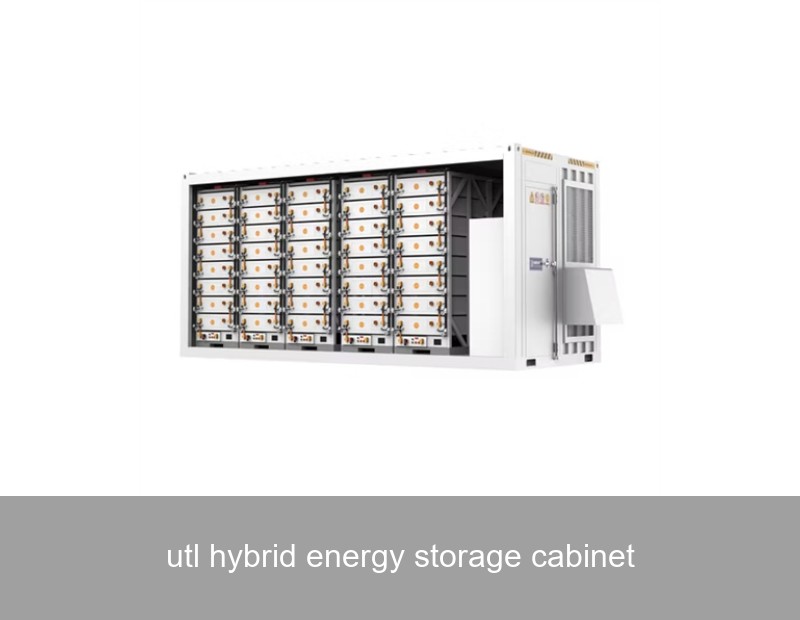
Imagine a world where your business isn't at the mercy of peak electricity prices, where your factory floor keeps humming during a grid outage, and your solar panels power your operations long after the sun sets. This isn't a distant future; it's the reality enabled by advanced energy storage solutions like the UTL Hybrid Energy Storage Cabinet. As grids worldwide grapple with the intermittency of renewables and aging infrastructure, a quiet revolution is happening in how we manage power. The UTL hybrid cabinet represents a significant leap, merging different battery technologies to create a system that is more than the sum of its parts—offering resilience, efficiency, and a faster return on investment. For facility managers, energy directors, and sustainability officers across Europe and the US, understanding this technology is key to building a robust energy strategy.
Table of Contents
- The Challenge: Intermittent Renewables and Unstable Grids
- What is a UTL Hybrid Energy Storage Cabinet?
- Why Hybrid? The Power of Combining Strengths
- Real-World Impact: A Case Study from Bavaria
- The Highjoule Approach: Intelligent Integration
- The Future Outlook for Hybrid Storage
The Challenge: Intermittent Renewables and Unstable Grids
We've all seen the headlines: "California Faces Flex Alerts as Heatwave Strains Grid" or "European Energy Prices Soar on Wind Lull." The transition to wind and solar is essential, but it introduces variability. The sun doesn't always shine, and the wind doesn't always blow. This creates a dual problem: energy surplus during peak generation and scarcity during troughs. According to the International Energy Agency (IEA), grid-scale storage needs to expand dramatically to support net-zero goals, with annual additions needing to grow 35-fold by 2030.
For commercial and industrial (C&I) users, this translates to tangible business risks: volatile energy costs, potential penalties for peak demand, and operational vulnerability during outages. The traditional response—oversized solar arrays or diesel generators—is often inefficient, costly, or contradicts sustainability targets. This is the precise pain point that advanced, integrated storage solutions are designed to address.

Image Source: Unsplash - Industrial solar integration requires robust storage solutions.
What is a UTL Hybrid Energy Storage Cabinet?
Let's break down the term. UTL often stands for "Utility" or denotes a specific, utility-grade class of equipment. A Hybrid Energy Storage Cabinet is a pre-engineered, containerized system that intelligently combines two or more types of energy storage technologies within a single, unified enclosure. Think of it not as a simple battery box, but as a sophisticated power management hub.
At its core, a UTL hybrid cabinet typically pairs:
- High-Power Battery Technology (e.g., Lithium Titanate Oxide - LTO): Excels at delivering rapid, high bursts of power. Perfect for demand charge reduction, grid frequency regulation, and providing seamless backup power during a grid failure.
- High-Energy Battery Technology (e.g., Lithium Iron Phosphate - LFP): Excels at storing large amounts of energy for long durations. Ideal for time-of-use arbitrage (storing cheap energy for expensive periods) and extending solar self-consumption.
By housing these technologies together with a sophisticated Energy Management System (EMS), the cabinet can dynamically decide which battery to use for which task, optimizing for performance, cost, and battery lifespan.
Why Hybrid? The Power of Combining Strengths
Why not just use one type of battery? It's a bit like asking a sprinter to run a marathon and then win a weightlifting contest. A single technology often involves compromises. A hybrid system eliminates these compromises.
| Application Need | Single Tech (LFP only) Challenge | Hybrid (LFP + LTO) Solution |
|---|---|---|
| Daily Solar Load-Shifting (4-6 hour cycle) | Well-suited, but degrades faster if also used for high-power tasks. | LFP handles this efficiently, preserving its cycle life. |
| Demand Charge Management (2-3 minute high-power bursts) | High stress on LFP, causing accelerated degradation and heat. | LTO handles these rapid, high-power discharges with minimal degradation. |
| Instantaneous Backup Power (Grid Failure) | Response can be limited by power output; may need oversizing. | LTO provides near-instantaneous power pickup, ensuring critical loads stay online. |
The result? A system that achieves a lower Levelized Cost of Storage (LCOS)—the total cost of owning and operating the storage asset over its lifetime. You get more cycles, more applications, and a longer useful life from your investment. This is where companies like Highjoule excel. With nearly two decades of experience since 2005, Highjoule designs its IntelliCube Hybrid Storage Systems with this exact philosophy. Their cabinets integrate best-in-class battery cells with proprietary EMS software that makes millions of data-driven decisions to maximize economic and operational value.
Real-World Impact: A Case Study from Bavaria
Let's move from theory to practice. A medium-sized automotive parts manufacturer in Bavaria, Germany, faced a classic C&I challenge: high grid fees driven by sharp afternoon power demand peaks, coupled with a desire to increase the use of their 500 kW rooftop solar array.
The Problem: Their existing solar system was exporting excess power at low noon prices, but they were buying expensive grid power later in the day. Furthermore, brief but intense machinery startups caused demand spikes, incurring high capacity charges.
The Solution: Highjoule installed a 1 MWh IntelliCube Hybrid Cabinet on-site, combining LFP and LTO technologies.
The Data-Driven Outcome (12-month post-installation):
- Demand Charge Reduction: Peak power draw from the grid was shaved by 28%, directly lowering grid capacity fees.
- Solar Self-Consumption: Increased from 35% to over 80%, drastically reducing daytime energy purchases.
- ROI Timeline: Projected payback period calculated at 5.2 years, enhanced by a German federal storage incentive (KfW).
- Resilience: The system now provides 2 hours of full facility backup, a previously unavailable benefit.
This case illustrates the multi-application power of a UTL hybrid system. It wasn't just a backup or just a solar booster; it was a comprehensive financial and operational tool. For more on grid challenges and storage benefits, the U.S. Department of Energy provides extensive resources.

Image Source: Unsplash - Representation of modern energy storage system monitoring.
The Highjoule Approach: Intelligent Integration
Not all hybrid cabinets are created equal. The magic lies in the software and system integration. Highjoule's IntelliCube platform goes beyond basic control. Its EMS uses AI-driven algorithms to:
- Predict Loads and Generation: Analyzing weather forecasts and historical usage patterns to pre-charge batteries optimally.
- Perform Health-Conscious Cycling: Strategically directing high-stress tasks to the LTO bank and longer-duration tasks to the LFP bank, extending overall system life.
- Enable Grid Services Participation: In certain markets, the system can automatically provide frequency response services to the local grid, creating a new revenue stream for the owner.
This intelligent layer transforms the hardware from a passive storage unit into an active, profit-optimizing asset. Highjoule's global service network provides ongoing performance monitoring and support, ensuring the system delivers value for its entire 15+ year lifespan.
Choosing the Right System for Your Needs
Is a UTL hybrid energy storage cabinet right for your facility? Ask these key questions:
- What are your primary drivers? Is it cost savings (demand charge reduction, arbitrage), sustainability (maximizing renewables), or resilience (backup power)?
- What is your load profile? Do you have short, sharp power spikes or long, steady draws? A detailed energy audit is crucial.
- What is your existing infrastructure? Do you have solar PV, and what is the capacity? What is your main electrical service size?
Engaging with an expert provider like Highjoule early in the planning process is critical. Their technical teams can model your energy data, simulate different technology configurations, and provide a clear projection of financial and operational benefits, helping you navigate available incentives in regions like the EU or the US.
The Future Outlook for Hybrid Storage
The trend is clear: the future of C&I and microgrid energy management is in multi-technology, software-defined platforms. As battery chemistries continue to evolve—with advancements in solid-state, flow batteries, and beyond—the hybrid cabinet's architecture is perfectly poised to integrate these future technologies seamlessly. The core value proposition remains: using the right tool for the right energy job, managed by an intelligent brain.
The journey toward energy independence and grid stability is complex, but the technology to start is here and proven. The question is no longer if energy storage makes sense, but how to configure it for maximum advantage. What single energy challenge, if solved by a resilient and intelligent system, would most transform the operational and financial outlook for your organization?
 Inquiry
 Online Chat