


Finding the Right 320 kWh Battery for Sale: A Comprehensive Guide for Commercial & Industrial Energy Independence
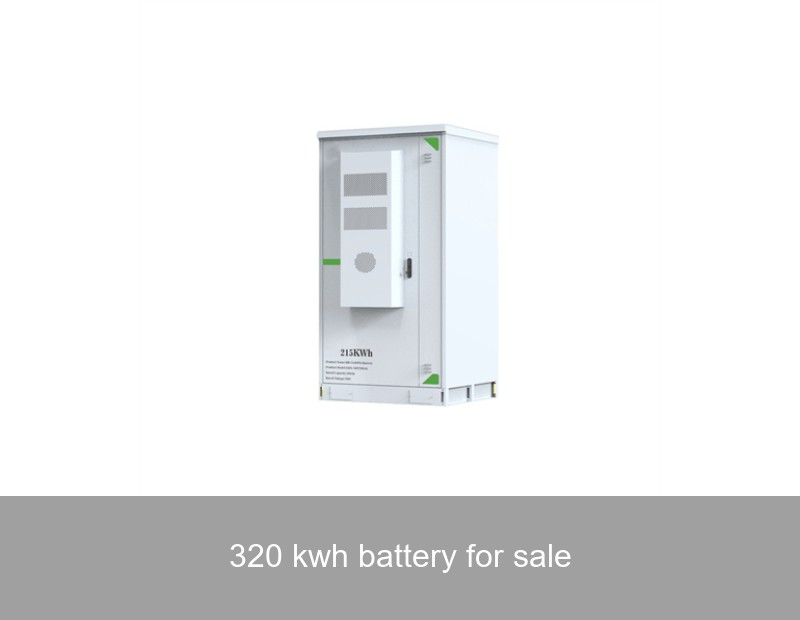
As energy prices continue their volatile dance and grid stability becomes a growing concern, a quiet revolution is powering up in backlots and on rooftops across Europe and North America. For facility managers, business owners, and project developers, the question is no longer if to invest in energy storage, but how to choose the right system. The 320 kWh battery system has emerged as a particularly compelling sweet spot—a robust capacity that can significantly slash demand charges, provide critical backup, and integrate renewable energy for a wide range of commercial and industrial (C&I) applications. But with so many options for a 320 kWh battery for sale, how do you ensure you're investing in a solution built for performance, safety, and the long haul? Let's unpack what you need to know.
Table of Contents
- Why the 320 kWh Capacity is a Strategic Sweet Spot
- Key Considerations When Evaluating a 320 kWh Battery System
- Beyond the Battery: The Critical Role of System Intelligence
- A Real-World Case Study: Manufacturing in Germany
- The Highjoule Solution: Engineered for Reliability and ROI
- Making the Informed Choice for Your Energy Future
Why the 320 kWh Capacity is a Strategic Sweet Spot
Think of a 320 kWh battery bank as the heavy-duty workhorse of the C&I energy storage world. It's substantial enough to make a meaningful financial impact but remains modular and scalable for tailored deployment. Here’s where this capacity truly shines:
- Demand Charge Management: For many businesses, a significant portion of the electricity bill comes from "demand charges"—fees based on the highest 15-30 minute power draw in a billing cycle. A 320 kWh system can be strategically discharged during short peak periods to shave these costly spikes, often delivering a return on investment (ROI) in just a few years.
- Solar Self-Consumption Optimization: Pairing a 320 kWh battery with a commercial solar array allows a business to store excess daytime generation and use it in the evening, dramatically increasing the percentage of clean, self-generated power consumed on-site.
- Backup Power for Critical Loads: It provides hours of reliable backup for essential operations, data centers, refrigeration, or safety systems, ensuring business continuity during grid outages.
- Grid Services Participation: In some markets, aggregated systems of this scale can participate in grid-balancing programs, creating an additional revenue stream.

The versatility of this size is why leading providers like Highjoule have developed robust, pre-engineered solutions around this capacity. Our H-Cube 320 series, for instance, is a containerized, all-in-one system designed for rapid deployment and seamless integration, answering the market's need for a reliable, high-performance 320 kWh battery for sale.
Key Considerations When Evaluating a 320 kWh Battery System
Not all 320 kWh systems are created equal. Purchasing based on capacity alone is like buying a vehicle based only on fuel tank size—you miss the critical details of efficiency, durability, and safety. Here’s your evaluation checklist:
| Factor | What to Look For | Why It Matters |
|---|---|---|
| Battery Chemistry | Lithium Iron Phosphate (LFP) | Superior safety (thermal runaway resistance), longer cycle life (6,000+ cycles), and excellent stability compared to older NMC chemistries. This is now the industry standard for stationary storage. |
| Round-Trip Efficiency (RTE) | >95% | Measures how much energy you get out versus what you put in. A higher RTE means less energy loss and more usable power for your operations. |
| Depth of Discharge (DoD) & Warranty | 90%+ DoD with a 10-year/cycle warranty | A high guaranteed DoD means you can use more of the battery's capacity without voiding the warranty. Look for a warranty that guarantees both a duration and a throughput (e.g., 10 years or 10,000 cycles). |
| Thermal Management | Liquid Cooling System | Critical for longevity and safety. Liquid cooling maintains optimal cell temperature, ensuring consistent performance in extreme climates and extending battery life far beyond air-cooled alternatives. |
| Grid Connectivity & Certifications | UL 9540, IEC 62619, Local Grid Codes | Non-negotiable for safety and permission to operate. Ensure the system is fully certified for your target market (e.g., CE for Europe, UL for North America). |
Beyond the Battery: The Critical Role of System Intelligence
The battery cells are just one part of the story. The true brain of a modern energy storage system is its software. A sophisticated Energy Management System (EMS) is what transforms a passive battery into a dynamic financial asset. The ideal EMS should offer:
- Adaptive Control: It learns your facility's load patterns and automatically dispatches the battery to maximize economic savings, seamlessly switching between peak shaving, solar optimization, and backup readiness.
- Remote Monitoring & Diagnostics: Provides 24/7 visibility into system health, state of charge, and performance metrics from any device.
- Future-Proofing: Software that can receive updates to adapt to new utility rate structures or participate in emerging grid service markets.
At Highjoule, we consider our Sentinel EMS™ the cornerstone of every H-Cube installation. It doesn't just run the system; it optimizes it for the highest possible ROI, giving our clients peace of mind and tangible financial results.
A Real-World Case Study: Precision and Savings in German Manufacturing
Let's move from theory to practice. A mid-sized automotive component supplier in Bavaria, Germany, faced two challenges: rising electricity costs (with demand charges constituting ~40% of their bill) and a corporate mandate to reduce carbon emissions. Their existing 500 kW rooftop solar system was often curtailed on weekends when the factory was idle.
The Solution: In 2023, they installed a Highjoule H-Cube 320 system. The containerized solution was installed and grid-connected in under a week with minimal disruption.
- Demand Charge Reduction: Peak grid draw was reduced by an average of 28%, leading to an annual savings of €31,000 on demand charges alone.
- Solar Self-Consumption: Increased from 68% to 94%, maximizing their existing solar investment.
- ROI Timeline: Projected payback period is calculated at 4.2 years, based on combined savings and Germany's supportive energy storage policies (Fraunhofer ISE, 2024).
- Resilience: The system now provides guaranteed backup for their quality control lab, preventing costly spoilage of materials during brief grid interruptions.

This case exemplifies the multi-faceted value a well-integrated 320 kWh system delivers—it's not an expense, but a strategic investment.
The Highjoule Solution: Engineered for Reliability and ROI
With nearly two decades of experience since our founding in 2005, Highjoule designs energy storage systems with a singular focus: sustainable performance you can bank on. When you evaluate a 320 kWh battery for sale from Highjoule, you're not just buying hardware; you're acquiring a turnkey power resilience solution.
Our flagship H-Cube 320 integrates every critical component:
- LFP Battery Modules: Utilizing top-tier cells with built-in safety cut-offs and managed by our proprietary Battery Management System (BMS).
- Advanced Liquid Cooling: Ensures even temperature distribution, enabling consistent performance from -30°C to 50°C and doubling the operational lifespan compared to passive systems.
- Bi-Directional Inverter: High-efficiency conversion for seamless flow between AC grid/loads and DC battery storage.
- Sentinel EMS™ Software Platform: The intelligent brain that automates optimization and provides full visibility via a user-friendly dashboard.
We support our clients from initial consultancy and system design through installation, commissioning, and long-term maintenance. Our global service network ensures that whether your project is in Texas or Turin, expert support is always available. For a deeper dive into system safety standards, we recommend reviewing resources from the National Fire Protection Association (NFPA) regarding energy storage equipment.
Making the Informed Choice for Your Energy Future
The journey to energy independence and cost control starts with asking the right questions. Beyond the initial price per kWh, you must consider total cost of ownership, the credibility of the manufacturer, and the intelligence of the software that will drive your savings day in and day out.
As you search for the ideal 320 kWh battery for sale, we invite you to consider this: Is your goal simply to purchase a battery, or is it to secure a predictable, lower-cost, and more resilient energy supply for the next decade and beyond? The technology is proven, the economics are compelling, and the time for strategic action is now.
What is the single biggest energy cost driver at your facility today, and how could controlling it transform your operational budget?
 Inquiry
 Online Chat