


Valve Regulated for Sale: Your Guide to Advanced, Maintenance-Free Energy Storage
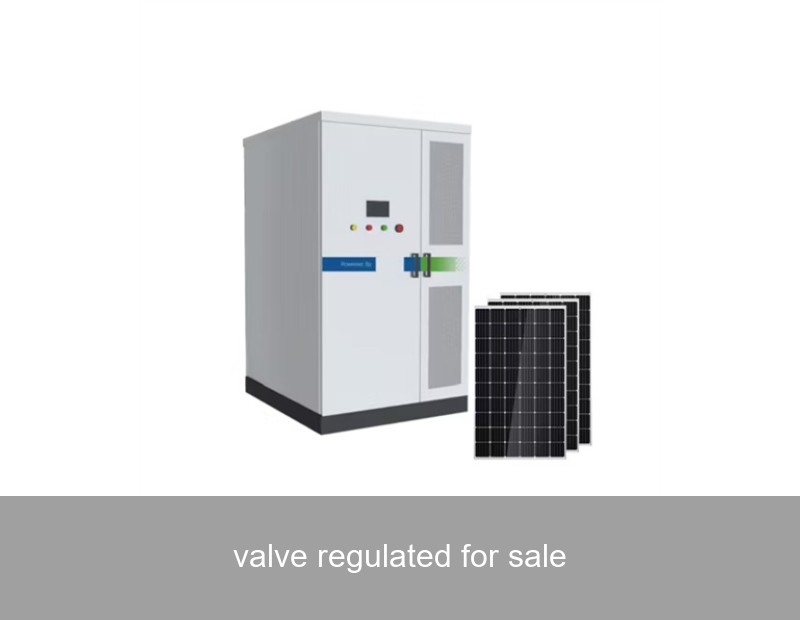
If you're exploring energy storage solutions for your business, home, or community project, you've likely come across the term "valve regulated for sale." It sounds technical, but understanding this technology is key to unlocking reliable, safe, and hassle-free power. Essentially, Valve Regulated Lead-Acid (VRLA) batteries represent a significant evolution in battery design, offering a sealed, maintenance-free power source that is crucial for modern renewable energy systems and backup power applications. In this guide, we'll demystify VRLA technology, explain why it matters for your energy independence, and show you how choosing the right partner, like Highjoule, can make all the difference.
Table of Contents
- What is a Valve Regulated Lead-Acid (VRLA) Battery?
- Why Choose VRLA Batteries for Your Energy Storage System?
- Key Applications: Where Do VRLA Batteries Shine?
- Real-World Impact: A German Case Study
- Choosing the Right VRLA Solution: Beyond the "For Sale" Tag
- Highjoule's Integrated Approach: Smart Systems, Superior Batteries
- The Future of VRLA and Advanced Storage
What is a Valve Regulated Lead-Acid (VRLA) Battery?
Let's break it down. Unlike traditional flooded lead-acid batteries, VRLA batteries are sealed. The "valve regulated" part refers to a safety valve that controls internal pressure. During normal operation, oxygen and hydrogen gases produced inside recombine into water. The valve only opens if pressure exceeds a safe limit, preventing damage. This design eliminates the need to add water, making them truly maintenance-free.
There are two main types you'll find when searching for "valve regulated for sale":
- AGM (Absorbent Glass Mat): The electrolyte is suspended in a fiberglass mat. These batteries offer excellent power delivery, faster charging, and good vibration resistance.
- Gel: The electrolyte is turned into a gel-like substance with silica. Gel batteries typically have slightly deeper cycle life and perform very well in hotter environments.

Image: Internal structure of a VRLA (AGM) battery. The sealed design and absorbent glass mats are key to its maintenance-free operation.
Why Choose VRLA Batteries for Your Energy Storage System?
The global shift towards renewables and grid resilience has propelled VRLA batteries into the spotlight. Here’s why they are a top contender for many projects:
| Feature | Benefit to You |
|---|---|
| Maintenance-Free Operation | No watering or regular electrolyte checks. Lower lifetime cost and ideal for remote or hard-to-access sites. |
| Safe & Flexible Installation | No acid fumes. Can be installed in offices, telecom cabinets, and residential areas without special ventilation. |
| Reliable Performance | Provides stable power for critical backup and daily cycling in solar+storage systems. |
| Cost-Effectiveness | Offers a compelling balance of upfront cost, performance, and lifespan, especially for commercial-scale projects. |
Key Applications: Where Do VRLA Batteries Shine?
When you see "valve regulated for sale," it's important to match the battery to its intended use. VRLA batteries excel in several critical areas:
- Uninterruptible Power Supply (UPS): Protecting data centers, hospitals, and industrial processes from grid outages.
- Renewable Energy Storage (Solar & Wind): Storing excess energy for use at night or during low-wind periods.
- Telecommunications: Providing backup power for cell towers and network infrastructure.
- Microgrids & Off-Grid Systems: Forming the backbone of energy storage for remote communities or campuses seeking energy independence.
Real-World Impact: A German Case Study
Let's look at data from Europe. A mid-sized dairy farm in Bavaria, Germany, faced rising energy costs and sought to maximize its on-site solar PV investment. Their goal was to increase self-consumption from 35% to over 70%.
Project Data:
- Solar PV Capacity: 150 kWp
- Storage Solution: A 240 kWh integrated battery energy storage system (BESS) utilizing high-performance VRLA (AGM) blocks.
- Outcome: Within the first year, the farm achieved 78% self-consumption, reducing grid imports by approximately 42,000 kWh. The VRLA-based system provided the necessary daily cycling capability and reliability, with a projected lifespan of 10+ years given the controlled operating environment. The system also provides critical backup for refrigeration units. This case illustrates that for commercial applications with predictable cycling, VRLA technology remains a robust and economically sound choice.
Choosing the Right VRLA Solution: Beyond the "For Sale" Tag
Not all VRLA batteries are created equal. Purchasing based on price alone can lead to premature failure and disappointment. Here’s what to consider:
- Depth of Discharge (DoD): How much of the battery's capacity can be used regularly. A higher rated DoD means more usable energy.
- Cycle Life: The number of charge/discharge cycles it can perform before capacity degrades significantly.
- Temperature Tolerance: Performance and lifespan are highly affected by ambient temperature.
- System Integration: A battery is only as good as the system managing it. Advanced Battery Management Systems (BMS) are crucial.
Highjoule's Integrated Approach: Smart Systems, Superior Batteries
This is where Highjoule's expertise transforms a simple component purchase into a long-term energy solution. Since 2005, we have engineered advanced storage systems that intelligently integrate the best battery technologies for the application.
For projects where VRLA is the optimal choice—due to budget, operational parameters, or reliability requirements—Highjoule provides more than just quality "valve regulated for sale." We deliver:
- Highjoule H-Stack Commercial Series: Our modular cabinet-based BESS can be configured with high-cycle VRLA or lithium-ion cells. It features our proprietary energy management platform for optimal battery health, efficiency, and grid services compatibility.
- Expert System Design: We don't just sell batteries; we design the entire storage system. Our engineers ensure proper sizing, thermal management, and electrical integration to maximize the lifespan of the VRLA batteries within it.
- Global Support & Monitoring: Our cloud-based monitoring platform gives you real-time insights into your system's performance, providing peace of mind from installation onwards.

Image: A technician performs checks on a modular battery energy storage system, similar to Highjoule's integrated solutions.
The Future of VRLA and Advanced Storage
While lithium-ion dominates headlines, VRLA technology continues to advance. Research into carbon-enhanced plates and improved electrolytes is pushing the boundaries of cycle life and charge acceptance. According to a U.S. Department of Energy report on energy storage, diverse technologies will be needed to build a resilient grid. VRLA batteries, with their proven safety, reliability, and recyclability, will continue to play a vital role, especially in stationary storage.
Furthermore, the established recycling chain for lead-acid batteries, with a recycling rate exceeding 99% in the USA and Europe according to the Battery Council International, offers a strong circular economy advantage.
So, as you evaluate your options for reliable energy storage, the question isn't just about finding "valve regulated for sale." The more important question is: How can you design a total storage system that leverages the right technology to meet your specific financial and operational goals for the next decade?
 Inquiry
 Online Chat