


Understanding the Different Types of Solar Batteries for Your Energy Independence
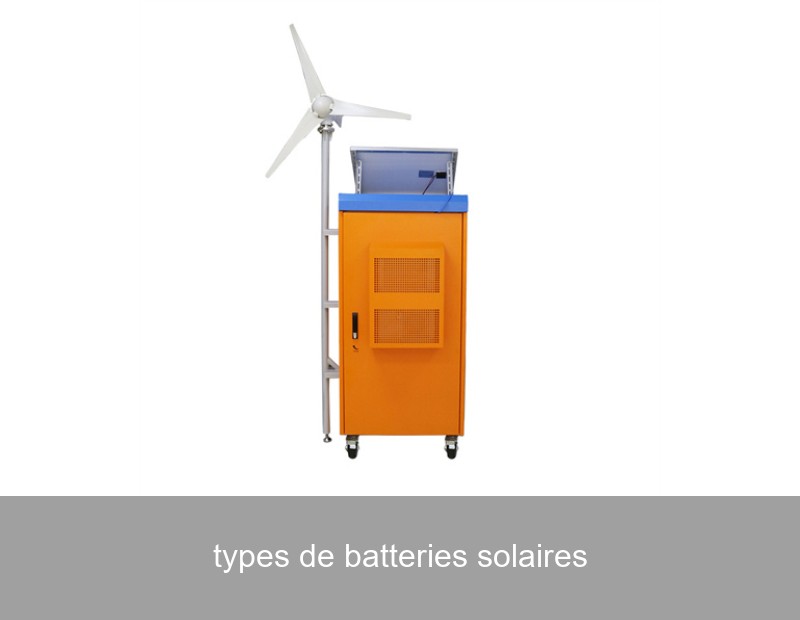
Have you ever looked at your solar panels on a sunny day and wondered, "Where does all that extra power go?" For many homeowners and businesses across Europe and the U.S., the answer is increasingly found in a solar battery storage system. But with terms like lithium-ion, LFP, and lead-acid being mentioned, choosing between the main types de batteries solaires can feel overwhelming. This guide will demystify the technology, compare your options with real-world data, and show you how the right battery can transform your solar investment from a bill-reducer to a true pillar of energy resilience and independence.
Table of Contents
The Challenge: Sun Doesn't Shine on Schedule
The fundamental problem with solar power is its intermittency. Your panels produce a surplus during peak daylight hours—often when you're not home—and generate nothing at night, precisely when demand spikes. Without storage, this excess energy is typically fed back to the grid for a small feed-in tariff, while you draw expensive power from the utility in the evening. This cycle limits your savings and leaves you vulnerable to outages. The solution? Pairing your photovoltaic (PV) system with a battery that stores your solar surplus for use on demand.

Image: A modern home solar installation with a battery storage unit. Source: Unsplash
Key Metrics for Comparing Solar Battery Types
Before diving into technologies, let's define what matters most:
- Depth of Discharge (DoD): The percentage of the battery's capacity you can safely use without damaging it. A 10 kWh battery with a 90% DoD means you can use 9 kWh.
- Cycle Life: The number of complete charge/discharge cycles a battery can handle before its capacity significantly degrades.
- Round-Trip Efficiency: The percentage of energy put into the battery that you can get back out. Losses occur as heat or in conversion.
- Energy Density: How much energy a battery stores per unit of volume. Crucial for space-constrained installations.
- Cost (Capex & LCOE): Upfront capital cost and the Levelized Cost of Energy, which factors in lifespan and performance.
Solar Battery Technology Breakdown
Lithium-Ion (NMC) Batteries
Dominating the market, these batteries use a cathode made of Lithium, Nickel, Manganese, and Cobalt. They are the "performance" option, known for high energy density and compact size. You'll find them in most consumer electronics and electric vehicles. For solar storage, they offer excellent round-trip efficiency (92-97%) and a good DoD (around 90%). Their main historical drawback has been thermal stability, requiring sophisticated battery management systems (BMS).
Lithium Iron Phosphate (LFP) Batteries
This is a subtype of lithium-ion chemistry that has become the new standard for stationary storage. By replacing the cathode with lithium iron phosphate, LFP batteries eliminate cobalt and nickel, enhancing safety and longevity. They are exceptionally thermally stable, have a longer cycle life (often 6,000+ cycles), and are less prone to thermal runaway. While their energy density is slightly lower than NMC, their superior safety profile and lifespan make them ideal for home and commercial energy storage. This is the chemistry of choice for industry leaders like Highjoule in their ResiCore and Commercium Pro series, prioritizing decades of safe, reliable operation.
Lead-Acid Batteries
The traditional, established technology. They are inexpensive upfront but have a shallow DoD (typically 50%), low round-trip efficiency (70-85%), and a short cycle life (500-1200 cycles). They also require regular maintenance and ventilation. While sometimes used in off-grid systems due to low initial cost, their total cost of ownership and performance limitations make them a poor fit for daily-cycling solar applications compared to modern lithium-based options.
Flow Batteries
An emerging technology for large-scale storage. Energy is stored in liquid electrolytes housed in external tanks. Their key advantage is the near-infinite cycle life and the ability to scale energy capacity independently of power output by simply increasing tank size. They are exceptionally durable but currently have lower energy density, higher complexity, and cost, making them suitable primarily for utility and large industrial microgrid projects.
Side-by-Side Comparison Table
| Technology | Typical Cycle Life | Round-Trip Efficiency | Depth of Discharge | Best For |
|---|---|---|---|---|
| Lithium-Ion (NMC) | 3,000 - 5,000 | 92-97% | ~90% | Space-constrained homes, EV integration |
| LFP (e.g., Highjoule ResiCore) | 6,000 - 10,000+ | 95-98% | 100% | Residential & Commercial daily cycling, maximum safety & lifespan |
| Lead-Acid (Flooded) | 500 - 1,200 | 70-85% | ~50% | Budget off-grid backup, rarely used |
| Vanadium Flow | 20,000+ | 70-80% | 100% | Utility-scale, long-duration storage |
Case Study: A German Bakery's Recipe for Resilience
Let's look at a real-world application. Bäckerei Schmidt (name changed), a mid-sized bakery in Bavaria, Germany, faced two problems: high energy costs during early morning production peaks and vulnerability to short grid outages that could spoil inventory. Their existing 50 kW rooftop solar array covered only 40% of their daily needs due to misaligned production and consumption.
In 2022, they installed a Highjoule Commercium Pro 100 system, a modular LFP battery solution with 102 kWh of storage capacity. The results after one year were compelling:
- Self-Consumption of Solar Power Increased: From 40% to over 85%.
- Grid Energy Costs Reduced: By 68% by avoiding peak-time tariffs.
- ROI Timeline: Projected to be under 7 years, thanks to German subsidy programs (like the KfW loans) and energy savings.
- Resilience: The system seamlessly provided backup power during two planned grid maintenance outages, ensuring uninterrupted refrigeration and production.
This case highlights how the right battery type—LFP, with its high cycle life and safe, deep cycling—is critical for commercial applications with daily, demanding energy profiles.

Image: A commercial-scale battery energy storage system. Source: Unsplash
Making the Right Choice for Your Needs
So, which of the types de batteries solaires is right for you? Ask yourself these questions:
- Primary Goal: Is it maximum bill savings, backup power during outages, or both?
- Budget: Are you evaluating upfront cost or total cost over 15+ years?
- Space: Do you have a dedicated, temperature-controlled space like a garage or basement?
- Local Climate: Will the battery be exposed to extreme heat or cold?
For the vast majority of residential and commercial users in Europe and North America, LFP batteries represent the optimal balance of safety, longevity, and performance. As noted by the U.S. Department of Energy's Solar Energy Technologies Office, declining costs and improving technology are making solar-plus-storage an increasingly accessible and valuable investment.
How Highjoule Delivers Intelligent Storage Solutions
Understanding the chemistry is just the first step. The true value of a solar battery system lies in its integration, intelligence, and reliability. This is where Highjoule's nearly two decades of expertise come into play. We don't just supply LFP battery cells; we engineer complete, intelligent storage systems.
Our ResiCore series for homes features modular LFP batteries with a compact design, 100% usable capacity, and a seamless integration with most inverters. It's managed by our EnergyOS platform, which learns your consumption patterns and automatically optimizes storage and discharge to maximize self-consumption and savings, whether under the Spanish sun or in variable German weather.
For businesses and microgrids, our Commercium Pro line offers scalable, containerized solutions. These systems provide not just backup power, but also services like peak shaving—intentionally using stored energy to avoid high demand charges from the utility. By integrating with our cloud-based management, businesses can turn their energy storage into an active financial asset. For deeper technical insights, independent research from institutions like Fraunhofer in Europe consistently underscores the importance of such smart energy management in maximizing ROI.
Given the rapid evolution of energy markets and the push for grid independence, what energy challenge in your home or business could be solved by having the right power, available at the right time?
 Inquiry
 Online Chat