


Village Solar Power Systems: The Complete Guide to Energy Independence
Imagine a village, not just with rooftops glinting under the sun, but where that sunlight directly powers homes, schools, and local businesses, day and night. This is no longer a futuristic dream but a present-day reality made possible by modern village solar power systems. For communities in Europe and the US seeking resilience, sustainability, and control over energy costs, integrating solar photovoltaic (PV) panels with advanced battery storage is the key. This guide will walk you through why these systems are transformative and how companies like Highjoule, a global leader in advanced energy storage since 2005, are engineering the intelligent backbone that makes true energy independence achievable.
Table of Contents
- The Phenomenon: From Grid Dependency to Local Empowerment
- The Data: Why Solar-Plus-Storage Makes Economic Sense
- Case Study: Resilience in the American Southwest
- Core Components of a Modern Village Solar Power System
- The Highjoule Advantage: Intelligence at the System Core
The Phenomenon: From Grid Dependency to Local Empowerment
Many villages and small communities face a common energy dilemma: they are at the "end of the line" of the traditional grid, susceptible to outages, volatile energy prices, and high transmission costs. Renewable energy, particularly solar, offers a brilliant solution—but with a catch. Solar generation is intermittent. What happens when the sun sets, or during a week of stormy weather? This mismatch between generation and consumption is the fundamental challenge a basic solar setup cannot solve.
The modern answer is the integrated village solar power system, which combines three critical elements: solar PV panels, a fleet of battery energy storage systems (BESS), and smart energy management software. This triad transforms a simple solar installation into a reliable, 24/7 microgrid.

Image source: Unsplash - Illustrative village with renewable energy.
The Data: Why Solar-Plus-Storage Makes Economic Sense
Let's talk numbers, because a sustainable solution must also be an economically viable one. According to the International Renewable Energy Agency (IRENA), the global weighted average levelized cost of electricity (LCOE) from utility-scale solar PV fell by 88% between 2010 and 2021. Meanwhile, battery storage costs have plummeted, dropping nearly 90% in the last decade according to BloombergNEF.
For a village, this translates to tangible benefits:
- Reduced Peak Demand Charges: For communities on commercial or industrial utility rates, demand charges can constitute up to 50% of the electricity bill. Storage can discharge during peak times, slashing these costs.
- Increased Self-Consumption: Instead of selling excess solar power back to the grid at low rates, a village can store it for use in the evening, increasing the use of self-generated power from ~30% to over 70%.
- Grid Services & Revenue: In some markets, aggregated storage systems can provide grid stability services, creating a potential revenue stream.
| Metric | Solar Only | Solar + Storage System |
|---|---|---|
| Annual Energy Cost Savings | ~$150,000 | ~$400,000+ |
| Grid Independence During Outages | None | 24+ hours (critical loads) |
| Renewable Self-Consumption | ~35% | ~80% |
Case Study: Resilience in the American Southwest
Consider the real-world example of Borrego Springs, California. This remote desert community is served by a single transmission line, making it highly vulnerable to outages from wildfires and extreme weather. To address this, a community microgrid was deployed, integrating 3.5 MW of solar with a 4 MW / 2 MWh battery energy storage system.
The results have been compelling. During planned outages or emergencies, the microgrid can "island" itself from the main grid and power the town's critical facilities—including the fire department, supermarket, and cooling center—for extended periods. In 2022, the system successfully provided backup power during a public safety power shutoff event, keeping essential services online for over 12 hours. This project demonstrates that a village solar power system is not just about savings; it's a critical infrastructure investment for resilience.

Image source: Unsplash - Representative image of a solar-plus-storage farm.
Core Components of a Modern Village Solar Power System
Understanding the anatomy of these systems demystifies their operation. It's a sophisticated symphony of components:
1. Solar Photovoltaic (PV) Array
The primary generation source. Panels are typically installed on rooftops, carports, or on dedicated land. For villages, a mix of distributed residential systems and a larger, central "solar farm" often provides optimal generation and land use.
2. Battery Energy Storage System (BESS)
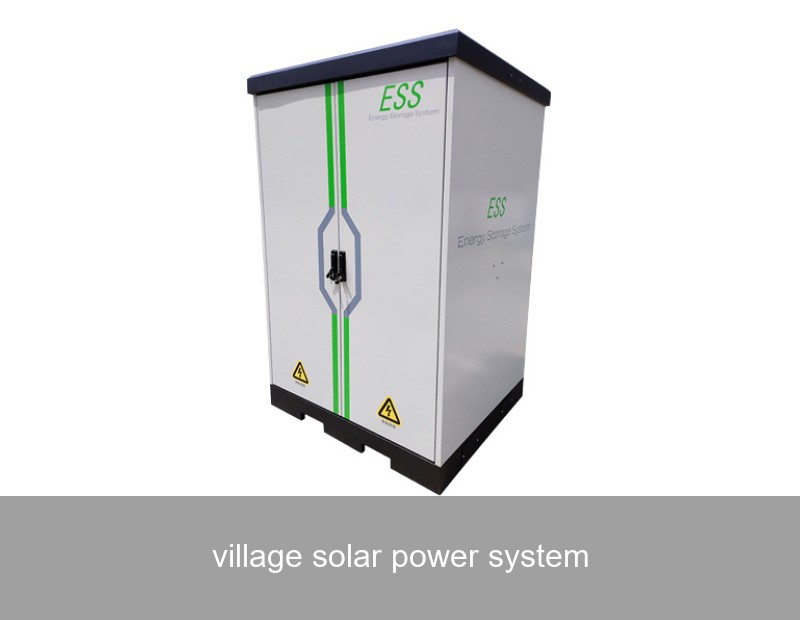
The heart of reliability. Modern systems use lithium-ion batteries (like LFP chemistry for safety and longevity) housed in modular, containerized units. The BESS stores excess solar energy for later use.
3. Bi-Directional Inverters & Power Conversion Systems (PCS)
The "translators." These critical devices convert the DC electricity from solar panels and batteries into the AC electricity used by the village grid, and vice-versa for charging.
4. Energy Management System (EMS)
The "brain." This is where the magic happens. A smart EMS uses algorithms and weather forecasts to decide when to charge the batteries, when to discharge, and how to prioritize loads, maximizing economics and reliability.
The Highjoule Advantage: Intelligence at the System Core
This is where Highjoule's expertise becomes pivotal. While solar panels capture energy, it's the storage and intelligence that unlock its full potential. Highjoule specializes in providing the integrated storage and control solutions that turn a collection of parts into a resilient, efficient village solar power system.
For community-scale projects, Highjoule's H-Series Commercial & Industrial (C&I) Battery Systems offer a robust, containerized solution. These systems are pre-engineered for safety and scalability, featuring Highjoule's proprietary battery management system (BMS) for optimal cell performance and lifespan. More importantly, they are governed by the Highjoule Neuron EMS Platform.
Think of Neuron as the community's energy conductor. It doesn't just manage the battery; it optimizes the entire microgrid:
- Predictive Optimization: Integrates weather and tariff data to forecast solar production and energy prices, scheduling battery cycles for maximum financial return.
- Seamless Islanding: Detects grid failures in milliseconds and automatically initiates island mode, keeping critical village infrastructure powered without interruption.
- Load Management: Can be configured to prioritize power to essential services (water treatment, medical clinics) during extended outages.
Highjoule's approach, refined since 2005 across thousands of global installations, is to provide not just hardware, but a complete, intelligent power solution tailored for the long-term success of community energy projects.
Future-Proofing Your Community's Energy
The transition to a decentralized, renewable-powered grid is accelerating. For village planners and community energy cooperatives in Europe and the US, the question is no longer if to adopt solar, but how to design a system that will remain robust and cost-effective for decades. The key insight is that the value lies in the integration. A standalone solar array addresses only part of the equation. The addition of smart, scalable storage is what delivers true energy sovereignty.
As battery technology continues to advance, with trends like long-duration flow batteries gaining traction for even longer backup times, the capabilities of these village systems will only expand. Designing with modularity and smart software from the start, as exemplified by Highjoule's platform, ensures your community can adapt and upgrade as new innovations emerge.
What is the first critical load—the hospital, the water pump, or the community center—that your village would prioritize to keep powered during a multi-day grid outage, and how would you begin the conversation about making that a guaranteed reality?
 Inquiry
 Online Chat