


Unlocking Energy Independence: The Essential Guide to Alternative Energy Battery Systems
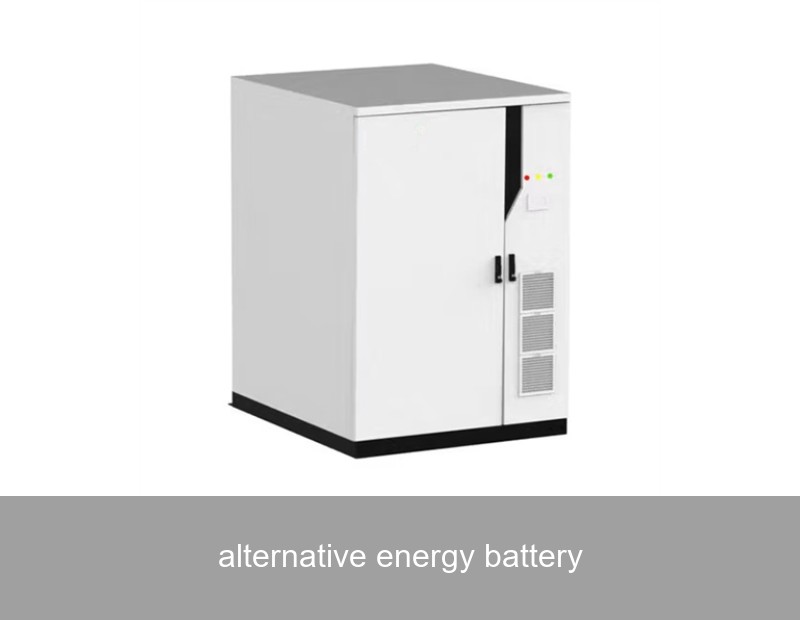
Imagine a world where your home or business isn't at the mercy of the next grid outage or volatile energy price spike. This isn't a distant dream; it's the reality being built today with advanced alternative energy battery systems. As Europe and North America accelerate their transition to renewable power, a critical question emerges: how do we capture the sun's energy at noon to power our evenings? The answer lies not just in generation, but in intelligent storage. This guide will explore how modern battery storage is the keystone of a resilient, efficient, and sustainable energy future.
Table of Contents
- The Intermittency Challenge: Why Solar and Wind Need a Partner
- From Lead-Acid to Lithium: The Evolution of Storage Tech
- Beyond Backup: Key Benefits of Modern Alternative Energy Batteries
- Case Study: A German Bakery's Recipe for Energy Resilience
- Choosing the Right System: What to Look For
- The Future Horizon: Smarter Grids and VPPs
The Intermittency Challenge: Why Solar and Wind Need a Partner
Renewable energy sources like solar PV and wind are fantastic—until the sun sets or the wind stops. This intermittency creates a mismatch between when energy is produced and when it's needed most. According to the International Energy Agency (IEA), grid-scale storage needs to expand significantly to support net-zero goals, with global capacity expected to multiply over 25-fold by 2030. For businesses and homeowners, this isn't just a grid-level issue. Without storage, excess solar energy you produce midday is often sold back to the grid at low rates, only for you to buy it back at night at a premium. An alternative energy battery system breaks this inefficient cycle, turning your renewable installation into a truly 24/7 power plant.
From Lead-Acid to Lithium: The Evolution of Storage Tech
The heart of any storage solution is the battery chemistry. While lead-acid batteries paved the way, today's market is dominated by Lithium-ion (Li-ion) variants, notably Lithium Iron Phosphate (LFP).
| Battery Type | Key Characteristics | Ideal Use Case |
|---|---|---|
| Lead-Acid | Low upfront cost, shorter lifespan, lower depth of discharge. | Budget-conscious, infrequent backup needs. |
| NMC (Li-ion) | High energy density, good cycle life. | Space-constrained residential applications. |
| LFP (Li-ion) | Superior safety, very long cycle life (6000+ cycles), excellent thermal stability. | Commercial, industrial, and residential seeking longevity & safety. |
LFP chemistry, used in Highjoule's H-Series commercial and HomeStack residential battery systems, has become the preferred choice for its remarkable balance of safety, lifespan, and performance. It's inherently non-combustible and can withstand daily deep cycling for decades, making it a truly sustainable investment. This technological leap is what makes modern alternative energy battery systems not just viable, but highly economical.

Modern, modular LFP battery racks like those in Highjoule's systems offer scalable, safe energy storage.
Beyond Backup: Key Benefits of Modern Alternative Energy Batteries
While providing power during an outage is a obvious benefit, the true value of a sophisticated battery system is multi-faceted:
- Energy Bill Optimization (Arbitrage): Store cheap energy (from your solar panels or off-peak grid rates) and use it during expensive peak hours. This is crucial in markets like California or Germany with high Time-of-Use (TOU) tariffs.
- Grid Services & Revenue: In some regions, aggregated batteries can provide frequency regulation or capacity services to the grid, creating a potential income stream for the system owner.
- Increased Self-Consumption: Maximize the use of your own solar generation, sometimes increasing self-consumption rates from 30% to 70% or more, dramatically improving ROI on your solar investment.
- Sustainability & Resilience: Reduce carbon footprint by maximizing green energy use and ensure critical operations continue during disruptions—a key concern for businesses.
At Highjoule, we engineer our systems with an intelligent Energy Management System (EMS) that automatically optimizes for these benefits, prioritizing between self-consumption, cost savings, and backup readiness based on your settings and real-time grid conditions.
Case Study: A German Bakery's Recipe for Energy Resilience
Let's ground this in reality. Bäckerei Schmidt (name changed for privacy), a mid-sized bakery in Bavaria with high electricity demand for ovens and refrigeration, faced rising energy costs and grid instability concerns. They had a 100 kW rooftop solar array but were still exporting over 60% of their production in the summer afternoons, only to buy power at night.
Their solution was a turnkey Highjoule system installed in 2022:
- Storage: A 240 kWh Highjoule H-Series LFP battery bank.
- Integration: Seamless integration with existing solar inverters via Highjoule's proprietary EMS.
- Results (12-month data):
- Energy Self-Sufficiency: Increased from 35% to 82%.
- Grid Import Reduction: Reduced peak-hour grid purchases by 95%.
- ROI: Projected payback period of 6.5 years based on energy savings and avoided demand charges.
- Resilience: The bakery can now operate fully for 8+ hours during a grid outage, protecting perishable goods and production schedules.
This case, mirrored by many across our European and North American installations, shows that an alternative energy battery system is a strategic business asset, not just an environmental statement.
Choosing the Right System: What to Look For
Not all battery systems are created equal. When evaluating options for your home or business, consider these critical factors:
- Chemistry & Safety: Prioritize stable chemistry like LFP. Ask for safety certifications (UL 9540, IEC 62619).
- Depth of Discharge (DoD) & Warranty: A battery rated for 90% DoD with a 10-year/10,000-cycle warranty (like Highjoule's) offers far more usable energy over its life than one with 80% DoD and a shorter warranty.
- Scalability & Integration: Can you easily add more capacity later? Does the system play nicely with your existing solar or different inverter brands? Modular designs are key.
- Software Intelligence: The "brains" (EMS) matter as much as the "brawn." Look for systems that offer customizable operating modes, remote monitoring, and smart grid interaction capabilities.
Highjoule's approach is to provide end-to-end solutions—from initial consultation and system design using our proprietary modeling tools, through to installation by certified partners, commissioning, and long-term monitoring via our Highjoule Pulse platform. We ensure the system is optimized for your specific load profile, tariff structure, and resilience goals.

Intuitive monitoring dashboards, like Highjoule Pulse, give users full control and insight into their energy flows.
The Future Horizon: Smarter Grids and VPPs
The journey doesn't end with a single battery installation. The future is interconnected. Virtual Power Plants (VPPs) are emerging as a transformative concept, where thousands of distributed alternative energy battery systems are aggregated to act as a single, large power plant. This can help balance regional grids, integrate more renewables, and provide stability. Highjoule is actively developing VPP-ready technology, allowing our customers to potentially enroll their systems in such programs, contributing to grid stability while earning additional incentives. It's a powerful vision: your home or business battery becoming an active cell in a larger, smarter, and more resilient energy organism.
As you contemplate taking control of your energy future, what specific challenge—be it unpredictable bills, grid reliability concerns, or sustainability targets—is most pressing for you to solve with an alternative energy battery solution?
 Inquiry
 Online Chat