


Understanding Voltronic Solar Inverters: The Heart of a Modern Solar Power System
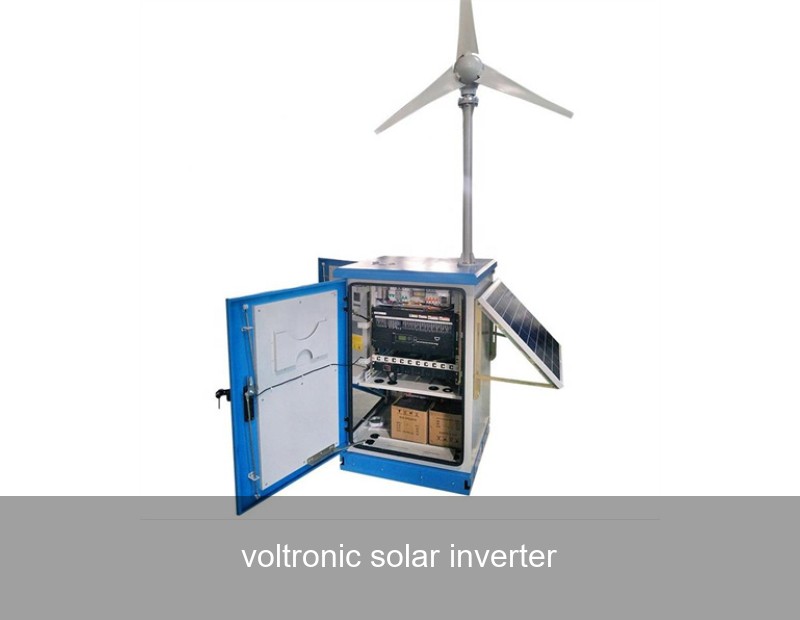
If you're exploring solar energy for your home or business, you've likely encountered a crucial piece of technology: the solar inverter. It's the unsung hero that transforms the raw power from your panels into usable electricity. Among the key players in this field, Voltronic solar inverters have established a significant presence. But what makes an inverter so vital, and how do you choose the right one for a reliable and efficient energy future? Let's demystify the technology powering your potential energy independence.
Table of Contents
What is a Solar Inverter and Why Does It Matter?
Your solar panels generate direct current (DC) electricity. However, every appliance in your home or business, and the grid itself, runs on alternating current (AC). The solar inverter's primary job is this fundamental conversion from DC to AC. But that's just the start. A modern inverter is the brain of your solar installation. It performs Maximum Power Point Tracking (MPPT) to squeeze every possible watt from your panels under varying weather conditions, ensures grid compliance for safety, and provides critical system monitoring data.
Choosing the right inverter impacts everything from your system's overall energy yield and reliability to its ability to integrate with battery storage and manage energy intelligently. It's not just a component; it's the central command unit.
Voltronic Solar Inverters: A Closer Look
Voltronic Power is a Taiwanese manufacturer known for producing a wide range of power conversion products, including solar inverters for off-grid, hybrid, and grid-tie applications. They are particularly recognized in the market for their value-oriented hybrid and off-grid inverters, which often combine the inverter, charger, and MPPT controller in a single unit. This all-in-one design can simplify system design for certain installations, especially where battery backup is a priority from the outset.
For homeowners and businesses considering a Voltronic solar inverter, it's important to understand the ecosystem. These inverters often form the base of a solar-plus-storage system. However, the true potential of any inverter is unlocked through seamless integration with high-quality batteries, sophisticated energy management software, and professional system design. This is where partnering with an experienced system provider becomes invaluable.

Image source: Unsplash (Professional photography of energy equipment)
Key Features of Modern Hybrid Inverters
When evaluating inverters like those from Voltronic or other brands, focus on these critical capabilities:
- Hybrid Functionality: The ability to manage power from solar panels, the grid, and a battery bank simultaneously, prioritizing self-consumption.
- Battery Compatibility & Charging Efficiency: Not all inverters work optimally with all battery chemistries (LiFePO4, NMC, etc.). Look for high charging efficiency to minimize energy loss.
- Scalability: Can the system easily expand with more batteries or solar panels in the future?
- Grid Services & Off-Grid Capability: Advanced features like grid-forming ability for backup power during outages, and compliance with local grid codes for feed-in.
- Monitoring & Control: A user-friendly app or portal that provides real-time data and control over your energy flows.
Real-World Impact: A Case Study from Germany
Let's move from theory to practice. Consider a mid-sized bakery in Bavaria, Germany. Facing rising electricity costs and seeking energy resilience, they installed a 45 kW solar array. Initially, they used a standard grid-tie inverter, which meant any surplus energy beyond immediate use was sold to the grid at a low feed-in tariff, and they had no power during grid outages.
The turning point was integrating a hybrid inverter system coupled with a 50 kWh lithium-iron-phosphate (LiFePO4) battery. The new system was designed not just to convert power, but to manage it intelligently. Here are the results after one year:
| Metric | Before Hybrid System | After Hybrid System |
|---|---|---|
| Self-Consumption of Solar Energy | 35% | 85% |
| Grid Energy Purchased | 65% of needs | 15% of needs |
| Energy Cost Savings | Baseline | €8,400 annually |
| Backup Power During Outages | None | Full operations for 10+ hours |
This case underscores a vital insight: the inverter choice was pivotal, but the system integration—pairing it with the right battery technology and intelligent controls—delivered the transformative economic and resilience benefits. (Data is illustrative based on typical industry performance reports from sources like the Fraunhofer Institute for Solar Energy Systems ISE).
Beyond the Inverter: The System Integration Imperative
This leads us to a broader, critical point in renewable energy. The industry is moving beyond selling standalone components toward providing holistic, intelligent energy solutions. This is the philosophy at the core of Highjoule. As a global leader in advanced energy storage systems since 2005, we understand that an inverter is just one part of the equation.
Our approach is to deliver optimized systems where the power conversion unit, whether it's a Voltronic solar inverter or another top-tier brand, is meticulously integrated with Highjoule's proprietary battery modules and our AI-driven Energy Management Platform (EMP). Our EMP doesn't just monitor; it learns your energy patterns, forecasts production and consumption, and automatically optimizes storage and discharge to maximize your financial return and energy independence.
For commercial and industrial clients across Europe and the U.S., this system-level intelligence is non-negotiable. It turns a capital investment into a strategic asset that manages demand charges, provides uninterrupted power for critical operations, and future-proofs the business against energy volatility.

Image source: Unsplash (Industrial energy storage installation)
Future Trends and Your Next Step
The future of solar inverters and energy systems is leaning heavily towards grid interactivity and decentralization. We're talking about inverters that can autonomously form microgrids, participate in virtual power plants (VPPs), and provide frequency regulation services to stabilize the broader grid. The technology, as seen in advanced hybrid inverters, is already paving the way.
So, whether you're initially drawn to the specifications of a particular Voltronic solar inverter or another model, we invite you to ask a more powerful question: How can my entire energy system work as an intelligent, cohesive unit to achieve my specific goals for savings, sustainability, and security?
What energy challenge is most pressing for your home or business—is it reducing peak demand charges, ensuring backup for essential loads, or simply maximizing the return on your solar investment?
 Inquiry
 Online Chat