


Where to Buy Solar Equipment: A Guide to Sourcing Your Power Independence
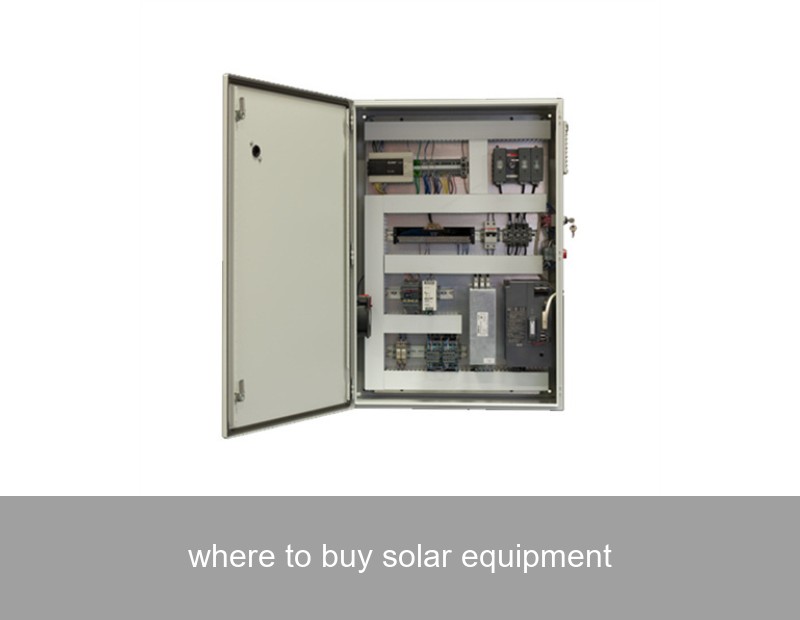
So, you've decided to harness the sun. The motivation is clear: energy independence, reducing your carbon footprint, and long-term savings on electricity bills. The first logical step that comes to mind is often, "Where do I buy solar equipment?" A quick online search reveals a dizzying array of panels, inverters, batteries, and mounting hardware from countless suppliers. But here's the crucial insight from the industry: sourcing components is just one piece of the puzzle; creating a reliable, efficient, and safe energy system is the real goal. This guide will navigate you through the complex marketplace, helping you move from simply finding a seller to forging a partnership for your energy future.
The DIY Solar Trend: Empowerment vs. Overwhelm
The rise of online marketplaces and a strong DIY culture, particularly in the US and Europe, has made solar equipment more accessible than ever. Homeowners and business managers are empowered to research and purchase components directly. The phenomenon is driven by the desire for cost savings and control. However, this often leads to a critical juncture: the overwhelm of technical compatibility. Not every solar panel works optimally with every inverter, and battery storage integration requires sophisticated energy management. The risk shifts from just finding a supplier to accidentally building an underperforming or even unsafe system.
The Real Cost of "Cheap": Data Behind the Decision
Let's talk numbers. According to the National Renewable Energy Laboratory (NREL), hardware (panels, inverters, racking) typically accounts for only about 25-30% of a residential solar PV system's total installed cost. The majority lies in "soft costs": installation labor, permitting, interconnection fees, and—critically—system design and engineering. A 2023 European study on commercial installations found that systems designed and supplied as an integrated solution had a 15-22% higher lifetime energy yield compared to piecemeal assemblies of individually sourced components, due to optimized compatibility and monitoring. The initial equipment price is a poor indicator of total value.

Image Source: Unsplash - Professional installation ensures safety and long-term performance.
From Warehouse to Powerhouse: A Bavarian Case Study
Consider the case of a medium-sized logistics warehouse in Bavaria, Germany. The facility manager initially sourced 300kW of solar panels from a large European online wholesaler and inverters from a separate distributor, aiming to cut costs. Post-installation, they faced persistent communication errors between the inverter arrays and their building management system, leading to erratic energy flow and an inability to claim the full feed-in tariff. Downtime for troubleshooting was costly.
Their solution was to partner with Highjoule. We conducted a full energy audit, replaced the incompatible inverters with our HJ-IntelliHub power conversion system, and integrated a 200kWh Highjoule CubeStack battery storage system. The key wasn't just new hardware; it was our OptiLoop AI-driven energy management platform. The result? Within one quarter:
| Metric | Before Highjoule | After Highjoule Integration |
|---|---|---|
| System Uptime | 87% | 99.5% |
| Self-Consumption of Solar Power | 35% | 82% |
| Grid Energy Cost (Monthly) | €8,400 | €2,100 |
This case underscores that 'where you buy' evolved into 'who you partner with,' transforming a problematic component purchase into a high-performance energy asset.
Your Pathways to Power: Where to Buy Solar Equipment
Understanding your options is key. Here are the primary channels, each with distinct pros and cons.
Online Marketplaces & Retailers
Description: General e-commerce platforms or specialized solar web stores. They offer a vast selection, often at competitive listed prices.
Best For: DIY enthusiasts with deep technical knowledge, small off-grid projects, or purchasing specific replacement parts.
Considerations: You are the system designer and integrator. Warranty support can be complex, and technical assistance is limited. Compatibility and long-term service are your responsibility.
Local Distributors & Electrical Suppliers
Description: Physical or regional wholesalers who supply equipment to installers. Some may sell to the public.
Best For: Those working with an independent installer who specifies the equipment. Offers a chance to see products and build a local relationship.
Considerations: Product range may be limited to a few brands. Pricing is often tailored for trade customers. You still need a separate installer and designer.
Integrated System Providers (The Highjoule Advantage)
Description: Companies like Highjoule that provide the complete solution: expert consultation, system design, certified equipment, installation (via certified partners), commissioning, and long-term monitoring and service.
Best For: Homeowners, businesses, and communities seeking a guaranteed outcome—reliable, clean power—without the technical heavy lifting. This is the core of our service at Highjoule.
Considerations: Perceived as a higher initial investment, but it encompasses total lifetime cost. You're buying performance and peace of mind.
At Highjoule, we don't just sell solar panels or batteries. We provide intelligent, integrated storage systems. For a homeowner, our HomePower+ solution bundles high-efficiency panels, a hybrid inverter, and our compact HomeCell battery into one intelligently managed system. For businesses, our Industrial Energy Platform is scalable from hundreds of kWh to MWh, ensuring facilities can weather price volatility and outages. We answer "where to buy" by becoming your single point of contact for the entire project lifecycle.

Image Source: Unsplash - A modern home battery storage unit, similar to integrated solutions.
Expert Insights: The 5 Questions to Ask Before You Buy
Before you click "add to cart" or sign a contract, ask these questions:
- Compatibility & Integration: "How do you ensure all components communicate seamlessly, and can this system integrate with my existing electrical panel or future technologies like EV chargers?"
- Performance Guarantee: "Is there a guaranteed annual energy production or system uptime clause, backed by more than just individual component warranties?"
- Software & Intelligence: "What software platform monitors performance and optimizes energy flow? Can I access this data, and who owns it?" (Highjoule's OptiLoop platform, for instance, gives clients full transparency).
- Local Compliance & Support: "Who handles local building permits, grid interconnection approval, and post-installation service in my area? What is the response time for service?"
- Total Value Proposition: "Beyond the price per watt, what is the projected levelized cost of energy (LCOE) over 20 years for this complete system?"
Powering Your Decision
The journey to solar is exciting. While the question "where to buy solar equipment" opens the door, the more profound question is, "how do I build a resilient and intelligent energy system for my specific needs?" The market offers multiple paths, from self-assembling components to partnering for a turnkey result. As you weigh the importance of upfront cost against lifetime performance, reliability, and smart management, your ideal source becomes clearer.
Is your primary goal to procure individual components, or is it to achieve a specific and measurable reduction in energy costs and carbon emissions with a partner who stands behind the entire system's performance?
 Inquiry
 Online Chat