


Which Battery is Best for Solar Hybrid Inverter? Your Guide to Optimal Energy Storage
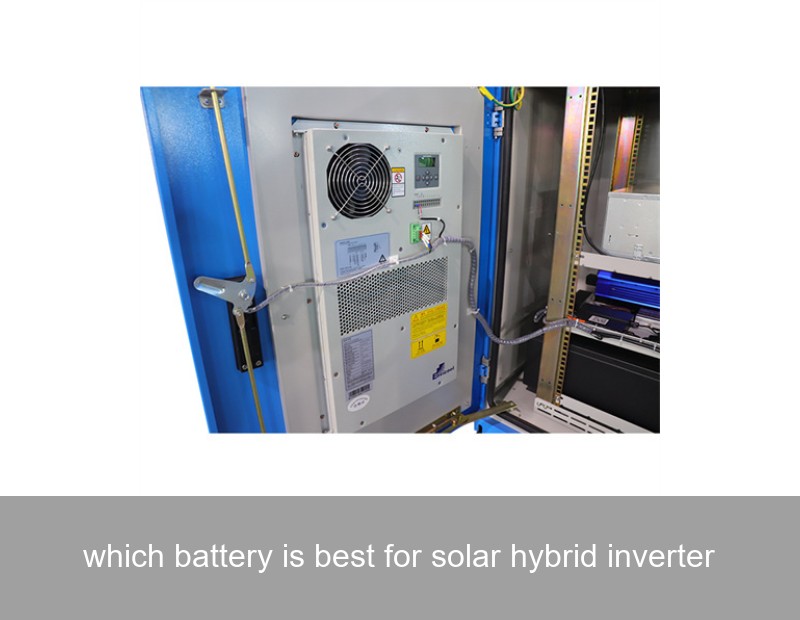
You've made the smart decision to invest in a solar hybrid inverter system. It's the brain of your energy setup, intelligently managing solar power, grid electricity, and battery storage. But here's the question we hear every day from homeowners and business owners alike: which battery is best for a solar hybrid inverter? The answer isn't one-size-fits-all. Your ideal battery is the one that aligns perfectly with your energy goals, budget, and lifestyle. Let's demystify the options and guide you to the perfect power partner for your hybrid system.

Image: A modern home battery storage system integrated with a hybrid inverter. (Source: Unsplash)
Key Battery Chemistry Showdown
The core of your storage decision lies in battery chemistry. Each type has distinct strengths and trade-offs, primarily in lifespan, safety, capacity, and cost.
Lithium Iron Phosphate (LiFePO4)
Currently, the reigning champion for residential and commercial hybrid systems. LiFePO4 batteries offer an exceptional balance:
- Safety & Stability: Incredibly stable chemistry, highly resistant to thermal runaway. This makes them a top choice for indoor installations, giving homeowners significant peace of mind.
- Long Cycle Life: They typically deliver 3,500 to 6,000+ charge/discharge cycles, often translating to a functional lifespan of 10-15 years or more.
- Performance: High depth of discharge (DoD) of 90-100%, meaning you can use almost all the stored energy without harming the battery.
The trade-off? A slightly lower energy density compared to other lithium types, meaning they can be a bit larger for the same capacity. However, for stationary storage, this is often an acceptable compromise for superior safety and longevity.
Nickel Manganese Cobalt (NMC)
Another popular lithium-ion variant, commonly found in electric vehicles and some energy storage systems.
- High Energy Density: Packs more capacity into a smaller, lighter footprint.
- Power Output: Excellent for applications requiring high bursts of power.
- Considerations: Generally has a shorter cycle life (2,000-3,000 cycles) than LiFePO4 and may have greater thermal management requirements.
Lead-Acid: A Legacy Option
The traditional technology. Flooded lead-acid batteries are low in upfront cost but come with significant limitations for hybrid systems:
- Short Lifespan & Low DoD: Only 500-1,000 cycles with a Depth of Discharge of around 50%. This means you need to buy twice the capacity to use half of it.
- High Maintenance: Require regular watering and ventilation due to off-gassing.
- Poor Efficiency: Lower round-trip efficiency (70-85%) wastes more of your precious solar energy as heat.
While they may suit a very tight initial budget, the total cost of ownership is often higher than lithium due to frequent replacements.
| Chemistry | Cycle Life (Est.) | Depth of Discharge (DoD) | Key Advantage | Best For |
|---|---|---|---|---|
| LiFePO4 | 3,500 - 6,000+ | 90-100% | Safety & Longevity | Most homes & businesses seeking a long-term, safe solution. |
| NMC | 2,000 - 3,000 | 80-90% | High Energy Density | Applications where space is extremely limited. |
| Lead-Acid (Flooded) | 500 - 1,000 | ~50% | Low Initial Cost | Very limited budgets, off-grid sheds/cabins. |
Five Critical Factors for Your Choice
Beyond chemistry, consider these five pillars when selecting your battery:
- Usable Capacity & Power: How many kilowatt-hours (kWh) do you need to cover your nightly usage or backup needs? Also, check the continuous power rating (kW) to ensure it can run your essential appliances simultaneously.
- System Compatibility & Communication: This is crucial. The battery must communicate seamlessly with your hybrid inverter. A "closed protocol" system from a single provider, like Highjoule's integrated solutions, ensures perfect compatibility, optimal performance, and remote monitoring.
- Warranty & Degradation: Look for a warranty that guarantees both a period (e.g., 10 years) and a retained capacity (e.g., 70% at end of warranty). This is a true measure of confidence.
- Scalability: Can you easily add more battery modules later if your needs grow? Modular designs are a future-proof investment.
- Total Cost of Ownership (TCO): Factor in not just purchase price, but lifespan, efficiency, and maintenance costs over 15+ years.
A Real-World Case Study: From Grid Anxiety to Energy Independence
Let's look at a real example. The Schmidt family in Bavaria, Germany, installed a 10kW solar array with a hybrid inverter in 2020. Initially, they paired it with a budget lead-acid battery bank (20kWh total, 10kWh usable).
The Problem: By 2023, the batteries had degraded severely, providing less than 4 hours of evening backup. They faced replacing the entire bank, a costly and frustrating cycle. Their system's inefficiency also meant they were selling excess solar to the grid at a low rate and buying back expensive power at night.
The Solution: In early 2024, they upgraded to a Highjoule H-EnergyStack, a modular LiFePO4 system. They started with a 13.5kWh module (100% usable), which already provided more usable storage than their old setup.
- Self-Consumption Rate Increased: From ~35% to over 85%, drastically reducing grid imports.
- Reliable Backup: Seamlessly powers essential loads for over 12 hours during an unexpected grid outage.
- Financial Payback: Projected payback period of 7-8 years based on current energy prices, with over a decade of additional warranty-covered service.
The Schmidts' story highlights that the "best" battery is one that solves long-term problems, not just short-term cost.

Image: Monitoring software showing high solar self-consumption achieved with a modern battery system. (Source: Unsplash)
The Highjoule Advantage: Intelligent Integration, Not Just Hardware
At Highjoule, we believe the best battery for your solar hybrid inverter is part of a cohesive, intelligent system. Since 2005, we've moved beyond just providing components to delivering optimized energy ecosystems. Our H-EnergyStack series (LiFePO4) is engineered from the cell level up to integrate flawlessly with our own and leading hybrid inverters.
What does this mean for you?
- Seamless Communication: Our batteries use advanced Battery Management Systems (BMS) that "speak" directly to the inverter, enabling features like predictive charging based on weather forecasts and smart load-shifting during peak tariff hours.
- Unmatched Safety Architecture: With multi-layer protection (electrical, thermal, and algorithmic), our systems are designed for safe, unattended operation in your home or business.
- Scalable Design: Start with what you need. Our modular design allows you to expand capacity from 13.5kWh upwards by simply adding additional stackable units.
- Global Support & Monitoring: Our Highjoule EnergyOS platform gives you real-time insights into your energy production, consumption, and storage via a user-friendly app, backed by our global technical support network in Europe and the US.
For commercial and microgrid applications, our H-PowerRack solutions offer utility-scale performance and reliability, enabling businesses to manage demand charges, ensure operational continuity, and participate in grid services. You can learn more about the technical standards for safe battery storage from authoritative sources like the NFPA 855 standard for stationary energy storage systems.
Your Energy Future Starts Here
The journey to energy resilience is both exciting and complex. While LiFePO4 technology stands out as the current optimal choice for most hybrid solar systems, the true key to success lies in expert integration, future-proof design, and intelligent software.
We invite you to reflect on your own situation: What is the primary driver for your battery storage—is it total energy independence, backup power during outages, or maximizing the financial return on your solar investment? How do you see your energy needs evolving over the next decade?
To explore a solution tailored precisely to your hybrid inverter and energy profile, why not connect with a Highjoule energy specialist today? They can help you model your savings and build a system that truly fits. For further independent research on solar and storage performance, reputable organizations like the National Renewable Energy Laboratory (NREL) publish valuable data and reports.
What's the first question you'd ask a specialist to feel confident in your battery choice?
 Inquiry
 Online Chat