


Unlocking Solar Potential: Why a Lithium Battery for Solar System is a Game-Changer
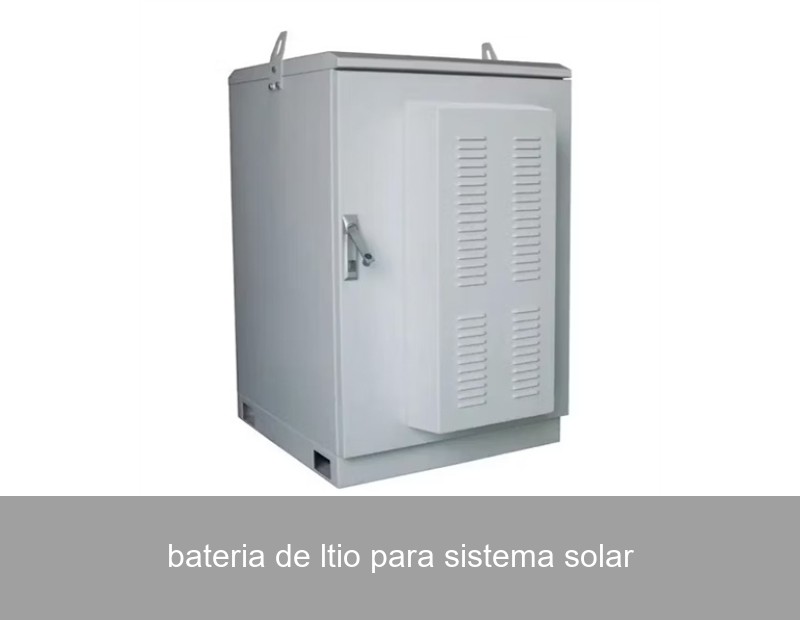
Have you ever watched your solar panels generate a surplus of clean energy on a bright afternoon, only to see it flow back to the grid, knowing you'll have to buy it back at night? This is the fundamental challenge of solar power: its generation doesn't always align with our energy consumption. The solution, increasingly, is pairing photovoltaic (PV) arrays with intelligent energy storage. And at the heart of this modern setup is the lithium battery for solar system applications. This technology isn't just an add-on; it's the key to transforming solar from a supplemental power source into a reliable, independent, and cost-effective energy foundation for homes and businesses across Europe and the US.
Table of Contents
- The Solar Paradox: Abundant Power, Intermittent Supply
- Lithium-Ion: The Technical Edge for Solar Storage
- Beyond Backup: The Multifaceted Value of Solar Batteries
- A Real-World Case: The Bavarian Dairy Farm
- Choosing Your Solar Battery: Key Considerations
- The Future is Integrated: Smart Energy Management
The Solar Paradox: Abundant Power, Intermittent Supply
The phenomenon is clear. Solar installations are booming, driven by falling costs and climate consciousness. However, the sun is a part-time worker. Grid demand often peaks in the early evening when solar production is waning, creating a mismatch. This leads to two issues: reliance on the grid (often powered by fossil fuels at peak times) and missed financial opportunity. According to the U.S. Department of Energy, solar accounted for over 50% of all new electricity-generating capacity in the US in early 2023. Yet, without storage, a significant portion of its potential value is unrealized.
This is where energy storage systems (ESS) come in, acting as a "bank" for your electrons. And while various battery chemistries exist, lithium-ion has emerged as the dominant force for residential and commercial solar storage, and for good reason.

Image: A modern home solar and battery storage setup. Source: Unsplash
Lithium-Ion: The Technical Edge for Solar Storage
Why has the lithium battery for solar system pairing become so prevalent? It boils down to a superior combination of performance characteristics essential for daily, deep-cycling use:
- High Energy Density: They pack a lot of capacity into a compact, lightweight footprint, crucial for space-constrained residential and commercial installations.
- High Depth of Discharge (DoD): Modern lithium batteries, especially Lithium Iron Phosphate (LFP), can safely use 90-100% of their rated capacity without significant degradation, unlike older lead-acid batteries which are limited to about 50% DoD.
- Long Cycle Life: A quality lithium battery can deliver thousands of charge-discharge cycles, often coming with warranties of 10 years or more, ensuring a long service life that matches well with solar panels.
- High Round-Trip Efficiency: When you store 10 kWh of solar energy, you get over 9 kWh back out with lithium-ion. This minimal energy loss (typically 5-10%) makes the system highly economical.
- Fast Charging & Power Output: They can quickly absorb surplus solar power and deliver high power to start appliances or meet sudden load spikes, which is vital for whole-home backup.
At Highjoule, our engineering focus has been on refining these advantages. Our Everflux series of residential battery systems utilizes stable LFP chemistry, prioritizing safety and longevity. For commercial and industrial applications, our Megaflex BESS (Battery Energy Storage System) offers modular, scalable solutions that can handle everything from peak shaving to full microgrid functionality.
Beyond Backup: The Multifaceted Value of Solar Batteries
While providing power during a blackout is the most visible benefit, the value proposition of a lithium battery for solar system is much broader:
| Benefit | Residential Impact | Commercial/Industrial Impact |
|---|---|---|
| Energy Independence | Reduce grid reliance by 70-90%, depending on system sizing and consumption patterns. | Mitigate exposure to volatile energy prices and ensure critical operations continuity. |
| Bill Management | Use stored solar energy during high evening tariff periods (Time-of-Use rates). | "Peak Shaving" - Avoid costly demand charges imposed for short periods of highest power draw. |
| Grid Services & Revenue | In some markets, programs allow homeowners to sell battery power back to the grid during peak demand. | Participate in grid-balancing ancillary services or Virtual Power Plants (VPPs) for revenue. |
| Sustainability | Maximize consumption of self-generated renewable energy, shrinking your carbon footprint. | Meet corporate ESG (Environmental, Social, Governance) goals and green certifications. |
A Real-World Case: The Bavarian Dairy Farm
Let's look at a concrete example from Southern Germany. The Müller family runs a medium-sized dairy farm with high energy demands for cooling, milking machines, and ventilation. They installed a 120 kWp solar carport but found themselves still drawing expensive grid power during morning and evening operations.
In 2022, they integrated a Highjoule Megaflex BESS with 240 kWh of lithium storage. The results, monitored over one year, were compelling:
- Self-Consumption Rate Increase: Rose from 35% to 88% of their solar generation.
- Grid Import Reduction: Reduced grid electricity purchases by 78%.
- Peak Load Management: The system automatically "shaves" power draws above 50 kW, eliminating demand charges, which previously accounted for 30% of their electricity bill.
- ROI: Projected payback period of under 7 years, thanks to Germany's high energy prices and the system's efficiency.
"The battery doesn't just save us money," explains Mr. Müller. "It makes our entire energy operation predictable and resilient. Even during a recent local grid outage, the milking parlor and cold storage continued uninterrupted."

Image: Commercial solar installation in an agricultural setting. Source: Unsplash
Choosing Your Solar Battery: Key Considerations
Not all lithium batteries are created equal. When evaluating a lithium battery for solar system integration, consider these factors:
- Chemistry: LFP (Lithium Iron Phosphate) is increasingly favored for its thermal stability, long life, and safety, making it ideal for stationary storage. Highjoule's products primarily use LFP technology.
- Usable Capacity & Power: Distinguish between total capacity and usable capacity. Also, ensure the battery's continuous power rating (in kW) can handle your home's or business's typical load.
- Scalability: Can you easily add more battery modules later if your needs grow? Modular systems like ours are designed for this.
- Integration & Software: The "brains" of the system are critical. Look for smart energy management systems that can learn your patterns, respond to grid signals, and optimize for your financial goals. Highjoule's NeuroGrid AI platform does exactly this, making autonomous decisions to maximize value.
- Warranty & Support: A strong warranty (e.g., 10 years, 10,000 cycles, 70% capacity retention) reflects manufacturer confidence. Ensure you have access to professional installation and technical support.
The Future is Integrated: Smart Energy Management
The ultimate goal is not just to have a solar battery, but to have a fully integrated, intelligent energy ecosystem. Imagine a system that not only stores solar energy but also can intelligently charge an EV during off-peak hours, pre-heat your home using surplus solar, and even contribute to grid stability during times of stress—all while prioritizing your comfort and savings.
This is the direction Highjoule is pioneering. Our systems are built to be future-proof, integrating with a wide range of inverters and ready to connect to smart home platforms and utility programs like Virtual Power Plants. The lithium battery for solar system is the core physical component, but the software is what unlocks its full potential, turning stored energy into actionable intelligence.
Ready to Transform Your Solar Investment?
The journey to true energy resilience and independence starts with understanding your unique consumption patterns and goals. What would a 80% reduction in your grid dependency mean for your household budget or your business's operational stability? We invite you to explore the possibilities with a tailored energy assessment.
 Inquiry
 Online Chat