


Microgrids with Energy Storage: The Cornerstone of a Resilient and Sustainable Energy Future
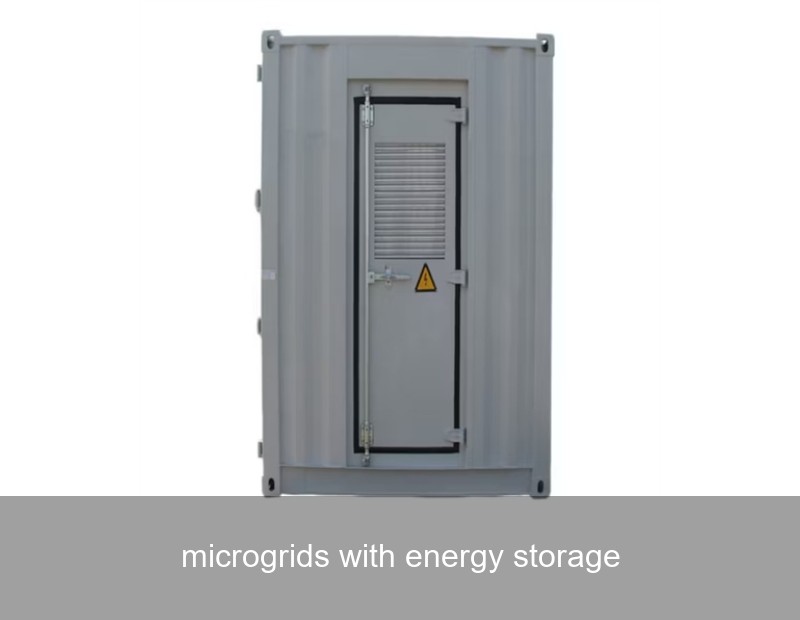
Imagine a community that keeps its lights on, its hospitals running, and its businesses open even when the main power grid goes dark. Or a remote industrial site that operates entirely on clean, self-generated power. This isn't a vision of the distant future; it's the reality being built today with microgrids with energy storage. These intelligent, localized energy networks are transforming how we generate, store, and consume electricity, offering unprecedented control, resilience, and sustainability. For businesses, municipalities, and communities across Europe and the U.S., integrating advanced battery storage is no longer an optional upgrade—it's the critical component that unlocks the full potential of a microgrid.
Table of Contents
- What Are Microgrids with Energy Storage?
- The Storage Imperative: Why Batteries Are the Brain of the Modern Microgrid
- Key Benefits of Integrating Energy Storage
- A Real-World Case Study: The Orkney Islands, Scotland
- Highjoule's Role: Building Smarter, More Adaptive Microgrids
- The Future Outlook and Your Next Step
What Are Microgrids with Energy Storage?
At its core, a microgrid is a localized group of electricity sources and loads that can operate independently ("island mode") or in conjunction with the main regional grid. Think of it as a miniaturized, intelligent version of the national grid. A modern microgrid typically integrates:
- Distributed Energy Resources (DERs): Solar PV arrays, wind turbines, combined heat and power (CHP) units.
- Critical Loads: The essential facilities it is designed to protect—data centers, water treatment plants, hospital wings, military bases, or a campus.
- Control Systems: The software and hardware that manage the flow of energy.
- And most crucially, Energy Storage Systems (ESS): Typically large-scale battery systems that store excess energy for later use.
Without storage, a microgrid's renewable sources are at the mercy of the weather. The sun doesn't always shine, and the wind doesn't always blow precisely when energy is needed most. This is where energy storage comes in, acting as the essential buffer and enabling true energy independence and stability.

Credit: Unsplash - A modern microgrid integrates solar generation with battery storage for consistent power.
The Storage Imperative: Why Batteries Are the Brain of the Modern Microgrid
Let's break down the phenomenon. The global push for decarbonization is driving massive adoption of variable renewables. The U.S. Energy Information Administration (EIA) projects that wind and solar will account for 22% of U.S. electricity generation in 2024, a record high. This variability challenges grid stability.
Here’s the data-backed insight: Energy storage does more than just "store electricity." It performs four vital functions:
- Bridging Power: Instantly providing electricity during the split-second gap when switching between grid and island mode.
- Renewable Firming: Smoothing out the second-to-second fluctuations from solar and wind, creating a stable, dispatchable power source.
- Energy Time-Shift: Storing cheap, abundant solar energy produced at noon and discharging it during the expensive, high-demand evening peak (a process known as "arbitrage").
- Frequency Regulation: Helping maintain the grid's delicate 60Hz (or 50Hz in Europe) frequency, which is fundamental for preventing equipment damage and blackouts.
Key Benefits of Integrating Energy Storage
The synergy between microgrids and battery storage creates a powerful value proposition:
| Benefit | Description | Impact |
|---|---|---|
| Enhanced Resilience | Islanding capability during grid outages caused by storms, wildfires, or faults. | Ensures continuity for critical services, avoiding costs of downtime. |
| Economic Optimization | Reducing demand charges and participating in grid service markets. | Significant reduction in energy costs and new revenue streams. |
| Decarbonization | Maximizing the consumption of on-site renewable generation. | Directly reduces carbon footprint and meets sustainability goals. |
| Grid Support | Providing local voltage support and deferring costly grid infrastructure upgrades. | Benefits the wider community and utility, creating a more robust system for all. |
A Real-World Case Study: The Orkney Islands, Scotland
The theory is compelling, but real-world data tells the definitive story. Consider the Orkney Islands in Scotland, a European leader in renewable integration. With over 100% of its electricity demand often met by wind power, the local grid faced congestion and curtailment issues—essentially having to turn off turbines because the grid couldn't absorb the excess power.
The Solution: The deployment of a community-scale microgrid with energy storage. The project integrated existing wind turbines with a large-scale battery energy storage system (BESS).
- Curtailement Reduction: The BESS reduced wind curtailment by storing excess generation, increasing renewable utilization by an estimated 30% in key periods.
- Frequency Response: The system provides essential frequency regulation services to the UK's National Grid, earning revenue for the community. A report by Regen highlights how such assets are vital for grid stability in high-renewable regions.
- Economic & Social Impact: Revenues from grid services are reinvested into local community projects, demonstrating a sustainable model for energy transition.
This case perfectly illustrates the transition from a phenomenon (renewable curtailment) to a data-backed solution (storage) and a successful community-scale case, leading to a clear insight: Energy storage is the enabling technology that turns renewable potential into reliable, economic, and community-owned power.

Credit: Unsplash - Community-scale projects like those in Orkney integrate storage with renewables.
Highjoule's Role: Building Smarter, More Adaptive Microgrids
At Highjoule, we've been at the forefront of this evolution since 2005. We understand that a successful microgrid with energy storage isn't just about hardware; it's about intelligent integration and long-term performance. Our approach focuses on three pillars:
1. High-Performance, Safe Battery Technology
Our H-Joule Cube commercial & industrial (C&I) energy storage system is engineered for microgrid duty. With industry-leading cycle life, superior thermal management, and built-in safety protocols, it provides the reliable backbone that microgrids depend on for daily cycling and emergency backup.
2. Advanced Energy Management System (EMS)
This is the true "brain." Our proprietary EMS doesn't just react—it predicts and optimizes. Using weather forecasts, load predictions, and real-time market data (where applicable), it autonomously decides when to charge, discharge, or hold, maximizing economic return and resilience. For a remote microgrid, it seamlessly manages the balance between diesel generators, solar PV, and battery storage to minimize fuel use and runtime.
3. Full-Scope Services: From Design to Long-Term Support
We partner with you for the entire journey. Our team of experts provides:
- Feasibility & Modeling: Using tools to model your specific load, generation, and financial goals.
- System Design & Integration: Ensuring seamless interoperability with existing generators, renewables, and switchgear.
- Commissioning & Training: Getting your system online and empowering your staff.
- Remote Monitoring & O&M: Proactive performance monitoring and maintenance to ensure optimal health over a 15-20 year lifespan.
Whether it's securing a California university campus against Public Safety Power Shutoffs (PSPS) or enabling a German industrial park to meet its "Industrie 4.0" energy autonomy goals, Highjoule's solutions are tailored to the distinct needs of the European and North American markets.
The Future Outlook and Your Next Step
The convergence of climate urgency, grid modernization needs, and advancing technology is making microgrids with energy storage the default choice for new critical infrastructure projects. The U.S. Department of Energy notes the growing importance of microgrids for national security and resilience. As battery costs continue to decline and software intelligence grows, the economic and environmental case becomes undeniable.
So, here is the pivotal question we leave you with: When your next grid interruption occurs—be it a routine outage or an extreme weather event—will your operations be in the dark, or will they be powered by your own intelligent, resilient, and sustainable microgrid?
 Inquiry
 Online Chat