


Which Lithium Battery is the Best for Your Energy Storage Needs?
As the world shifts towards renewable energy, a critical question emerges for homeowners and businesses alike: which lithium battery is the best for a solar or backup power system? It's not a simple one-size-fits-all answer. The "best" battery depends entirely on your specific goals—whether it's maximizing solar self-consumption, ensuring backup power during outages, or achieving long-term financial savings. This article will cut through the complexity, comparing the leading lithium-ion technologies and guiding you toward the optimal choice for your situation.
Table of Contents

Modern lithium-ion battery systems are engineered for safety and longevity. (Image: Unsplash)
The Contenders: Main Lithium Battery Chemistries
Today's market is dominated by two advanced lithium-ion chemistries, each with distinct strengths.
Lithium Iron Phosphate (LFP or LiFePO4)
LFP batteries use iron, phosphate, and lithium. They are renowned for exceptional safety and long life. The chemical structure is inherently stable, making them highly resistant to thermal runaway—a key safety consideration for homes and businesses. They typically offer 6,000+ charge cycles and can last 15-20 years.
Nickel Manganese Cobalt (NMC)
NMC batteries blend nickel, manganese, and cobalt. This chemistry provides a higher energy density, meaning more storage capacity in a smaller, lighter package. Historically, this made them a favorite for electric vehicles and applications where space is at a premium. Their cycle life is generally shorter than LFP, often in the 3,000-5,000 cycle range.
Head-to-Head: LFP vs. NMC Battery Comparison
| Feature | LFP (LiFePO4) | NMC |
|---|---|---|
| Energy Density | Lower (Bulkier) | Higher (More Compact) |
| Cycle Life (to 80% capacity) | 6,000+ cycles | 3,000 - 5,000 cycles |
| Thermal & Safety Profile | Excellent, very stable | Good, requires robust BMS |
| Cost (Upfront) | Competitive, falling rapidly | Historically higher, fluctuating with cobalt |
| Optimal Use Case | Stationary storage (Home, Commercial, Long-duration) | EVs, applications where space/weight is critical |
Beyond Chemistry: What Truly Defines the "Best" Battery?
Choosing a battery goes far beyond the chemistry acronym. The battery management system (BMS) is the true "brain" of the unit. A superior BMS from a reputable manufacturer ensures safety, maximizes lifespan by preventing overcharge and deep discharge, and maintains cell balance. Furthermore, warranty terms are a direct reflection of the manufacturer's confidence. Look for a performance warranty that guarantees a specific capacity (e.g., 70%) after 10 years, not just a period of coverage.
This is where system integration matters most. A battery is just one component. The "best" battery is part of a seamlessly integrated, intelligent energy ecosystem. This is the core philosophy at Highjoule. Since 2005, we've evolved from providing advanced battery cells to delivering complete, smart storage solutions. Our Highjoule HPS Series for residential and commercial use leverages the safety and longevity of LFP chemistry, coupled with our proprietary Adaptive BMS and grid-forming inverter technology. This creates a system that doesn't just store energy—it intelligently manages it, optimizing self-consumption of solar power, providing seamless backup, and even participating in grid services where available.

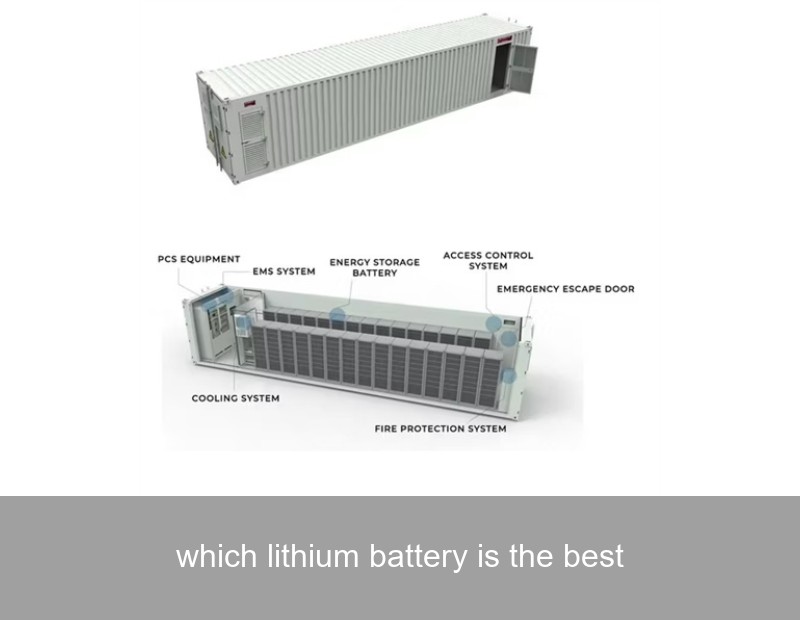
Professional monitoring and control systems are vital for large-scale storage. (Image: Unsplash)
Real-World Performance: A German Case Study
Let's look at real data. A medium-sized bakery in Bavaria, Germany, faced rising electricity costs and sought energy independence. Their primary goal was to maximize the use of their 100 kWp rooftop solar array to power daytime operations and charge a battery for evening use and backup.
- Challenge: High afternoon energy draw, need for reliable overnight backup for refrigeration.
- Solution: A 120 kWh Highjoule HPS-C commercial storage system with LFP batteries.
- Results (12-month period):
- Grid electricity consumption reduced by 82%.
- Solar self-consumption rate increased from 35% to over 90%.
- The system provided uninterrupted backup during two grid outages, preventing spoilage.
- Projected payback period: 6.5 years, based on current energy prices.
This case highlights that the "best" battery was the one that matched the client's long-term economic and resilience goals. The LFP chemistry's cycle life ensures the system will deliver savings well beyond the payback period. For more on the growth of commercial storage, see this report from the International Energy Agency.
The Highjoule Solution: Intelligent Systems, Not Just Cells
At Highjoule, we believe the best battery is part of the best system. Our products are designed for the specific demands of the European and North American markets, adhering to the highest safety and certification standards (like UL 9540 in the US and CE in Europe).
For residential clients, our HPS Home system offers scalable capacity and a user-friendly app for monitoring and control. For commercial and industrial (C&I) applications, our HPS Grid solutions are modular, allowing for multi-megawatt installations that can perform peak shaving, demand charge reduction, and provide microgrid capabilities. Our systems are future-proof, with software that can be updated to adapt to new energy tariffs and grid requirements.
The core of our offering is the Highjoule Energy Operating System (EOS). This software layer intelligently decides when to charge, when to discharge, and when to hold energy based on weather forecasts, usage patterns, and electricity rates. It turns a simple storage unit into an automated energy asset. You can explore independent technical reviews of battery technologies at NREL's energy storage page.
So, Which Lithium Battery *Is* The Best?
The verdict? For nearly all stationary energy storage applications—from homes to factories—Lithium Iron Phosphate (LFP) emerges as the leading choice today. Its superior safety, exceptional lifespan, and decreasing cost make it the optimal balance of performance, value, and peace of mind for the long haul.
However, the final answer is: The best lithium battery is the one at the heart of a well-engineered, intelligently managed system from a provider you can trust for decades. It's about total cost of ownership, not just the sticker price.

A complete home energy system with solar and storage. (Image: Unsplash)
Making Your Choice: Key Questions to Ask
Before you decide, ask your provider these crucial questions:
- What is the detailed warranty, including guaranteed end-of-term capacity?
- What safety certifications does the complete system (battery, BMS, inverter) hold?
- Can you provide a performance simulation based on my historical energy data?
- How does the system's software optimize for my specific financial and resilience goals?
- What is the company's track record for system longevity and software support?
Ready to move from wondering "which lithium battery is the best" to powering your life or business with the optimal energy solution? What's the first energy goal you'd want a smart storage system to tackle for you?
 Inquiry
 Online Chat