


Understanding OSDA 550W Solar Panel Specs for Maximum Energy Harvest
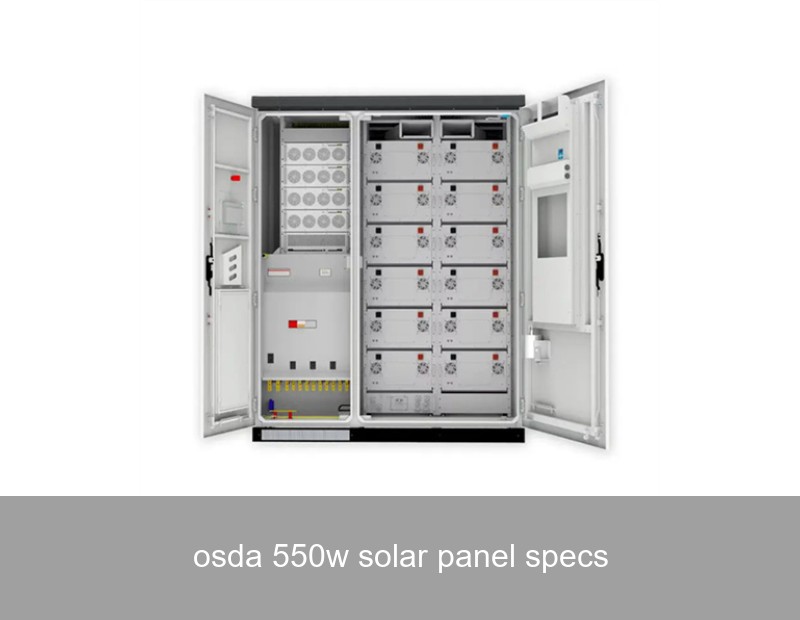
So, you're researching high-power solar panels and keep coming across the OSDA 550W solar panel specs. It's a compelling number—550 watts from a single panel promises to reduce the number of panels you need and potentially lower installation costs. But what's behind the spec sheet? As a product technology expert at Highjoule, I spend my days not just looking at these numbers, but understanding how they translate into real-world, reliable power for homes, businesses, and communities. Let's peel back the layers of the typical 550W panel specification and explore what these figures truly mean for your renewable energy investment, especially when paired with intelligent storage.
What is the OSDA 550W Solar Panel?
The term "OSDA 550W" often refers to a category of high-efficiency, large-format photovoltaic modules typically built with advanced cell technology, like PERC (Passivated Emitter and Rear Cell), N-type TOPCon, or even heterojunction (HJT) cells. These panels are engineered to deliver exceptional power output—around 550 watts under Standard Test Conditions (STC). Their larger size and higher cell density are key to achieving this impressive wattage. For a system integrator like Highjoule, such panels are a cornerstone for designing high-yield, space-efficient solar arrays for our commercial and industrial clients.
Key Specifications Deep Dive
Let's move beyond the headline 550W and examine the critical parameters that define performance and value.
Power & Efficiency: The Core of Performance
The nominal power rating (Pmax) of 550W is measured under ideal lab conditions (STC: 1000W/m² irradiance, 25°C cell temperature). More important is the module efficiency, which for a 550W panel typically ranges between 21.3% and 22.8%. This efficiency tells you how well the panel converts sunlight into electricity. A higher efficiency means you generate more power from the same rooftop area.
- Power Tolerance: Look for a positive tolerance (e.g., 0 to +5%). This means your panel can actually output more than 550W, not less.
- Cell Technology: Most 550W panels use monocrystalline silicon. N-type TOPCon cells are increasingly common, offering higher efficiency and better temperature performance than traditional P-type PERC.

Image Source: Unsplash - Close-up of modern solar cells.
Durability & Reliability: Built for the Long Haul
Your solar array is a 25+ year investment. The mechanical and environmental specs guarantee its longevity.
- Mechanical Load: High-quality 550W panels can withstand significant snow loads (e.g., 5400 Pa) and wind loads (e.g., 2400 Pa). This is non-negotiable for installations in Scandinavia or mountainous regions.
- Degradation & Warranty: A first-year degradation of ≤2% and an annual linear degradation of ≤0.45% thereafter is standard for premium panels. Look for a product warranty of 12-15 years and a performance warranty guaranteeing at least 85-92% output after 25 years.
Temperature & Low-Light Performance
Panels don't operate in a climate-controlled lab. Two coefficients are crucial:
| Specification | Typical Value for 550W Panel | What It Means for You |
|---|---|---|
| Temperature Coefficient (Pmax) | -0.29% / °C to -0.34% / °C | For every degree above 25°C, power output drops by this percentage. A lower (closer to zero) coefficient is better for hot climates like Southern Europe or the US Southwest. |
| NOCT (Nominal Operating Cell Temperature) | ~42°C ± 2°C | Estimates the panel's real-world operating temperature. A lower NOCT often indicates better heat dissipation and higher actual yield. |
Furthermore, excellent low-light performance ensures energy generation starts earlier in the morning and continues later in the evening, smoothing out your daily production curve.
Why These Specs Matter for Your Energy Goals
Understanding OSDA 550W solar panel specs is about optimizing your total system. Higher wattage and efficiency mean you need fewer panels and less balance-of-system hardware (racking, cables) to meet your energy target. This translates directly into lower installation costs and a better use of available space. For a commercial warehouse with limited roof area, these high-density panels can be the difference between meeting 40% or 70% of their daytime load through solar.
Real-World Case Study: A German Dairy Farm
Let's look at a concrete example. A dairy farm in Bavaria, Germany, partnered with Highjoule to achieve energy independence. Their goal was to cover their substantial refrigeration and milking parlor energy loads.
- Challenge: High, consistent energy demand with limited roof space on traditional barn structures.
- Solution: A 145 kWp array using 264 units of 550W N-type TOPCon panels. Their superior temperature coefficient was key for consistent summer output.
- Integration: The solar array was connected to a Highjoule HPS 100 commercial battery storage system (100 kWh capacity).
- Result: The system now generates over 155,000 kWh annually. The Highjoule battery stores excess midday production, releasing it during high-tariff evening hours and ensuring critical cooling operations continue during grid outages. The farm reduced its grid electricity purchases by 78% in the first year, with a calculated payback period of under 7 years. This case shows how the right panel specs, when paired with intelligent storage, create a resilient and economical energy solution. You can explore more about Germany's solar expansion on the Fraunhofer ISE website.
Integrating with a Highjoule Energy Storage System
This is where the magic happens. High-power panels like the 550W class produce a lot of energy, often more than you can use instantly. Without storage, this surplus is fed back to the grid, often at a low feed-in tariff. A Highjoule battery energy storage system (BESS) captures that surplus.
Our Highjoule HPS Series for residential and HCS Series for commercial applications are designed with such high-density solar in mind. Their advanced inverters and battery management systems are optimized to handle the high DC input from strings of 550W panels efficiently and safely. The system's software intelligently decides when to store solar energy, when to use it, and when to sell it back based on your consumption patterns and utility rates. This maximizes self-consumption, protects you from outages, and turns your solar array into a true 24/7 power asset. For independent data on storage value, the U.S. Department of Energy's SETO provides valuable resources.

Image Source: Unsplash - Home with solar and battery storage.
Making the Right Choice for Your Project
Choosing the right solar panel is more than picking the highest wattage. It's about matching the OSDA 550W solar panel specs—temperature coefficients, durability, and warranty—to your local climate, physical site, and long-term financial model. Then, it's about seamlessly integrating that generation with a smart storage system to capture every kilowatt-hour of value.
At Highjoule, we don't just supply components; we provide integrated, intelligent power solutions. Our expertise lies in designing systems where high-performance solar, like 550W panels, and our cutting-edge storage work in perfect harmony. What specific energy challenge—be it rising costs, grid instability, or sustainability targets—could a perfectly tuned solar-plus-storage system solve for you?
 Inquiry
 Online Chat