


Navigating the World of Wholesale Solar Panels from China: A Strategic Guide for 2024
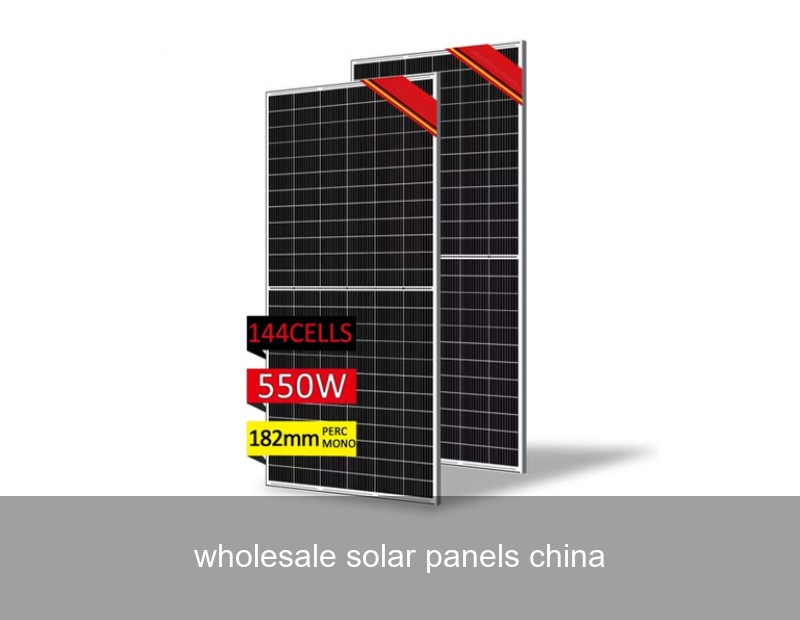
For businesses and project developers in Europe and the US, sourcing wholesale solar panels from China represents a significant opportunity to reduce capital expenditure and accelerate the energy transition. However, the landscape is complex, blending impressive economies of scale with critical considerations around quality, compliance, and total project value. As a global leader in advanced energy storage, Highjoule has witnessed firsthand how the right PV modules, paired with intelligent storage, form the bedrock of a resilient and profitable energy asset. Let's unpack the realities of this market.
Table of Contents
- The Allure: Why China Dominates Global PV Manufacturing
- Looking Beyond Price: The Critical Factors in Wholesale Procurement
- From Warehouse to Grid: A Real-World Case Study
- The Integration Key: Why Your Panels Need a Smart Storage Partner
- Highjoule's Role: Beyond Panels to Complete Power Solutions
- Future-Proofing Your Investment: Technology and Policy Trends

Image Source: Unsplash - Representative image of a large-scale solar installation.
The Allure: Why China Dominates Global PV Manufacturing
The numbers are staggering. As of 2023, China's share of global manufacturing capacity for key solar components exceeded 80%. This dominance isn't accidental; it's the result of over a decade of strategic policy, massive investment in R&D, and the development of a complete, vertically integrated supply chain. For a procurement manager sourcing wholesale solar panels from China, this translates to:
- Unmatched Scale: Ability to source large volumes consistently for utility-scale or multi-site commercial projects.
- Continuous Technological Evolution: Rapid adoption of new technologies like TOPCon and HJT cells, offering higher efficiencies directly from production lines.
- Cost Competitiveness: Significant economies of scale that make Chinese modules highly price-competitive on a $/Watt basis.
However, this attractive landscape requires a discerning eye. The market is not monolithic, with quality and service varying dramatically between tier-1 brands and a long tail of smaller manufacturers.
Looking Beyond Price: The Critical Factors in Wholesale Procurement
Focusing solely on the sticker price of a panel can be a costly mistake. A holistic evaluation framework is essential for long-term project success. Here are the key pillars:
| Factor | Key Questions to Ask | Why It Matters |
|---|---|---|
| Quality & Reliability | Is the manufacturer IEC/UL certified? What are their bankability ratings? What is the product warranty (e.g., 12-15 years) and linear performance guarantee (e.g., >85% after 25 years)? | Directly impacts energy yield, project financeability, and long-term ROI. Poor-quality modules degrade faster, eroding profits. |
| Compliance & Documentation | Do the panels have full EU CE/UKCA marking and IEC 61215/61730 certification? Are they compliant with U.S. anti-dumping/CVD regulations? Is traceability documentation robust? | Non-compliance can halt shipments at customs, incur fines, or disqualify projects from incentives. Full documentation is non-negotiable. |
| Logistics & Total Delivered Cost | What are the shipping, insurance, and import duty costs? What are the lead times and supply chain risks? | The "ex-works" price is just the beginning. Shipping volatility and tariffs can drastically alter the final cost. |
| Technical Compatibility | Are the panel's voltage, current, and temperature coefficients compatible with your chosen inverters and, crucially, with advanced energy storage systems? | Mismatched equipment leads to suboptimal system performance and can limit future storage expansion. |
From Warehouse to Grid: A Real-World Case Study
Let's ground this in reality. Consider a 500 kW commercial rooftop project in Northern Germany. The developer sourced tier-1 bifacial panels from a reputable Chinese manufacturer at a highly competitive wholesale price. However, they initially paired them with a basic inverter and no storage.
The Data-Driven Insight: Analysis showed the system was exporting over 60% of its midday generation to the grid at low rates, while the facility was buying expensive power in the evening. The solution wasn't just in the panels.
The Integrated Solution: The developer retrofitted a Highjoule HI-Stack Commercial Battery System. Our AI-driven energy management system (EMS) now optimizes the flow: storing excess solar generation and dispatching it during peak price hours.
The Result: The project's self-consumption rate jumped from ~40% to over 85%. The combined PV + storage system increased the project's net present value (NPV) by 28% compared to the solar-only setup, paying back the storage addition in under 7 years thanks to optimized arbitrage and grid services. The high-quality wholesale solar panels from China provided the foundation, but the intelligent storage unlocked the full financial potential.

Image Source: Unsplash - Representative image of a commercial battery energy storage system.
The Integration Key: Why Your Panels Need a Smart Storage Partner
Solar panels generate electricity when the sun shines, but energy demand is a 24/7 curve. This fundamental mismatch is the core challenge that storage solves. This is where Highjoule's expertise becomes critical. When you procure wholesale solar panels from China, you're buying a superb energy *generation* asset. To transform it into a reliable, revenue-maximizing *power* asset, seamless integration with storage is paramount.
Highjoule's systems are designed with this integration in mind. Our hybrid inverters and battery systems communicate natively with a wide array of PV modules, ensuring maximum energy harvest is not just captured, but strategically utilized. We think beyond the DC coupling to the entire system's lifecycle value.
Highjoule's Role: Beyond Panels to Complete Power Solutions
While Highjoule is not a PV panel manufacturer, we are the essential partner that ensures your solar investment delivers its promised return. Our value proposition for projects utilizing imported panels includes:
- System Design & Integration Engineering: Our technical teams ensure the selected panels are perfectly matched with our HI-Stack (commercial/industrial) or HI-Home residential storage systems for optimal performance and safety.
- Advanced Energy Management: The true brain of the operation. Highjoule's EMS uses weather data, tariff structures, and load profiles to make real-time decisions on charging, discharging, and grid interaction, turning a simple solar system into an intelligent energy profit center.
- Grid Services Readiness: For larger commercial and microgrid projects, our systems can be configured to provide frequency regulation, peak shaving, and backup power, opening additional revenue streams that further enhance ROI.
In essence, we provide the intelligence and resilience layer that transforms cost-effective solar hardware into a sophisticated, grid-interactive energy asset.
Future-Proofing Your Investment: Technology and Policy Trends
The market is dynamic. Two major trends will impact decisions around sourcing wholesale solar panels from China:
- Technology Shift to N-type TOPCon: The industry is rapidly moving from PERC to more efficient N-type cells like TOPCon. When procuring, verify the cell technology. TOPCon panels offer higher efficiency and better temperature coefficients, meaning more energy yield per square meter—a crucial factor when space or interconnection limits are constrained. Highjoule's storage systems are fully compatible with these high-efficiency modules.
- Policy & Tariff Landscape: Policies like the U.S. Inflation Reduction Act (IRA) and the EU's Net-Zero Industry Act are creating incentives for localized manufacturing. While this evolves, Chinese modules remain highly competitive. It is vital to work with partners who understand the latest customs and compliance requirements. You can track official EU policy updates via the European Commission press corner.
Furthermore, the rise of digital product passports in the EU will increase traceability demands. Sourcing from manufacturers with transparent, auditable supply chains will become even more critical.
Final Considerations Before You Procure
Before finalizing a purchase order for wholesale solar panels from China, ask yourself and your supplier: Does this procurement strategy align with the total system performance and financial model for the next 25+ years? Have I accounted for the cost and capability of the necessary storage and intelligence to make this solar energy truly valuable for my specific application?
The most successful projects we see are those where solar procurement and storage integration are planned concurrently, not sequentially. This integrated approach ensures technical harmony and maximizes financial returns.
What specific challenge in your next project's financial model—whether it's peak demand charges, low solar export tariffs, or the need for backup power—could be solved by viewing your solar panel procurement as the first step in building a comprehensive, intelligent energy system?
 Inquiry
 Online Chat