


Is a 10kW Wind Turbine for Home the Right Choice for Your Energy Independence?
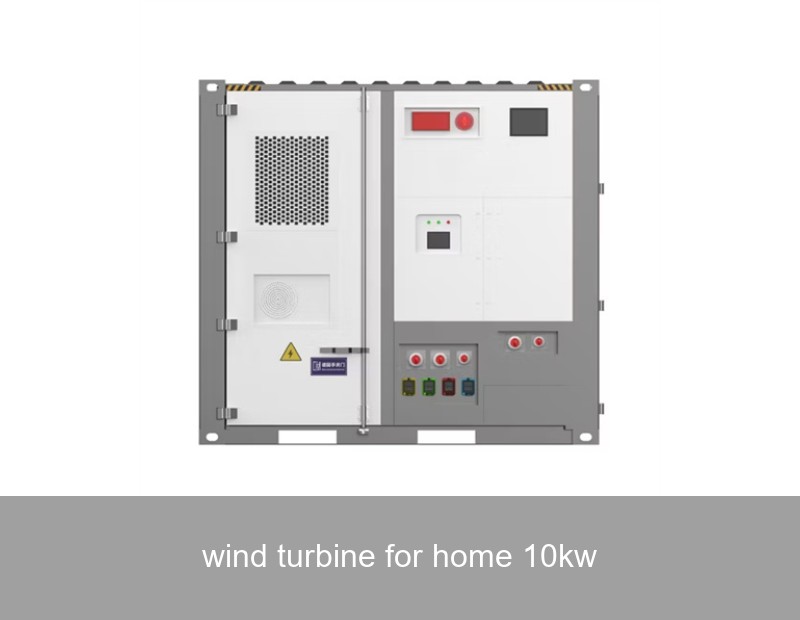
Imagine this: your electricity bill arrives, and instead of a charge, it's a credit. The wind blowing across your property isn't just fresh air—it's powering your home, your electric vehicle, and your future. For homeowners in windy regions of Europe and the US, this isn't a distant dream. Small-scale wind energy, particularly with a robust 10kW wind turbine for home use, is becoming a tangible piece of the residential energy puzzle. But is it the right fit for everyone? Let's cut through the noise and explore the realities, the data, and how pairing it with smart storage transforms potential into reliable, 24/7 clean power.
Table of Contents
What Exactly is a 10kW Wind Turbine for Home Use?
A 10kW wind turbine is a significant piece of equipment designed for substantial energy production. To put it in perspective, a 10kW rating refers to its maximum output under ideal wind conditions. In reality, over a year, it might average 20-40% of that capacity, depending on your site's wind resource. This could translate to 14,000 to 30,000 kWh of electricity annually—enough to cover the needs of a large, energy-efficient home, and potentially an EV, with surplus left over.
These systems typically feature a tower raising the rotor 25-40 meters (80-130 feet) to capture stronger, less turbulent winds, and a blade span of 6-8 meters. They are a serious investment in energy infrastructure, not a backyard gadget.
Key Components You'll Need
- The Turbine & Tower: The visible structure that converts kinetic wind energy into mechanical power.
- The Controller & Inverter: The brain and converter, turning variable generator output into usable grid-compatible AC electricity.
- The Foundation & Installation: Major civil works to secure the tower safely and permanently.
- The Critical Fourth Component: The Battery Energy Storage System (BESS). This is what we at Highjoule specialize in, and it's what makes a wind investment truly intelligent.
The Reality Check: Wind, Space, and Economics
The allure of wind power is strong, but success hinges on three non-negotiable factors.
1. A Consistently Windy Site
This is the first and most critical filter. An average wind speed of at least 5 meters per second (11 mph) is considered the baseline for viability. However, for a 10kW system to be economically sound, speeds of 6 m/s (13 mph) or higher are preferable. You can't change your location's wind, so a professional site assessment using historical data and an anemometer is essential. The Global Wind Atlas is a useful free tool for an initial check, but local topography (hills, trees, buildings) can create microclimates.
2. Ample Space and Permitting
You'll need space for the tower, plus a safety setback from boundaries. Local zoning laws, height restrictions, and noise ordinances vary dramatically. In rural parts of the US Midwest or coastal European communities, regulations may be favorable. In densely populated suburbs, they often are not.
3. The Financial Equation (With Storage)
The upfront cost for a quality 10kW wind turbine system, including installation, can range from $50,000 to $80,000+. Government incentives, like the US Investment Tax Credit (ITC) or the UK's Smart Export Guarantee (SEG), can improve the payback period. Crucially, adding storage adds to the initial cost but fundamentally changes the economics by maximizing self-consumption of your wind power.
| Average Wind Speed | Estimated Annual Generation | Potential Annual Value* (Grid Offset + Export) |
|---|---|---|
| 5 m/s (11 mph) | ~14,000 kWh | $2,100 - $2,800 |
| 6 m/s (13 mph) | ~20,000 kWh | $3,000 - $4,000 |
| 7 m/s (16 mph) | ~28,000 kWh | $4,200 - $5,600 |
*Value assumes a blended rate of $0.15/kWh for offset usage and $0.05/kWh for exported surplus. Actual rates vary by region and utility.
The Missing Link: Why Battery Storage is Non-Negotiable
Here's the fundamental challenge with wind: it's intermittent and often doesn't align with your home's energy consumption patterns. The wind might blow strongest at night when demand is lowest. Without storage, you end up exporting most of your valuable, self-generated power to the grid at a low feed-in tariff, only to buy back expensive power when it's calm.
A battery energy storage system (BESS) breaks this cycle. It captures every kilowatt-hour your 10kW wind turbine produces, storing it for use exactly when you need it. This is where Highjoule's expertise becomes pivotal. Our HES Series (Home Energy System) is engineered to seamlessly integrate with renewable sources like wind turbines.

The Highjoule HES doesn't just store energy; its intelligent energy management system (EMS) constantly optimizes the flow. It decides in real-time whether to power the home, charge the battery, or export to the grid based on weather forecasts, consumption patterns, and tariff rates. This means you maximize self-consumption, protect yourself during grid outages, and build true energy resilience.
Case Study: Real-World Success in Cornwall, UK
Let's look at a concrete example. A farmstead on the windy coast of Cornwall, UK, installed a 10kW Bergey Excel turbine in 2021. Their goal was to offset high electricity costs and achieve backup power for critical loads.
- System: 10kW wind turbine + Highjoule HES-20 (20kWh lithium-iron-phosphate battery) + existing solar PV.
- Annual Wind Generation: Approximately 22,000 kWh (site average 6.5 m/s).
- Result with Storage: Their energy self-consumption rate jumped from an estimated 35% (wind only) to over 85%. The Highjoule system intelligently blended wind and solar power, ensuring the home was powered day and night by renewables. During a winter storm grid outage in 2022, the system kept lights, refrigeration, and water pumps running for 42 hours seamlessly.
- Financial Outcome: Combined with the UK's SEG, the system is on track for a payback period of under 10 years, after which they will have virtually no energy bills for the system's remaining 10-15 year lifespan.
This case underscores that a 10kW wind turbine for home isn't just about the turbine—it's about the integrated system.
Highjoule's Role: Integrating Wind into a Complete Home Energy System
Since 2005, Highjoule has been at the forefront of advanced energy storage, and we view technologies like home wind turbines as crucial generation assets in a modern microgrid. Our approach is system-first.
For homeowners considering a 10kW wind turbine, we provide:
- Pre-Installation Consultation: Our experts can help model the combined performance of your proposed wind turbine and our HES battery, giving you a realistic picture of ROI and resilience.
- Seamless Integration: The Highjoule HES is designed with multi-source input compatibility. Our inverters and controllers can manage the variable input from your wind turbine alongside solar and the grid, all through one intuitive interface.
- Intelligent Control: The Highjoule EMS is the true value-driver. It learns your habits, knows weather patterns (like when a windy front is coming), and pre-charges the battery to capture every possible watt, all while ensuring the longevity of your battery system.
- Scalability & Service: Need more storage as you add an EV or heat pump? Our systems are modular. And with a global service network, you have support for the long haul.

Making the Decision: Your Path Forward
So, is a 10kW wind turbine for your home a wise investment? The answer is a conditional "yes"—if you have the wind resource, the space, and, most importantly, if you plan it as a complete system with storage at its heart.
It's less about buying a turbine and more about investing in a personal energy resilience platform. The turbine is a powerful fuel source; the battery and intelligence (like Highjoule's) are what make that fuel usable, valuable, and reliable.
Your Next Steps
- Get the Data: Seriously investigate your local wind resource. Consult a professional for a site assessment.
- Check Regulations: Contact your local planning authority about permits and restrictions.
- Think in Systems: Start conversations with integrators who understand both wind generation and advanced storage. Ask them how they will ensure you use the power you generate.
- Run the Numbers: Model the economics with and without storage. Consider incentives from sources like the U.S. Department of Energy or the UK's Ofgem.
The journey to energy independence is a detailed one, but for the right homeowner, a 10kW wind turbine paired with robust storage isn't just a power source—it's a declaration of independence from volatile markets and a step toward a sustainable legacy. What's the first question you need answered to see if your home could harness the wind?
 Inquiry
 Online Chat