


Understanding the True Cost of a 65 kW Solar System Price
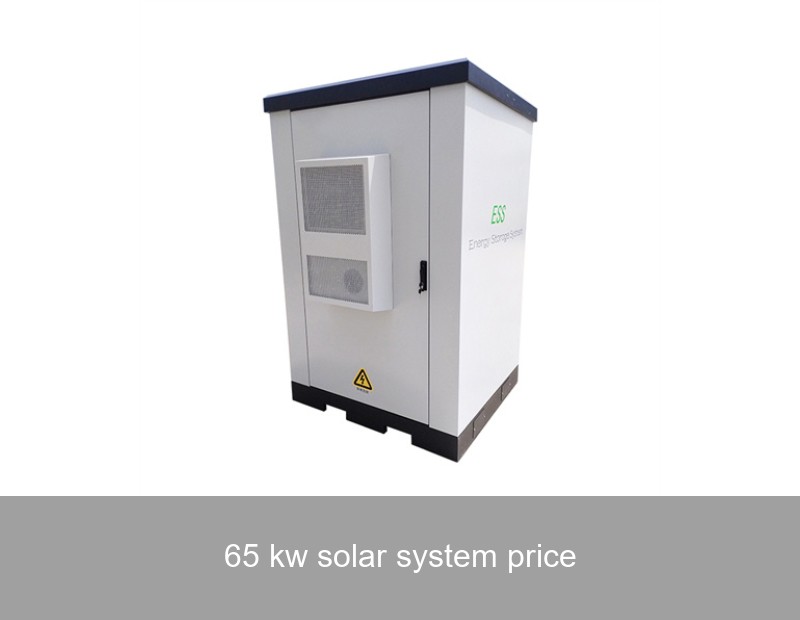
So, you're considering a significant step towards energy independence and have your eyes on a 65 kW solar system. It's a powerful choice, perfect for medium to large commercial buildings, industrial facilities, or community projects. But when you search for a "65 kW solar system price," you quickly find that the quoted figures vary wildly. Why is that? The truth is, the hardware—the panels and inverters—is just one piece of the puzzle. The real value and final cost are determined by the system's intelligence, durability, and the long-term partnership with your provider. Let's demystify the factors that turn a simple price tag into a wise investment.
The Real Breakdown of a 65 kW Solar System Price
A raw price per watt for a 65 kW system in markets like the U.S. or Germany can range from $1.20 to $2.00+ per watt for the solar installation alone, translating to a broad range of $78,000 to $130,000+. This variance isn't arbitrary. It's built from several core components:
- Solar Panels (Modules): Tier-1 monocrystalline panels with higher efficiency (21%+) command a premium over standard polycrystalline models.
- Inverters: Will you use string inverters, or more advanced power optimizers or microinverters that maximize output per panel and offer detailed monitoring?
- Mounting & Racking: Engineering for specific roof types (flat, metal, shingle) or ground mounts, considering local wind and snow loads.
- Labor & Installation: Complexity of the site, electrical upgrades needed, and regional labor rates.
- Permits, Grid Connection, & Software: Often overlooked, these "soft costs" include interconnection fees, permitting, and the platform for monitoring your system's performance.
As the National Renewable Energy Laboratory (NREL) reports, soft costs now represent a significant portion of total system prices, emphasizing that the provider's process expertise is as valuable as the hardware.
Beyond Panels: The Critical Role of Balance of System (BOS)
Think of the Balance of System as the nervous system and skeleton of your solar array. A low-quality BOS can undermine premium panels. Key questions to ask your provider:
- Is the wiring rated for longevity and safety?
- Does the monitoring software offer real-time, panel-level insights, or just basic total output?
- How is the system protected against voltage spikes or grid fluctuations?
At Highjoule, we engineer our BOS with the same rigor as our core technology. Our Smart Combiner Boxes and integrated Energy Management System (EMS) platform provide granular control and diagnostics, ensuring every kilowatt-hour your 65 kW system produces is captured, managed, and utilized efficiently.
The Storage Premium: Adding Batteries to Your 65 kW Array
Many businesses exploring a 65 kW system price are also evaluating battery storage. This transforms a solar generator into a true energy asset. Adding a battery energy storage system (BESS) can increase the total project cost by 40-80%, but the financial dynamics change profoundly.
| Scenario | Key Benefit | Impact on ROI |
|---|---|---|
| Solar Only | Reduces daytime energy bills | ROI based on offset consumption & net metering |
| Solar + Storage | Energy arbitrage, backup power, grid services | Additional revenue streams, maximizes self-consumption, protects operations |
Highjoule's HPS Series battery storage systems are designed for seamless integration with large-scale solar like a 65 kW array. Our containerized HPS-C solutions, scalable from 100 kWh to multi-MWh, allow commercial clients to time-shift energy, participate in demand response programs, and build resilience. The price of the system becomes an investment in both savings and strategic energy independence.

Image Source: Unsplash (Representative image of industrial battery storage)
Real-World Insights: A 65 kW Commercial Case Study in Bavaria
Let's move beyond theory. A mid-sized dairy processing plant in Bavaria, Germany, faced rising energy costs and sought to stabilize operations. Their goals were to cover daytime load, reduce grid dependence, and ensure continuity for refrigeration.
- System: 65 kW rooftop solar paired with a 120 kWh Highjoule HPS-M battery system.
- Challenge: High afternoon energy draw that exceeded simultaneous solar production.
- Solution: The Highjoule EMS intelligently charged the batteries with excess solar midday and discharged them during the peak afternoon load and evening operations.
- Data & Outcome: In the first year, the system achieved 92% self-consumption of solar energy (far above the German average of ~30% for solar-only systems). It reduced their peak grid demand by 75%, translating to significant grid fee savings. The combined system is projected to pay for itself in under 8 years, thanks in part to intelligent software that optimizes every flow of energy. This case shows how the right 65 kW solar and storage system price delivers value far beyond kilowatt-hours generated.
The Highjoule Approach: Intelligent Systems for Predictable Returns
Since 2005, Highjoule has moved beyond being just an equipment supplier. We are a provider of guaranteed performance. For a 65 kW client, this means:
- Precision Engineering: We model your site's specific irradiance, load profile, and tariff structure to design a system with a predictable financial return, not just a theoretical output.
- Fully Integrated Technology: Our inverters, batteries, and EMS are designed to work as one cohesive unit, minimizing compatibility issues and maximizing efficiency. This integration is a hidden value that protects your investment.
- Long-Term Partnership: Our service includes remote monitoring, proactive maintenance alerts, and software updates that continuously improve your system's performance over its 20+ year lifespan.
When you receive a 65 kW solar system price from Highjoule, it reflects this holistic, long-term value engineering. We factor in lifetime yield, operational savings, and risk mitigation—elements often absent from a basic installer's quote.

Image Source: Unsplash (Representative image of commercial solar installation)
Asking the Right Questions Beyond the Initial Quote
To truly understand the value behind a price, consider asking your potential provider these questions:
- Can you provide a detailed pro forma showing projected energy production, self-consumption, and bill savings over 10 years?
- What is the degradation rate of the panels you use, and what is the performance warranty?
- How does your monitoring system help me identify and troubleshoot issues?
- What is your process for integrating future battery storage or expanding the system?
According to the International Energy Agency (IEA), a diversified and resilient supply chain is also key to long-term project viability—an area where established global providers like Highjoule offer significant security.
Your Next Step Towards Clarity
The journey to a 65 kW solar system isn't about finding the lowest price per watt; it's about securing the highest value per dollar over decades. It's about choosing a partner whose technology and vision will remain relevant as energy markets evolve. With incentives like the U.S. Investment Tax Credit (ITC) and various European Union grants making now an advantageous time to invest, the most important question isn't just "what does it cost?"
What specific energy challenge for your business—be it peak demand charges, resilience needs, or sustainability targets—could a intelligently designed 65 kW solar and storage system solve, and how would you measure its success beyond simple payback period?
 Inquiry
 Online Chat