


Understanding the Wiring Diagram for Solar System with Inverter: Your Blueprint for Clean Energy
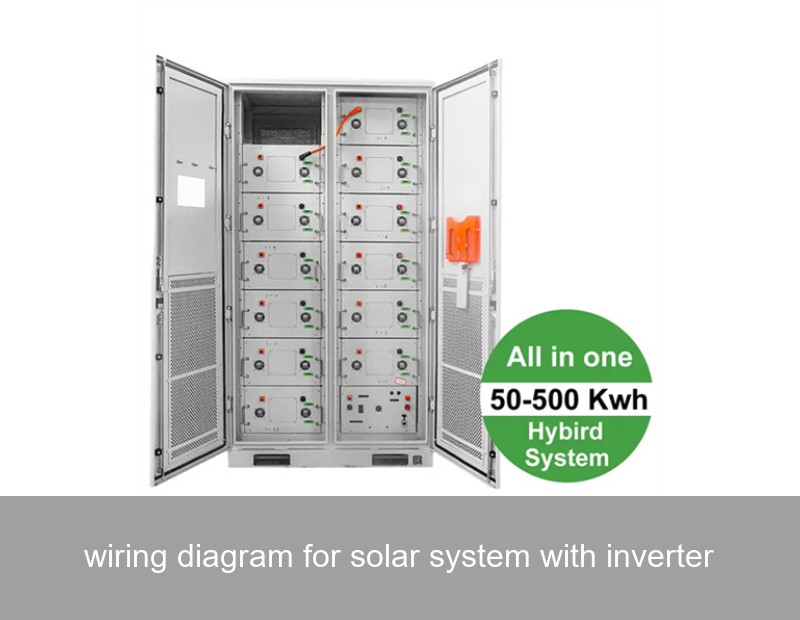
So, you've decided to harness the power of the sun. Congratulations! Whether you're a homeowner in California, a business owner in Germany, or simply energy-curious, you know that solar panels are just one part of the puzzle. The true heart of your power system, the component that makes the electricity usable, is the inverter. And the map that guides it all to work safely and efficiently? That's the wiring diagram for solar system with inverter. Think of it as the architectural blueprint for your personal power plant. Without a proper diagram, even the best components can underperform or, worse, become hazardous. This article will demystify this crucial document, explain its key parts, and show you why getting it right is fundamental to a system that delivers maximum return on investment for years to come.
Table of Contents
- The Core Phenomenon: Why Your Solar System Needs a Nervous System
- Anatomy of a Wiring Diagram: Breaking Down the Key Components
- The Critical Role of the Inverter: More Than Just Conversion
- From Blueprint to Reality: A Case Study from Bavaria
- Beyond the Basics: Modern Systems and Smart Integration
- Ensuring Safety and Compliance: Non-Negotiables in Your Diagram
The Core Phenomenon: Why Your Solar System Needs a Nervous System
Imagine a symphony orchestra without a conductor, or a city without street signs. Chaos, right? A solar power system without a clear, accurate wiring diagram for solar system with inverter faces a similar fate. The phenomenon we see time and again is that system performance gaps—lower energy yield, unexplained shutdowns, or safety concerns—often stem from planning oversights, not faulty equipment. The diagram is your conductor, ensuring every component from the PV panels to your home's outlets plays in perfect harmony.
Consider this data: The National Renewable Energy Laboratory (NREL) highlights that improper system design and installation, which includes incorrect wiring, can reduce a PV system's energy output by 10-25% over its lifetime. That's a significant financial loss. The diagram is the first and most critical line of defense against this, specifying wire sizes (gauge), circuit protection (breakers, fuses), grounding points, and the precise communication links between components.
The Data Behind the Design
Let's talk numbers. A typical residential solar system in the U.S. or Europe operates at several voltage levels. Your panels might generate 600V DC, your inverter outputs 240V AC, and your battery, if you have one, might store energy at 48V DC. The wiring diagram must meticulously plan for these different electrical domains. Using undersized wires for a high-current DC run can lead to voltage drop (energy loss as heat) and is a major fire risk. The diagram ensures every segment of wire is rated for the current it will carry, as defined by standards like the National Electrical Code (NEC) in the U.S. or IEC 60364 in Europe.
Anatomy of a Wiring Diagram: Breaking Down the Key Components
A professional wiring diagram isn't a sketch on a napkin. It's a detailed schematic using standardized symbols. Here’s what you'll typically find:
- PV Array: Shows how panels are connected in series (to increase voltage) and parallel (to increase current) strings.
- DC Disconnect: A safety switch to isolate the DC current from the panels before it reaches the inverter.
- The Inverter: The central icon. Its inputs (DC) and outputs (AC) are clearly labeled.
- AC Breaker Panel: Shows how the inverter connects to your main electrical service panel (grid-tied) or a critical loads panel (off-grid).
- Utility Meter & Grid Connection Point: For grid-tied systems, this shows the interface with the public grid.
- Battery Bank (if applicable): Details the connection to a battery energy storage system, including a charge controller or a DC-coupled path.
- Grounding System: Perhaps the most important safety feature, showing how all metal parts are bonded to earth.
- Monitoring & Communication Cables: Often overlooked, these lines for data are crucial for system management.

Image Source: Wikimedia Commons (Creative Commons). A simplified example of a system schematic.
The Critical Role of the Inverter: More Than Just Conversion
In your wiring diagram for solar system with inverter, the inverter isn't just a box; it's the command center. Modern inverters, especially the smart hybrid inverters we specialize in at Highjoule, do far more than convert DC to AC. They manage energy flow, ensure grid compliance, and optimize self-consumption. Your diagram must reflect this intelligence.
For instance, a Highjoule HI-5000 Series hybrid inverter in a diagram isn't a passive component. The wiring will show its multiple MPPT (Maximum Power Point Tracking) inputs for connecting panel strings from different roof orientations, its dedicated ports for battery communication (like for our JouleCell residential battery series), and its connection to a home energy management system. This level of detail in the diagram is what transforms a simple installation into an integrated, smart energy ecosystem. It ensures that when the sun shines, power flows optimally to your home, to your battery, or back to the grid, all managed seamlessly by the inverter's software.
From Blueprint to Reality: A Case Study from Bavaria
Let's move from theory to practice. Consider a real-world example: a medium-sized dairy farm in Bavaria, Germany. The goal was to achieve 80% energy self-sufficiency, reducing reliance on volatile grid prices and ensuring stable operation for refrigeration.
The Challenge: The farm had multiple roof spaces (barns, main house) facing east, west, and south. A simple inverter setup would have led to significant efficiency losses due to shading and different production peaks.
The Highjoule Solution: Our design team created a detailed wiring diagram centered around a Highjoule HI-10K-T three-phase commercial inverter with four independent MPPT trackers. The diagram clearly mapped:
| Roof Section | String Configuration | MPPT Input | Estimated Peak Output |
|---|---|---|---|
| South Barn | 12 panels in series x 2 strings | MPPT 1 & 2 | 6.2 kW |
| East Stable | 10 panels in series x 1 string | MPPT 3 | 2.8 kW |
| West Main House | 11 panels in series x 1 string | MPPT 4 | 3.1 kW |
The diagram also integrated a 40 kWh JouleCell battery bank and a critical loads panel for the milking and cooling equipment. Crucially, it included all German grid compliance (VDE-AR-N 4105) and grounding details.
The Result: Post-installation data from the first year showed a 22% higher energy yield compared to a standard single-inverter design. The precise wiring plan minimized on-site errors, and the system achieved 83% self-sufficiency, exceeding the farmer's goal. This case underscores that a diagram tailored to advanced inverter capabilities directly translates to performance and financial gain.
Beyond the Basics: Modern Systems and Smart Integration
The landscape is evolving. Today's wiring diagram for solar system with inverter must account for future-ready features. Are you planning to add an EV charger next year? The diagram should pre-plan for that circuit. Considering vehicle-to-home (V2H) technology? Your inverter and wiring need to be compatible.
At Highjoule, our diagrams for systems featuring our Energy Hub Manager look more like a home's central nervous system. They show not just power cables, but data lines connecting the inverter to smart meters, IoT devices, and even weather stations. This allows for AI-driven energy forecasting and automated load shifting—for example, scheduling the water heater to run exactly when solar production peaks. The diagram ensures this communication backbone is as robust as the power backbone.

Image Source: Unsplash. A technician finalizing connections based on a system wiring plan.
Ensuring Safety and Compliance: Non-Negotiables in Your Diagram
This cannot be stressed enough. A proper wiring diagram is a legal and safety document. It must comply with all local building and electrical codes. In the EU, this means adherence to the Low Voltage Directive and specific national rules. In the U.S., NEC Article 690 (Solar Photovoltaic Systems) is the bible.
Key safety elements your diagram must include:
- Rapid Shutdown: NEC requirement for firefighters. The diagram shows how initiating devices trigger the inverter to shut down DC voltage within 30 seconds.
- Proper Ground-Fault and Arc-Fault Protection: Specific breakers and detectors must be placed as per code.
- Clear Labeling: Every disconnect, combiner box, and inverter must be labeled as per the diagram for emergency personnel.
When you choose a provider like Highjoule, you're not just buying hardware. You're gaining access to a global team of experts who provide certified system schematics that are designed to meet the strict compliance standards of your region, be it California's Title 24 or the UK's G99. This turns the complex maze of regulations into a clear, actionable plan for your installer.
The Highjoule Difference: From Diagram to Delivered Performance
Our approach at Highjoule is holistic. We believe the product journey begins with perfect planning. For every commercial, industrial, or residential project, our technical support provides comprehensive wiring diagrams and system schematics as part of our solution package. These aren't generic templates; they are custom-engineered for your site's specific conditions, our inverter's advanced firmware features, and your energy goals. We ensure the wiring diagram for solar system with inverter is a living document that guarantees safety, maximizes efficiency, and unlocks the full intelligence of your investment.
Now that you see the immense importance of this blueprint, what's the first question you will ask your solar installer about their system design and wiring plan?
 Inquiry
 Online Chat