


1 MW Solar Power Generation Plant: Your Blueprint for Energy Independence and Profitability
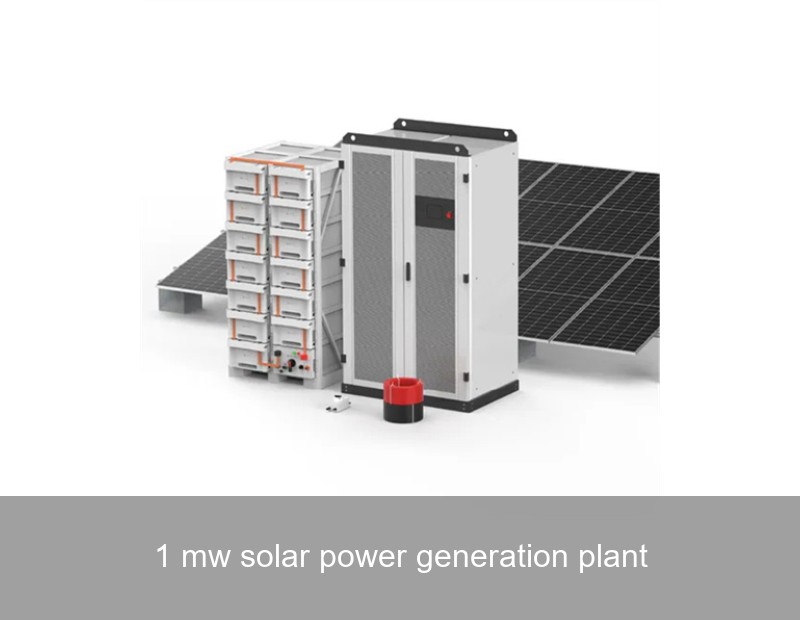
Imagine a power plant on your property, silently converting sunlight into clean, predictable electricity. Not a massive utility-scale farm, but a substantial, impactful energy asset. This is the reality of a 1 MW solar power generation plant—a sweet spot for businesses, communities, and large-scale commercial operations seeking control over energy costs and a tangible commitment to sustainability. Whether you're in Europe with its ambitious Green Deal or in the US with the tailwinds of the Inflation Reduction Act, a 1-megawatt solar installation represents a strategic investment. But generating the power is only half the story. The true modern energy masterstroke is pairing this generation with intelligent storage, transforming a solar plant into a resilient, 24/7 power resource. As a leader in advanced energy storage, Highjoule has been at the heart of this evolution since 2005, ensuring that every kilowatt-hour produced is maximized for value and reliability.
Table of Contents
- What Exactly is a 1 MW Solar Power Plant?
- The Compelling Economics: More Than Just "Green"
- The Critical Next Step: Why a 1 MW Plant Needs Energy Storage
- Real-World Impact: A Case Study from the US Market
- Highjoule's Expertise: Integrating Intelligence with Your Solar Asset
- Key Considerations for Planning Your 1 MW Solar Project
- What Does the Future Hold for Mid-Scale Solar?
What Exactly is a 1 MW Solar Power Plant?
Let's break down the scale. A 1 MW (megawatt) DC solar power generation plant is a system with a peak generating capacity of 1,000 kilowatts under ideal sunlight conditions. In practical terms, it typically requires between 4 to 6 acres (1.6 to 2.4 hectares) of land or rooftop space, utilizing approximately 2,200 to 3,000 modern high-efficiency solar panels. But the output is what truly matters. Annually, depending on your location—like sun-rich Southern Europe or California versus Northern Europe or the Midwest—a 1 MW plant can produce 1.2 to 1.8 million kilowatt-hours (kWh) of electricity. To put that in perspective, that's enough to power:
- 150-200 average American homes for a year.
- A 100,000 sq ft commercial warehouse or manufacturing facility for a significant portion of its operations.
- Offset the consumption of a small to medium-sized agricultural or water treatment facility.
This scale places it perfectly in the commercial and industrial (C&I) and community solar realm, offering serious financial and operational impact without the complexities of gigawatt-scale utility projects.
The Compelling Economics: More Than Just "Green"
The driving force behind the surge in 1 MW solar projects is robust, bankable economics. The phenomenon of falling solar panel costs is well-known, but the real story is the total system value.
Data Point: According to the National Renewable Energy Laboratory (NREL), the levelized cost of energy (LCOE) for utility-scale PV has dropped by nearly 90% since 2009. For a 1 MW plant, this translates to a levelized cost often between $0.04 to $0.08 per kWh, frequently beating retail electricity prices in many European and US markets.
The financial model is multifaceted. It includes direct savings on utility bills through self-consumption, revenue from excess power fed back to the grid (via feed-in tariffs or net metering, though policies are evolving), and significant protection against future electricity price volatility. Furthermore, incentives like the Investment Tax Credit (ITC) in the US and various EU member state subsidies can reduce the upfront capital expenditure by 30-50%. The payback period can often be between 5-8 years, with decades of nearly free electricity to follow.

Image Source: Unsplash - A commercial-scale solar installation similar to a 1 MW plant.
The Critical Next Step: Why a 1 MW Plant Needs Energy Storage
Here's the pivotal insight: a solar-only plant generates power only when the sun shines. This creates a fundamental mismatch with most energy demand curves, which often peak in the early morning and evening. This is where the game changes. Integrating a Battery Energy Storage System (BESS) transforms your 1 MW solar power generation plant from a intermittent source into a dispatchable asset.
Think of storage as the "energy bank" for your solar plant. Excess solar energy produced at midday is stored instead of being sold back to the grid at potentially low prices. That energy can then be deployed during:
- Peak Rate Periods: Power your operations with stored solar when grid electricity is most expensive, maximizing savings.
- Grid Outages: Provide critical backup power, ensuring operational continuity.
- Evening Hours: Extend the solar day, increasing self-consumption and independence.
This synergy doesn't just save money; it creates new revenue streams through grid services in some markets and future-proofs your investment against changing net metering policies.
Real-World Impact: A Case Study from the US Market
Let's move from theory to tangible results. Consider a mid-sized food processing facility in California. Facing high time-of-use electricity rates and a goal to achieve 24/7 carbon-free operations, they installed a 1.2 MW solar canopy over their parking lot.
The Initial Limitation: The solar plant covered 65% of their daytime load but left them fully exposed to high-priced grid power from 4 PM to 9 PM and offered no backup.
The Storage Solution: The facility partnered with Highjoule to integrate a 500 kW / 1,000 kWh battery storage system. Our smart energy management system was programmed to prioritize charging the batteries with surplus solar and then discharge during the peak evening window.
The Data-Driven Outcome (12-month period):
| Metric | Result |
|---|---|
| Grid Energy Consumption During Peak Hours | Reduced by 92% |
| Annual Electricity Cost Savings (Beyond Solar Alone) | Increased by $48,000 |
| Self-Consumption of Solar Generation | Rose from 70% to over 95% |
| System ROI Period | Shortened by 1.5 years |
This case exemplifies the transformative "solar-plus-storage" model. The solar plant generates the fuel, and the Highjoule BESS ensures it's used at the most valuable and critical times.
Highjoule's Expertise: Integrating Intelligence with Your Solar Asset
At Highjoule, we don't just supply batteries; we provide the intelligence that unlocks the full potential of your 1 MW solar power generation plant. For nearly two decades, we've specialized in tailoring systems for C&I and microgrid applications.
Our role in your project encompasses:
- Highjoule H-Series Commercial Battery Systems: Scalable, containerized or modular lithium-iron-phosphate (LFP) solutions designed for the rigorous duty cycle of solar smoothing, peak shaving, and backup. They are built for safety, longevity (with industry-leading cycle life), and seamless integration.
- JouleBrain™ Energy Management System (EMS): The true brain of the operation. This AI-driven platform forecasts solar production and facility load, making real-time decisions to optimize energy flow between solar, storage, the grid, and your loads. It maximizes financial returns automatically.
- End-to-End Project Support: From initial feasibility analysis and system design to commissioning and long-term monitoring, our technical experts guide you through every step, ensuring your 1 MW solar-plus-storage plant performs at its peak for decades.
Our systems are designed to be the perfect partner to your solar investment, ensuring no generated watt goes to waste.

Image Source: Unsplash - Interior of a modern battery storage system like Highjoule's H-Series.
Key Considerations for Planning Your 1 MW Solar Project
Embarking on a 1 MW project requires careful planning. Here is a logical step-by-step framework:
- Site Assessment: Analyze available space (roof, ground, carport), shading, structural integrity, and grid interconnection point.
- Energy Audit: Understand your facility's precise load profile. When do you use power? This data is critical for sizing both solar and storage optimally.
- Regulatory & Incentive Landscape: Navigate local permitting, grid connection agreements, and secure available tax credits, grants, or rebates. This varies significantly between, for example, Germany and Texas.
- Financial Modeling: Develop a clear pro forma with CapEx, OpEx, projected savings, revenue, and IRR. Include storage from the start for the most accurate picture.
- Technology Partner Selection: Choose experienced partners for both PV and storage. An integrator with deep expertise in coupling these systems, like Highjoule, is essential for seamless operation.
What Does the Future Hold for Mid-Scale Solar?
The trajectory is clear. As noted by the International Energy Agency (IEA), solar PV is set to become the dominant source of global electricity capacity growth. The future of a 1 MW solar power generation plant is not as a standalone generator, but as the core of a smart, decentralized energy node. We're moving towards ecosystems where these plants, coupled with storage, participate in virtual power plants (VPPs), provide local grid stability, and enable true energy independence for businesses and communities.
The question for forward-thinking operators and developers is no longer just "Should we build solar?" but "How do we architect our solar asset to be as resilient and financially agile as possible in an evolving energy landscape?" The integration of intelligent storage is the definitive answer.
Is your organization ready to explore how a 1 MW solar-plus-storage plant can be designed to meet your specific financial and sustainability targets?
 Inquiry
 Online Chat