


Load Shedding Solutions in South Africa: A Guide to Energy Independence
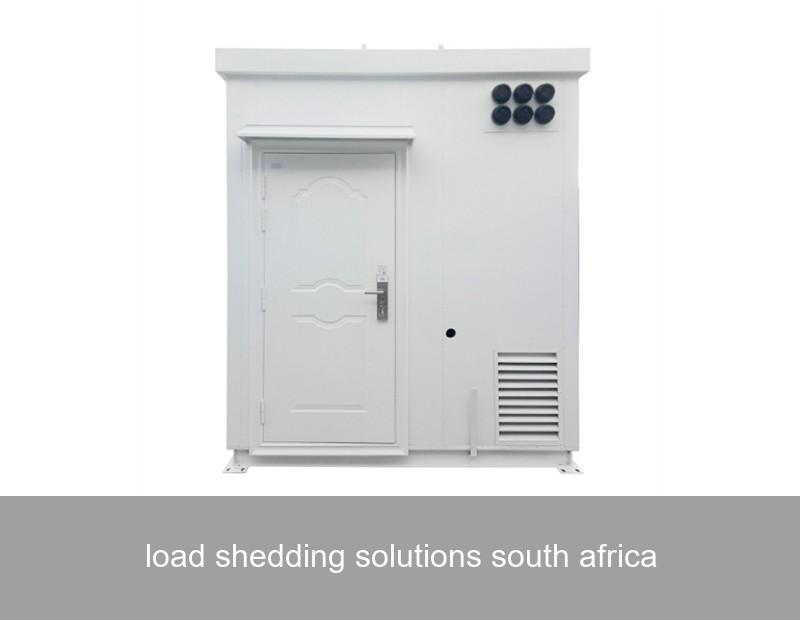
For residents and businesses in South Africa, the term "load shedding" has moved from industry jargon to a daily reality that dictates schedules, impacts productivity, and tests resilience. This managed power outage, implemented by the national utility to prevent a total grid collapse, is more than an inconvenience—it's a significant economic and social challenge. However, within this challenge lies a powerful opportunity for transformation. This article explores the landscape of load shedding solutions in South Africa, moving from understanding the problem to implementing practical, sustainable answers that not only keep the lights on but also pave the way for a more secure and cost-effective energy future.
Table of Contents
- The Phenomenon: Understanding South Africa's Energy Crisis
- The Data: Quantifying the Impact of Load Shedding
- The Solution Spectrum: From Backup to Breakaway
- Case Study: A Johannesburg Manufacturing Plant's Journey
- Highjoule's Role: Intelligent Energy Storage for South Africa
- Future-Proofing Your Energy Strategy
The Phenomenon: Understanding South Africa's Energy Crisis
So, what exactly is happening? Load shedding is a last-resort measure used by Eskom, South Africa's primary electricity supplier, to balance the country's power demand with its available supply. The core issue is an aging fleet of coal-fired power stations, plagued by reliability issues and deferred maintenance, failing to meet the nation's needs. This isn't a temporary glitch; it's a structural deficit that has evolved over decades. The result is a scheduled, stage-based system of rolling blackouts that can leave homes and businesses without power for several hours a day, often with little notice. For anyone running a operation, from a small home office to a large factory, this uncertainty is the true enemy.
The Data: Quantifying the Impact of Load Shedding
The numbers tell a stark story. According to reports, South Africa experienced over 200 days of load shedding in 2023, with stages frequently escalating to Level 6, meaning over 6,000 MW of capacity was shed from the grid. The Council for Scientific and Industrial Research (CSIR) has consistently documented the annual energy shortfall, which often runs into tens of terawatt-hours. Economically, the cost is staggering. The South African Reserve Bank has estimated that intensive load shedding can shave multiple percentage points off the country's GDP growth. For a medium-sized business, this translates directly into lost revenue, spoiled inventory, disrupted production lines, and increased operational costs from running diesel generators. It's clear: passive endurance is not a strategy.
The Real Cost to Business (Example)
| Impact Area | Consequence |
|---|---|
| Productivity | Forced downtime, missed deadlines, idle workforce. |
| Equipment | Damage from power surges when grid returns, reduced lifespan. |
| Operational Cost | High cost of diesel for generators, maintenance expenses. |
| Revenue | Direct sales loss, inability to trade, contract penalties. |
The Solution Spectrum: From Backup to Breakaway
Navigating load shedding solutions in South Africa means evaluating a spectrum of options, each with its own advantages and considerations.
- Diesel Generators: The traditional quick fix. They provide immediate power but come with high ongoing fuel costs, noise, pollution, and maintenance burdens. They are a cost center, not a solution.
- Uninterruptible Power Supplies (UPS): Excellent for protecting critical IT infrastructure and providing short-term bridge power (minutes to an hour). However, they are not designed to sustain entire operations through prolonged load shedding stages.
- Solar PV Systems: A fantastic renewable energy source that can significantly reduce grid dependency during sunny hours. The key limitation? The sun doesn't shine at night, and load shedding doesn't follow a daylight schedule.
- Battery Energy Storage Systems (BESS): This is the game-changer. BESS stores electricity (from the grid when it's cheap/stable, or from solar panels) and discharges it when you need it most. It's silent, clean, and has low operating costs.
The most robust and economically savvy approach is a hybrid system combining solar PV with a sophisticated BESS. This creates a self-sufficient microgrid that maximizes free solar energy, stores it for use during outages or peak tariff periods, and provides seamless backup.

Credit: A hybrid solar and battery storage installation, the cornerstone of modern energy independence. (Source: Unsplash)
Case Study: A Johannesburg Manufacturing Plant's Transformation
Let's look at a real-world example. A mid-sized automotive parts manufacturer in Johannesburg faced crippling losses during Stage 4+ load shedding, halting production lines and risking just-in-time delivery contracts. Running diesel generators for 6-8 hours daily was financially unsustainable and environmentally taxing.
Their Solution: In 2023, they deployed a integrated solar-plus-storage microgrid. The system included a 500 kW rooftop solar array coupled with a 1 MWh containerized battery storage system and intelligent energy management software.
- Grid Independence During Load Shedding: The plant can now operate entirely off-grid for over 8 hours, covering the vast majority of scheduled outages.
- Cost Savings: Annual energy costs reduced by 40%, with a projected return on investment (ROI) in under 5 years. Diesel generator use has been reduced by over 90%.
- Emission Reduction: Carbon footprint cut by approximately 300 tonnes of CO2 annually.
- Operational Stability: Zero production downtime due to power outages, leading to a 15% increase in overall equipment effectiveness (OEE).
This case underscores that modern load shedding solutions in South Africa are not mere expenses but strategic investments with clear financial and operational returns.
Highjoule's Role: Intelligent Energy Storage for South Africa
This is where Highjoule's expertise becomes critical. Since 2005, we have been at the forefront of advanced energy storage technology, designing solutions for the very challenges faced in markets like South Africa. We understand that a one-size-fits-all approach doesn't work. Our IntelliBESS product line is engineered for resilience and intelligence.
For commercial and industrial applications, our containerized and modular BESS solutions offer scalable power and capacity. They integrate seamlessly with existing solar installations or new PV arrays. The secret lies in our proprietary Energy Management System (EMS), which acts as the brain of the installation. It doesn't just react to outages; it proactively optimizes energy flow. It decides when to store cheap grid power, when to discharge battery power to avoid peak tariffs, and how to prioritize solar self-consumption—all while ensuring there's always enough reserve to weather the next load shedding stage.
For larger-scale needs like microgrids for campuses, mines, or industrial parks, Highjoule provides end-to-end system design, integration, and long-term performance management. Our solutions are built on lithium iron phosphate (LFP) battery chemistry, known for its safety, long cycle life, and stability—perfect for the demanding South African context.

Credit: A technician performing maintenance on a modern battery energy storage system. (Source: Unsplash)
Future-Proofing Your Energy Strategy
Looking beyond immediate load shedding relief, investing in a sophisticated BESS positions you for the future of energy. As South Africa moves towards a more diversified and liberalized energy market, capabilities like peak shaving (reducing draw from the grid during expensive peak times) and potential future grid services become valuable. Your energy asset transitions from a passive utility connection to an active, strategic component of your infrastructure.
Choosing the right partner is crucial. It requires a provider with global experience, robust technology, and a deep understanding of local grid dynamics and challenges. The system must be reliable, safe, and backed by strong warranties and local service support.
Key Considerations for Your Project
- Energy Audit: How much power do you need, and for how long, to cover critical loads?
- Solar Potential: Can your site accommodate solar panels to create a hybrid system?
- Financial Modeling: What are the total costs, savings, and ROI projections?
- Technology & Safety: Is the BESS built with safe, durable chemistry (like LFP)? Does it have intelligent monitoring?
- Partner Viability: Does the provider have a proven track record and the ability to support you for the system's lifetime?
As the world moves towards decentralized and resilient power, South African businesses and homeowners have a unique impetus to lead this charge. The question is no longer if one should invest in an energy solution, but which solution offers the most intelligent path to independence and stability. What would the elimination of load shedding uncertainty do for your productivity, your bottom line, and your peace of mind?
 Inquiry
 Online Chat