


Understanding the 10 kVA Solar Battery Price: A Smart Investment for Energy Independence
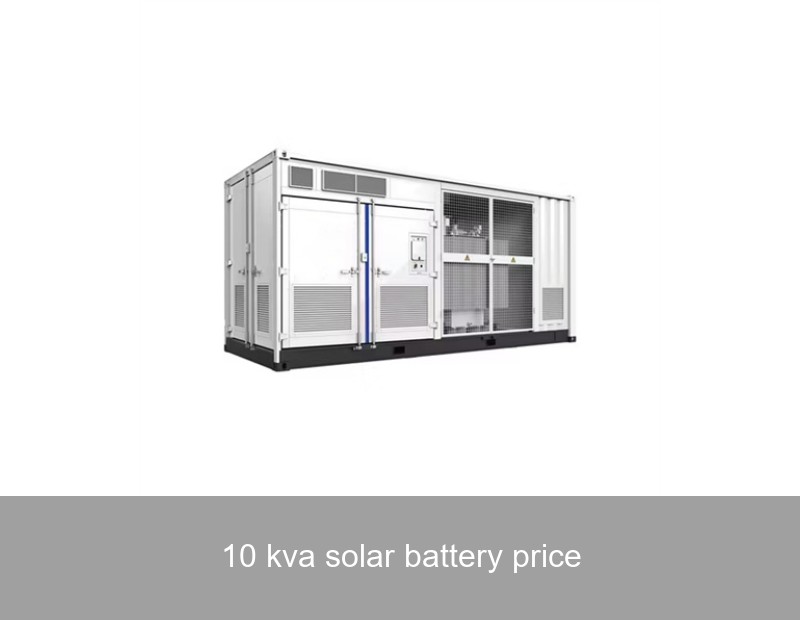
If you're exploring solar power for your home or business, you've likely encountered the term "10 kVA solar battery." But what does it really mean for your energy bills and security? More importantly, what factors influence the 10 kVA solar battery price, and how can you ensure you're making a sound investment? As energy costs continue to fluctuate and grid reliability becomes a growing concern, moving beyond solar panels to a complete storage solution is the key to true energy autonomy. Let's demystify the costs and value behind a robust 10 kVA battery system.
Table of Contents
- What is a 10 kVA Solar Battery System?
- Key Factors Influencing the 10 kVA Solar Battery Price
- A Real-World Cost Breakdown
- Case Study: Maximizing ROI in a European Home
- Looking Beyond the Price Tag: Intelligence & Durability
- The Highjoule Approach: Engineered for Value
- Is a 10 kVA System Right for You?
What is a 10 kVA Solar Battery System?
Let's clarify the terminology first. "kVA" (kilovolt-ampere) is a unit of apparent power, often used for inverter capacity. A 10 kVA system typically features a battery bank with a usable energy capacity measured in kilowatt-hours (kWh)—often in the range of 10 to 20 kWh—paired with a powerful 10 kVA hybrid inverter. This setup doesn't just store solar energy; it intelligently manages power flow from your panels, the battery, and the grid. It can power essential loads during an outage, time-shift solar energy for use at night, and, in many regions, participate in grid services to generate revenue. It's the brain and brawn of a modern energy-independent property.

Think of it this way: your solar panels are the harvest, and the 10 kVA battery system is your sophisticated pantry and kitchen, storing the bounty and deciding how best to use it to feed your home's appetite for electricity.
Key Factors Influencing the 10 kVA Solar Battery Price
The sticker price you see online is just one piece of the puzzle. A truly accurate cost assessment must consider the total system value and long-term performance. Here are the primary drivers:
- Battery Chemistry & Quality: Lithium Iron Phosphate (LFP) is now the industry standard for safety and longevity, commanding a different price point than older technologies. The quality of the battery management system (BMS) is crucial.
- Usable Energy Capacity (kWh): A "10 kVA system" with 10 kWh of storage will cost significantly less than one with 15 kWh. You must match capacity to your actual consumption patterns.
- Inverter Capabilities: Is it a basic inverter or a smart hybrid model with advanced grid-management features? Can it form an off-grid backup? This functionality adds value and cost.
- System Integration & Intelligence: Can the system learn and adapt to your usage? Does it offer sophisticated energy management software? This software is what turns hardware into savings.
- Installation Complexity: Electrical upgrades, backup load panel installation, and local permitting fees vary widely by location, especially between the US and different European countries.
- Brand, Warranty, and Service: A premium brand like Highjoule offers extensive warranties (often 10+ years on batteries) and professional support, protecting your investment over its 15-20 year lifespan.
A Real-World Cost Breakdown
To move from abstract factors to concrete numbers, let's outline a typical price range. For a fully installed, high-quality 10 kVA hybrid inverter system with a 15 kWh LFP battery in Western Europe or the United States, you can expect a broad range.
| Component / Cost Type | Estimated Cost Range (USD/EUR) | Notes |
|---|---|---|
| Battery Module (15 kWh LFP) | $4,500 - $7,000 | Core energy storage component |
| 10 kVA Hybrid Inverter | $2,000 - $3,500 | Brain of the system, manages AC/DC conversion |
| Balance of System & Hardware | $800 - $1,500 | Wiring, conduits, safety disconnects, etc. |
| Professional Installation & Permits | $2,000 - $4,000 | Highly variable by region and home electrical setup |
| Total Installed Cost | $9,300 - $16,000 | Before incentives or tax credits |
Important: These are pre-incentive estimates. In the US, the federal Investment Tax Credit (ITC) can reduce system cost by 30%. Many European countries, like Germany or Italy, also offer substantial subsidies or tax deductions for battery storage paired with solar. Always check official government resources for the latest programs.
Case Study: Maximizing ROI in Hamburg, Germany
Let's look at real data. A family in Hamburg installed a 10 kVA system with 14 kWh storage (Highjoule's H-ESeries) in early 2023. Their goal was to increase self-consumption of their existing rooftop solar and gain backup power.
- Upfront Cost: €13,800 (after local BAFA subsidy).
- Energy Bill Reduction: Their grid electricity purchases dropped by 82%, from an average of €280/month to €50/month.
- Backup Performance: The system seamlessly powered critical loads (fridge, heating controls, lights, internet) during two grid outages totaling 11 hours in the winter.
- Payback Analysis: With monthly savings of €230 and considering rising energy prices, their simple payback period is projected to be under 6 years. For a system with a 15-year warranty, this represents over 9 years of essentially free, secure power.
This case highlights that the true metric isn't just the initial 10 kVA solar battery price, but the cost of energy independence over time. The intelligence of the system to optimize self-consumption was a critical factor in achieving these savings.
Looking Beyond the Price Tag: Intelligence & Durability
When comparing quotes, it's easy to focus on the lowest number. But two systems with similar "kVA/kWh" specs can perform vastly differently. Ask these questions:
- Cycles & Degradation: A cheaper battery may be rated for 4,000 cycles to 80% capacity, while a premium one is rated for 8,000+ cycles. That's double the useful life, radically altering long-term value.
- Software & Updates: Can the system receive over-the-air updates to improve algorithms or add new features? Is there a user-friendly app that provides actionable insights? Scalability: Can you easily add more battery modules later if your needs change (e.g., buying an EV)? A modular design protects your initial investment.

The Highjoule Approach: Engineered for Value
At Highjoule, we believe the right price reflects lifelong performance and peace of mind. Our 10 kVA-scale solutions, like the H-ESeries for residential and H-CSeries for commercial applications, are built on this principle. We don't just sell hardware; we deliver an intelligent energy ecosystem.
Our systems feature industry-leading LFP battery cells with a warranty guaranteeing 70% capacity after 10 years. The integrated Highjoule EnergyOS™ platform uses AI-driven forecasting to decide the most economical moment to charge from solar or the grid, and when to discharge—maximizing your return. For our commercial clients, this can include automated participation in demand response programs, turning stored energy into a revenue stream. Our global service network ensures support is always available, a critical factor often overlooked in the initial 10 kVA solar battery price calculation.
Is a 10 kVA System Right for You? Your Next Question
The journey to energy independence starts with understanding your unique profile. A 10 kVA system is an excellent fit for an average to large home with significant evening energy use or a small business wanting to lock in energy costs and ensure operational continuity. But the perfect fit requires looking at your past year's electricity bills, your peak usage, and your future plans.
So, instead of just asking "What's the price?", perhaps the more powerful question to ask yourself is: "What is the cost of *not* having control over my power in the next decade?" With that perspective, evaluating the investment in a robust, intelligent system like Highjoule's becomes a conversation about long-term security, sustainability, and financial predictability. What specific energy goal—total blackout protection, slashing your bill, or reducing your carbon footprint—is most compelling for you to tackle first?
 Inquiry
 Online Chat