


Understanding the 20 kVA Lithium Battery Price: A Smart Investment for Energy Independence
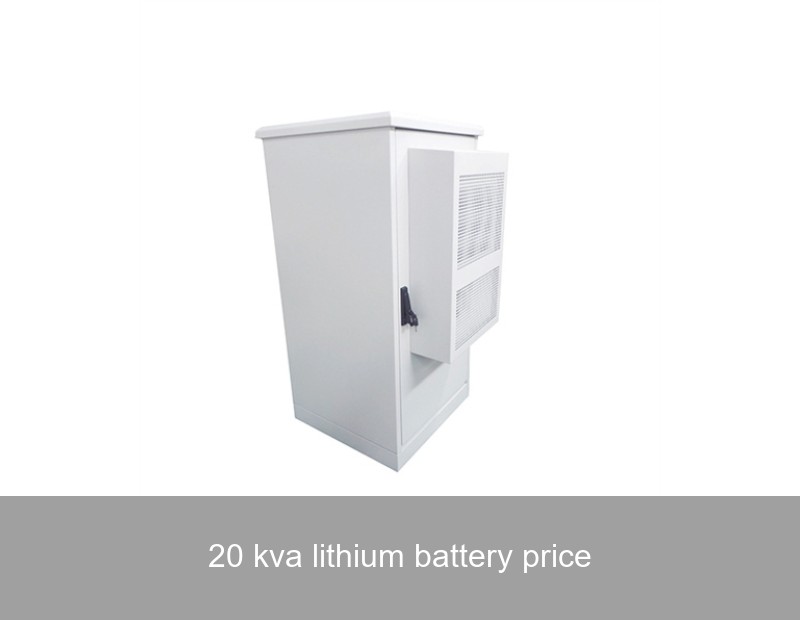
If you're researching energy storage for your business, farm, or large home, you've likely encountered the term "20 kVA lithium battery." But what exactly goes into that price tag? It's more than just a box of batteries; it's the key to unlocking energy resilience, slashing electricity bills, and contributing to a sustainable future. In this guide, we'll demystify the factors influencing the 20 kVA lithium battery price, explore its real-world value, and show you how making an informed choice today can pay dividends for decades.
Table of Contents
- What is a 20 kVA Lithium Battery System?
- Key Factors Determining the 20 kVA Lithium Battery Price
- Value Beyond the Price Tag: ROI and Resilience
- A Real-World Case Study: The German Bakery
- Choosing the Right Technology Partner: Why Highjoule Stands Out
What is a 20 kVA Lithium Battery System?
Let's break it down. "kVA" (kilovolt-ampere) refers to the power rating—essentially, how much electrical load the system can handle at once. A 20 kVA system is a robust solution, capable of powering a significant portion of a commercial facility, a large residential property with heavy loads (like air conditioning and pool pumps), or critical agricultural operations. The "lithium battery" component, typically Lithium Iron Phosphate (LiFePO4), is the heart of the system, storing energy from the grid or your solar panels for use when you need it most.
Think of it as your personal energy insurance policy. When grid prices peak, or during an outage, this system seamlessly takes over, keeping your lights on and operations running. Companies like Highjoule specialize in integrating these intelligent battery systems with solar PV and advanced energy management software, creating a holistic, smart energy ecosystem for your property.
Key Factors Determining the 20 kVA Lithium Battery Price
The quoted price for a 20 kVA system isn't arbitrary. It's a reflection of the quality, capability, and long-term value engineered into the solution. Here are the core components that shape the investment:
- Battery Chemistry & Quality: Not all lithium is created equal. High-quality, automotive-grade LiFePO4 cells (known for safety and longevity) command a premium over lower-grade alternatives. This is the single most critical factor for system life.
- Usable Energy Capacity (kWh): kVA tells you the power; kWh tells you the duration. A 20 kVA inverter paired with a 30 kWh battery will run your loads for a shorter time than if paired with a 60 kWh battery. The price scales significantly with total usable capacity.
- Inverter & Power Electronics: The inverter is the brain, converting DC battery power to AC for your building. Advanced, high-efficiency inverters with robust grid-management capabilities are a key cost component.
- System Integration & Intelligence: A basic battery is a dumb box. A smart system, like those from Highjoule, includes sophisticated energy management software that learns your usage patterns, automatically optimizes for time-of-use rates, and provides real-time monitoring via an app.
- Installation & Balance of System (BOS): This includes wiring, safety disconnects, mounting, climate control (batteries perform best in temperate environments), and professional installation labor. Proper installation is non-negotiable for safety and performance.
- Warranty & Service: A comprehensive 10+ year warranty on both performance and capacity retention is a hallmark of a premium product. This peace of mind is built into the initial price.
As a ballpark, for a fully installed, high-quality 20 kVA / 40-60 kWh LiFePO4 system in the US or European market, you can expect a price range of $25,000 to $45,000. The variance depends entirely on the factors above.
Value Beyond the Price Tag: ROI and Resilience
Focusing solely on the upfront 20 kVA lithium battery price misses the bigger picture. The true metric is Total Cost of Ownership (TCO) and Return on Investment (ROI).
| Value Driver | How it Saves/Makes Money | Long-Term Impact |
|---|---|---|
| Peak Shaving & Load Shifting | Use stored cheap/night/solar energy during expensive peak grid hours (e.g., 4-9 pm). | Can reduce demand charges and energy bills by 30-60% for commercial users. |
| Backup Power & Uptime | Immediate, silent transition during grid outages. No lost productivity or spoiled inventory. | Protects revenue and avoids losses. For a business, one avoided outage can pay for the system. |
| Solar Self-Consumption | Store excess solar energy produced midday for use in the evening, maximizing your own green power. | Increases solar utilization from ~30% to 70%+, drastically reducing payback time. |
| Grid Services & Incentives | In some markets, you can earn revenue by providing grid stability services (e.g., frequency response). | Creates a new, small income stream, further improving ROI. Programs like this are expanding in the US and EU. |
When you factor in rising electricity prices and increasing grid instability—evidenced by events like Winter Storm Elliott in 2022 or Europe's energy crisis—the investment transforms from a cost into a strategic asset.
A Real-World Case Study: The German Bakery
Let's make this concrete. A family-owned bakery in Bavaria, Germany, was facing crippling energy costs and worried about power interruptions during their critical overnight baking cycle. Their 50 kW solar array was producing excess energy they couldn't use.
The Solution: Highjoule installed a tailored 20 kVA / 50 kWh LiFePO4 storage system integrated with their existing solar and a smart energy manager.
The Data-Driven Results (after 12 months):
- Energy Bill Reduction: 68% decrease in grid electricity purchases through optimal solar self-consumption and peak shaving.
- Self-Sufficiency: Solar consumption increased from 35% to 92%.
- Payback Period: Projected to be under 7 years, thanks to high German electricity prices and a supportive policy environment.
- Resilience: The bakery has experienced three brief grid outages with zero operational impact.
This isn't just theory; it's a tangible blueprint for how a 20 kVA system pays for itself. 
Choosing the Right Technology Partner: Why Highjoule Stands Out
Since 2005, Highjoule has been at the forefront of advanced energy storage. When you invest in a Highjoule system, you're not just buying hardware; you're acquiring a decades-long partnership for energy intelligence. Our approach to the 20 kVA lithium battery price is transparent and value-driven.
Our Product Edge: Highjoule's IntelliStoreTM series for commercial & industrial applications features:
- Proprietary LiFETM Cell Technology: Engineered for 10,000+ cycles with less than 20% capacity degradation, backed by a 12-year warranty.
- Adaptive Power Management: Our AI-driven software doesn't just store energy; it actively learns and forecasts your load and weather patterns to make the most economical decisions every 15 minutes.
- Scalable & Modular Design: Start with what you need. Our 20 kVA platform can be easily expanded in both power and capacity as your business grows.
- Global Compliance & Safety: All systems meet the strictest international standards (UL, IEC, CE) and feature multi-layer protection (thermal, electrical, structural).
We provide a complete turnkey service: from initial energy audit and financial modeling to professional installation, grid permissioning support, and 24/7 remote monitoring. This holistic service ensures your system delivers the promised ROI from day one.
Making Your Decision: The Right Questions to Ask
So, how do you move from consideration to action? Start by asking the right questions, not just about the 20 kVA lithium battery price, but about your future energy landscape:
- What are my specific peak demand charges and time-of-use rates? (Check your last 12 months of utility bills)
- What are the critical loads I absolutely must keep running during an outage, and for how long?
- Does my local utility or government offer storage incentives or rebates? (e.g., The U.S. Investment Tax Credit (ITC) now applies to standalone storage).
- Does the provider offer a performance guarantee, and what does their long-term service and support look like?

The journey to energy independence begins with a conversation. What is the single biggest energy challenge your home or business will face in the next five years, and how could having control over your own power change that equation?
 Inquiry
 Online Chat