


Demystifying the 100 Ah Battery: The Heart of a Modern Battery Energy Storage System (BESS)
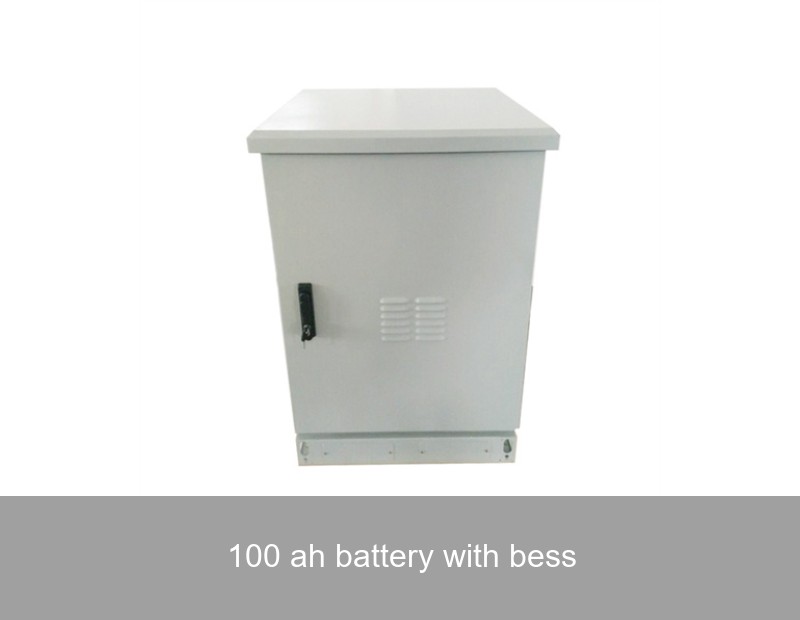
You've probably seen the term "100 Ah battery" pop up everywhere—from RV forums to solar power guides. But what does it really mean, and why is it becoming such a crucial specification for modern energy storage? At its core, a 100 Ah (Ampere-hour) battery tells you about capacity, but it's only one piece of the puzzle. The true magic happens when it's integrated into an intelligent Battery Energy Storage System (BESS). This combination is quietly revolutionizing how homes and businesses manage electricity, turning a simple battery into a dynamic power asset. Let's explore how this works and why it matters for your energy independence.
Table of Contents
- What Exactly is a 100 Ah Battery?
- From Simple Battery to Smart BESS: A Necessary Evolution
- The Key Components That Make a BESS "Smart"
- A Real-World Case: The German Bakery Project
- Choosing the Right System: Beyond the 100 Ah Label
- The Highjoule Approach: Engineering Resilience
What Exactly is a 100 Ah Battery?
In simple terms, a 100 Amp-hour (Ah) battery can, in theory, deliver 5 amps of current for 20 hours, or 20 amps for 5 hours, before it's considered fully discharged. It's a measure of energy capacity. However—and this is a big however—this rating is often given under ideal, laboratory-like conditions. Real-world performance is a different story. Factors like temperature, discharge rate, and battery chemistry dramatically affect how much usable energy you actually get. This is where understanding the battery's role within a complete system becomes critical.
Think of it like an engine: a 2.0-liter engine specification tells you something, but it doesn't tell you about the car's fuel injection, transmission, or driving assists. The 100 Ah is the engine. The Battery Energy Storage System is the high-performance vehicle built around it.
From Simple Battery to Smart BESS: A Necessary Evolution
The phenomenon is clear: energy prices are volatile, and grid stability can no longer be taken for granted. The data is compelling. According to the International Energy Agency (IEA), global electricity demand is set to surge, putting immense pressure on existing infrastructure. Meanwhile, the levelized cost of energy from renewables like solar has plummeted. The problem? Solar panels produce when the sun shines, not necessarily when you need power most at night or during peak hours.
This mismatch creates a pressing need for storage. A standalone 100 Ah battery connected to some panels might give you basic backup. But a true BESS transforms that setup. It intelligently decides when to store energy, when to power your home, when to send excess back to the grid, and when to draw from the grid to protect the battery's health. It turns passive storage into an active energy management platform.
The Key Components That Make a BESS "Smart"
So, what's inside a typical residential or commercial BESS that utilizes a 100 Ah battery bank? It's far more than just batteries in a box.
- The Battery Modules (e.g., 100 Ah Lithium Iron Phosphate): The core energy reservoir. Modern systems like those from Highjoule use stable, long-life LiFePO4 chemistry, which offers superior safety and longevity compared to older lead-acid or other lithium variants.
- The Battery Management System (BMS): The brain of the battery pack. It monitors every cell for voltage, temperature, and state of charge, ensuring balance and preventing damage from overcharge or deep discharge. This is what unlocks the full, safe cycle life of your 100 Ah capacity.
- The Hybrid Inverter/Charger: The heart of the system. This sophisticated device converts DC power from the batteries and solar panels to AC power for your home. Crucially, it also manages the flow between all sources: solar, battery, and grid.
- Energy Management System (EMS) Software: The strategic commander. This software allows you to set preferences—like maximizing self-consumption or prioritizing backup—and can often learn your usage patterns to optimize efficiency automatically.

Image: A modern lithium-ion battery rack, the core of a smart BESS. (Source: Unsplash)
Why System Integration Matters Most
You can't just buy a 100 Ah battery off the shelf and a separate inverter and expect optimal performance. They need to "speak" the same digital language. A fully integrated BESS, where all components are designed and tested to work together seamlessly, provides unmatched reliability, safety, and performance. This is the fundamental design philosophy at Highjoule, where we engineer our ResiCore Home and BizGrid Commercial systems as unified solutions, not collections of parts.
A Real-World Case: The German Bakery Project
Let's look at a concrete example from our European operations. A mid-sized artisan bakery in Bavaria, Germany, was facing two major issues: crippling peak-demand charges from the grid and the risk of spoilage during power outages. Their existing 30 kW solar array was producing excess energy midday that was being sold to the grid at a low feed-in tariff, while they were buying expensive power during their early morning and afternoon baking peaks.
Highjoule's solution was a tailored BizGrid 50 BESS, centered around a scalable battery bank with a usable capacity starting at 40 kWh (equivalent to a bank of high-quality 100 Ah batteries in a sophisticated configuration). The system was integrated with their existing solar and bakery equipment.
| Metric | Before BESS | After BESS Installation |
|---|---|---|
| Grid Peak Demand | 45 kW | 28 kW (reduced by 38%) |
| Solar Self-Consumption | 35% | Over 80% |
| Annual Energy Cost Savings | Baseline | €6,200+ |
| Backup Power for Critical Loads | None | Up to 8 hours |
The system intelligently "peak shaves" by discharging the battery during the bakery's high-demand periods and recharging from excess solar or off-peak grid power. The result? Significant cost savings, enhanced sustainability, and priceless peace of mind. The 100 Ah-rated battery cells provided the reliable capacity, but it was the smart BESS that orchestrated their economic value.
Choosing the Right System: Beyond the 100 Ah Label
When evaluating a BESS, focusing solely on the "100 Ah" spec of its battery modules is a common pitfall. Here’s what you should consider instead:
- Usable Energy (kWh): This is your "gas tank" size. How many kilowatt-hours of energy can you actually use, considering the system's depth of discharge? A 100 Ah battery at 48V nominal is about 4.8 kWh theoretical, but usable will be less.
- Continuous Power Rating (kW): How much power can it deliver at once? Can it start your well pump or air conditioner? This is often limited by the inverter, not just the battery.
- Cycles & Warranty: Look for a warranty that guarantees a certain percentage of original capacity after a set number of full cycles (e.g., 70% after 10,000 cycles). This tells you more about long-term value than any initial Ah rating.
- Grid Services & Software: Can the system participate in grid-balancing programs (where available) for additional revenue? Is the user interface intuitive?
The Highjoule Approach: Engineering Resilience
Since 2005, Highjoule has moved beyond simply supplying batteries. We design and deliver intelligent energy ecosystems. Our systems, whether for a home (ResiCore), a business (BizGrid), or a community microgrid, are built with a core principle: energy resilience should be seamless, efficient, and sustainable.
For a homeowner, this might mean our ResiCore 10 system with modular 5 kWh battery expansions (based on robust 100 Ah-class LiFePO4 cells) ensuring the lights stay on and the home efficient. For an industrial client, it could be a containerized MegGrid solution providing megawatt-scale storage for load shifting and grid support. In every case, the hardware is powered by our JouleMind AI software platform, which continuously optimizes energy flow for your economic and operational goals.
Image: A modern home integrated with solar panels and a wall-mounted battery storage unit. (Source: Unsplash)
The Future is Integrated and Adaptive
The next frontier for BESS technology is deeper integration with electric vehicles, heat pumps, and smart home ecosystems. Imagine your 100 Ah-equivalent home battery not just storing solar, but also intelligently charging your EV during the cheapest renewable-rich periods, or warming your home by utilizing time-of-use rates. The system becomes the central nervous system for your property's energy needs.
So, as you ponder taking control of your energy future, we leave you with this question: Is your current energy setup just a collection of bills and meters, or is it an intelligent asset waiting to be optimized?
 Inquiry
 Online Chat