


Finding the Best Batteries for Your Solar Panel System: A Guide to Smarter Energy Independence
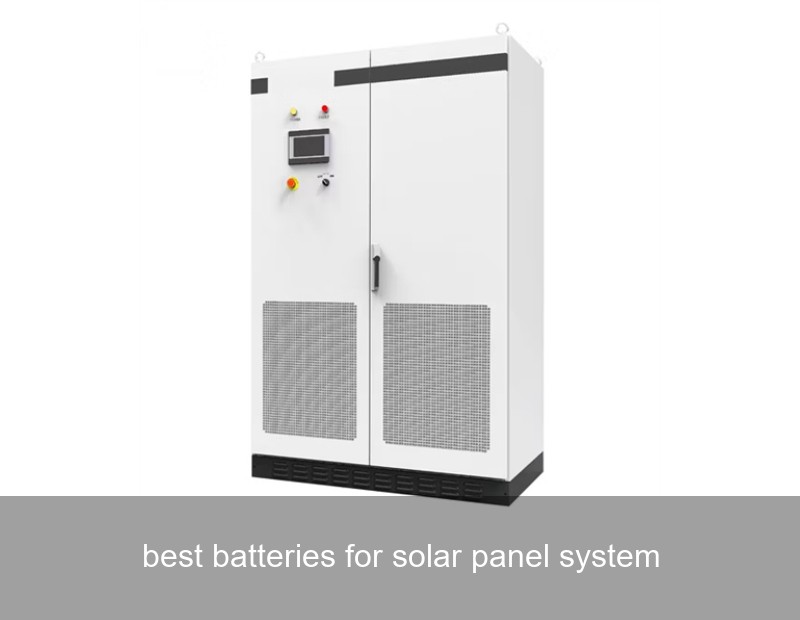
You've made the smart decision to invest in solar panels. They're quietly generating clean energy on your roof, slashing your electricity bills and your carbon footprint. But have you ever wondered what happens when the sun goes down, or on those gloomy, overcast days? This is where the true game-changer comes in: energy storage. Choosing the best batteries for your solar panel system is the crucial next step to unlocking full energy autonomy, maximizing your solar investment, and building a resilient power supply for your home or business. Let's navigate the key factors that separate a good battery from a truly great one.
Table of Contents
- The Heart of the Matter: Battery Chemistry Matters
- Beyond kWh: Key Metrics for the Best Solar Batteries
- From Theory to Reality: A Real-World Case Study
- Future-Proofing Your Investment: Software and Scalability
- The Highjoule Difference: Engineered for Performance and Reliability
- What's Your Energy Independence Goal?
The Heart of the Matter: Battery Chemistry Matters
Not all batteries are created equal. The core chemistry defines its personality—its lifespan, safety, depth of discharge, and cost. For decades, lead-acid was the default, but today, lithium-ion is the undisputed champion for solar storage, and even within this category, there are important distinctions.
- Lithium Iron Phosphate (LFP): This is the current gold standard for residential and commercial solar storage. LFP batteries, like those used in Highjoule's ResiCore and CommPower series, offer exceptional thermal and chemical stability. They are inherently safer, have a longer cycle life (often 6,000+ cycles), and can be regularly discharged to 90-100% of their capacity without significant degradation. While slightly less energy-dense than some alternatives, their safety and longevity make them the top recommendation for most stationary storage applications.
- Nickel Manganese Cobalt (NMC): Known for higher energy density, NMC chemistries are common in electric vehicles. For stationary storage, they may offer a more compact footprint but often come with a slightly shorter lifespan and stricter thermal management requirements.
The trend is clear: for a system that needs to be safe, reliable, and last for 15+ years, LFP technology is the leading choice for the best batteries for solar panel systems.

Image Source: Unsplash (Representative image of modern home battery storage)
Beyond kWh: Key Metrics for the Best Solar Batteries
It's tempting to just look at the kilowatt-hour (kWh) capacity—the "size of the fuel tank." But focusing solely on this is like buying a car based only on its gas tank size. To make a truly informed decision, you need to examine the spec sheet closely.
| Metric | What It Means | Why It's Important |
|---|---|---|
| Usable Capacity | The actual kWh you can use regularly. | Some batteries list total capacity but have a limited "depth of discharge." The best offer 100% usable capacity. |
| Round-Trip Efficiency | Percentage of energy put in that you get back out. | A 95% efficiency means for every 10 kWh you store, you get 9.5 kWh back. Higher is better, saving you more solar energy. |
| Power Rating (kW) | How much electricity the battery can deliver at once. | Dictates how many heavy appliances (AC, oven, EV charger) you can run simultaneously from the battery. |
| Cycle Life & Warranty | The number of charge/discharge cycles before significant degradation. | Look for warranties that guarantee both a period (e.g., 10 years) AND a throughput (e.g., 60 MWh). This reflects true confidence in the product. |
For instance, a homeowner might need a battery with a high power rating (e.g., 5 kW continuous) to start a well pump or central air conditioner during an outage, not just a large capacity. A business, on the other hand, might prioritize massive capacity and high cycle life to perform daily "peak shaving" to avoid utility demand charges.
From Theory to Reality: A Real-World Case Study
Let's look at a concrete example from Southern California, a market with high electricity rates and a strong solar culture. A mid-sized winery installed a 150 kW solar array but faced two problems: volatile time-of-use rates and the constant threat of grid outages during fire-risk season, which could spoil temperature-controlled fermentation tanks.
Their solution was integrating a 250 kWh Highjoule CommPower battery energy storage system (BESS). The results, monitored over one year, were compelling:
- Demand Charge Reduction: By discharging the battery during peak grid demand hours (4-9 PM), the winery slashed its monthly demand charges by an average of 68%.
- Backup Power: The system provided seamless backup power for critical cooling and control systems during two planned safety shutoffs (PSPS events), totaling 42 hours.
- Solar Self-Consumption: Increased on-site use of solar generation from ~40% to over 90%, maximizing their investment in panels.
- ROI Timeline: Based on combined savings from demand charge management and increased solar consumption, the project's calculated payback period was under 7 years, well within the system's 10+ year warranty.
This case shows that the best batteries for solar panel systems aren't just backup devices; they are intelligent financial tools that actively manage energy costs. You can read more about the importance of storage for grid resilience from the U.S. Department of Energy.
Future-Proofing Your Investment: Software and Scalability
The hardware is only half the story. The brain of a modern solar-plus-storage system is its energy management software. The best systems learn your energy habits, forecast weather, and automatically decide when to charge from solar or the grid, when to discharge, and when to hold reserves for backup.
Scalability is equally crucial. Your energy needs might grow—perhaps you'll buy an electric vehicle or add a home extension. A modular battery system allows you to start with what you need now and cost-effectively add more capacity later. Highjoule's systems are designed with this in mind, allowing seamless capacity expansion without the need to replace the core power conversion equipment.

Image Source: Unsplash (Representative image of energy monitoring app)
The Highjoule Difference: Engineered for Performance and Reliability
With nearly two decades of experience since 2005, Highjoule has engineered its storage solutions from the ground up to meet the rigorous demands of global markets in Europe and North America. Our philosophy is that the best batteries for solar panel systems must be more than just a commodity cell in a box.
Our ResiCore Home battery system exemplifies this approach. Built with UL-listed LFP chemistry, it offers 100% usable capacity and a robust warranty backed by real cycle-life testing. Its integrated inverter is grid-forming, meaning it can create a stable "microgrid" for your home during an outage, even without sunlight—a feature not all batteries offer.
For commercial and industrial clients, our CommPower and GridEdge solutions are containerized or modular BESS platforms. They come with Highjoule's proprietary EnergyOS software suite, which enables advanced strategies like peak shaving, energy arbitrage, and participation in grid services programs. We don't just sell hardware; we deliver a tailored, intelligent energy asset. For an independent look at battery storage technologies, the National Renewable Energy Laboratory (NREL) provides excellent resources.
Highjoule's Core Services
- Custom System Design & Engineering: Our experts model your load profile and solar production to size the optimal system for your financial and resilience goals.
- Turnkey Installation & Commissioning: Seamless integration with new or existing solar arrays by certified partners.
- Remote Monitoring & Proactive Support: Our cloud-based platform allows for continuous system health checks and performance optimization.
- Comprehensive Warranty & Service Plans: Long-term peace of mind with warranties that cover performance, not just defects.
What's Your Energy Independence Goal?
Is it to never worry about a blackout spoiling the food in your fridge or disrupting your business operations? Is it to finally take control of rising and unpredictable energy bills by creating your own personal power plant? Or is it to simply get the most out of the solar panels you've already invested in?
The journey to finding the best batteries for your solar panel system starts by defining that goal. The technology is here, it's proven, and it's more accessible than ever. What specific energy challenge would you like a battery system to solve for you first?
 Inquiry
 Online Chat