


100 kW Battery: How Much Does It Really Cost for Your Business?
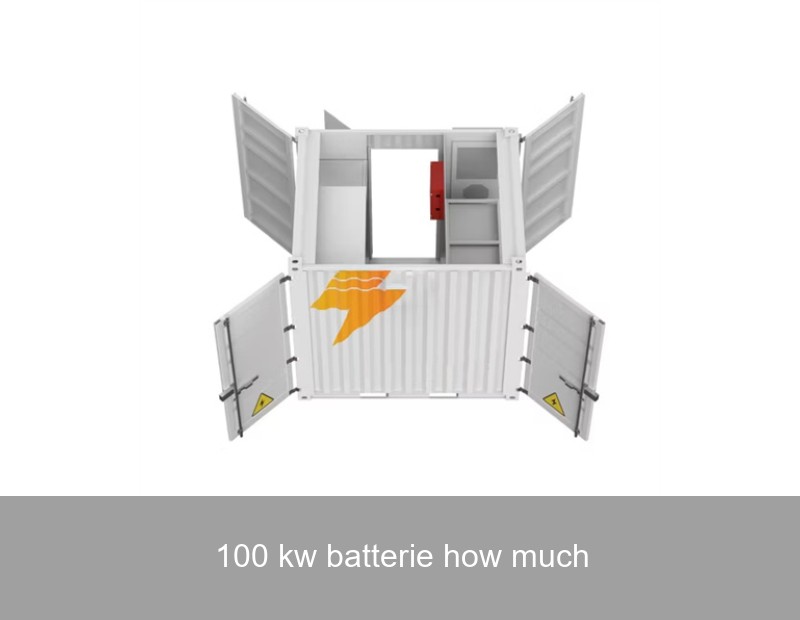
If you're a business owner, facility manager, or involved in commercial energy planning, you've likely asked the question: "A 100 kW battery, how much will it set me back?" It's a smart starting point. As electricity prices remain volatile and grid stability becomes a growing concern, investing in battery energy storage is no longer just for early adopters—it's a strategic business decision. But here's the first crucial insight: asking "how much for a 100 kW battery?" is a bit like asking "how much for a car?" The answer depends vastly on the type, features, technology, and the long-term value it delivers. In this guide, we'll demystify the costs, explore the value beyond the price tag, and show you how a system like this can transform your energy economics.
Key Factors Influencing the Cost of a 100 kW Battery
The power rating (100 kW) tells you how much electricity the battery can deliver at any one moment—think of it as the size of the pipe. But the energy capacity, measured in kilowatt-hours (kWh), is the size of the tank. A 100 kW system could have a 200 kWh tank or a 400 kWh one. This capacity is the single biggest driver of cost. You're essentially paying for the battery cells themselves.
- Battery Chemistry: Lithium Iron Phosphate (LFP) is now the dominant chemistry for commercial storage due to its safety, longevity, and lower cost per cycle compared to older NMC blends. It typically offers a longer lifespan, which improves your return on investment.
- System Integration & Intelligence: A battery is more than just cells in a box. The cost includes the Battery Management System (BMS), power conversion system (PCS or inverter), thermal management, and crucially, the energy management software (EMS). A "dumb" battery is cheap but offers little value. A smart system like Highjoule's EnerSync AI Platform optimizes every charge and discharge cycle for maximum financial return.
- Installation & Grid Interconnection: Site preparation, electrical cabling, safety systems, and permitting can vary significantly based on location (e.g., U.S. vs. EU regulations) and site complexity. This "balance of system" cost is a substantial part of the total.

Image: A commercial-scale battery energy storage system. Source: Unsplash
The Price Range: Setting Realistic Expectations
As of 2024, for a fully installed, grid-connected 100 kW / 200 kWh commercial battery storage system, businesses in Europe and the U.S. can expect a total project cost in the range of $120,000 to $250,000+. This wide range accounts for the variables above. A basic system with lower capacity and minimal intelligence will be at the lower end. A high-capacity, fully integrated smart energy solution designed for multiple revenue streams (like Highjoule's C&I solutions) represents the higher end—but with a significantly faster payback period.
Breaking Down the Investment: More Than Just Hardware
Viewing a battery as a capital expense is only half the story. The smarter perspective is to see it as a revenue-generating asset or a cost-avoidance tool. Let's break down the value pillars:
| Value Stream | How It Works | Financial Impact |
|---|---|---|
| Peak Shaving | The battery discharges during your short periods of highest electricity demand, reducing peak power draw from the grid. | Can slash "demand charges" on your utility bill by 20-40%, often paying for the system itself in a few years. |
| Energy Arbitrage | Store electricity when prices are low (e.g., at night), use it when prices are high. | Direct savings on energy consumption costs, especially potent in markets with high time-of-use rates. |
| Backup Power & Resilience | Provides seamless, instantaneous power during grid outages. | Prevents costly downtime, protects sensitive processes/data. Value is business-specific but can be enormous. |
| Grid Services (FCR, aFRR) | In some markets, you can sell the battery's rapid response capability to the grid operator to stabilize frequency. | Creates an additional revenue stream. This is more advanced and requires specific system capabilities. |
Real-World Case Study: A European Bakery's Solution
Let's move from theory to practice. A medium-sized industrial bakery in Germany faced crippling demand charges and had a goal to integrate their existing rooftop solar. Their peak load regularly hit 95 kW. They installed a Highjoule H-Stack C100 system, configured as 100 kW / 215 kWh.
- Problem: Monthly demand charges exceeded €2,500. Solar curtailment during peak production.
- Solution: The Highjoule system, governed by its AI-driven EMS, was programmed to aggressively shave peaks and store excess solar.
- Result: Within the first year:
- Demand charges reduced by 68%.
- Solar self-consumption increased by 35%.
- Overall annual energy cost savings: €18,400.
This project had a total installed cost of approximately €145,000. The simple payback period? Just under 8 years, and that's before factoring in available EU subsidy programs which could shorten it further. The bakery now enjoys protected refrigeration during brief grid dips and has a clear path to further sustainability goals. You can explore more about frequency regulation markets in Europe via the European Network of Transmission System Operators (ENTSO-E).
How Highjoule Delivers Value Beyond the Kilowatt
At Highjoule, we understand that your primary question—"100 kW battery, how much?"—is really about ROI, not just a quote. Since 2005, we've evolved from a hardware provider to a full-stack energy intelligence partner. Our systems, like the H-Stack Commercial Series, are engineered for the dual challenge of today's energy landscape: economics and resilience.
What sets our solution apart is the EnerSync AI Platform. It doesn't just react; it predicts. By analyzing your load patterns, weather forecasts, and real-time electricity market data (where applicable), it makes millisecond decisions to optimize the battery's operation for your specific financial goals. Whether it's maximizing demand charge savings in California or participating in a virtual power plant program in the UK, the intelligence layer is where the true long-term value is unlocked.
Furthermore, our design philosophy emphasizes modularity and safety. The 100 kW power cabinet can be paired with flexible capacity modules, allowing for future expansion. And with our proprietary LFP cell packaging and multi-layer BMS, we ensure the system meets the strictest safety standards for commercial installations.

Image: Advanced energy management software dashboard visualizing performance. Source: Unsplash
Making the Right Choice: Questions to Ask Your Provider
As you evaluate proposals, move beyond $/kWh. Ask these critical questions:
- What is the round-trip efficiency? (Aim for >92%). Higher efficiency means less energy lost in the storage process.
- What is the guaranteed end-of-warranty capacity? (e.g., 70% after 10 years or 6,000 cycles). This defines the system's long-term value.
- Can the EMS be easily re-programmed as utility tariffs or my business needs change? Flexibility is key.
- What is included in the total scope of work? Ensure permitting, grid interconnection application, and commissioning are covered.
For authoritative, third-party information on battery safety and standards, you can refer to resources from the National Fire Protection Association (NFPA) and their standards like NFPA 855.
From Cost to Investment: Your Next Step
The journey to answering "100 kW battery, how much?" is ultimately a journey to understanding your own energy profile. The most successful projects start with a deep analysis of 12-24 months of utility bills to pinpoint the exact savings potential. So, here is our challenge to you: What single energy cost line item on your bill—be it demand charges, time-of-use rates, or unreliable power—presents the biggest opportunity for your business to gain control and start saving?
 Inquiry
 Online Chat