


Unlocking Energy Independence: A Guide to JFY Grid Connected Battery Systems
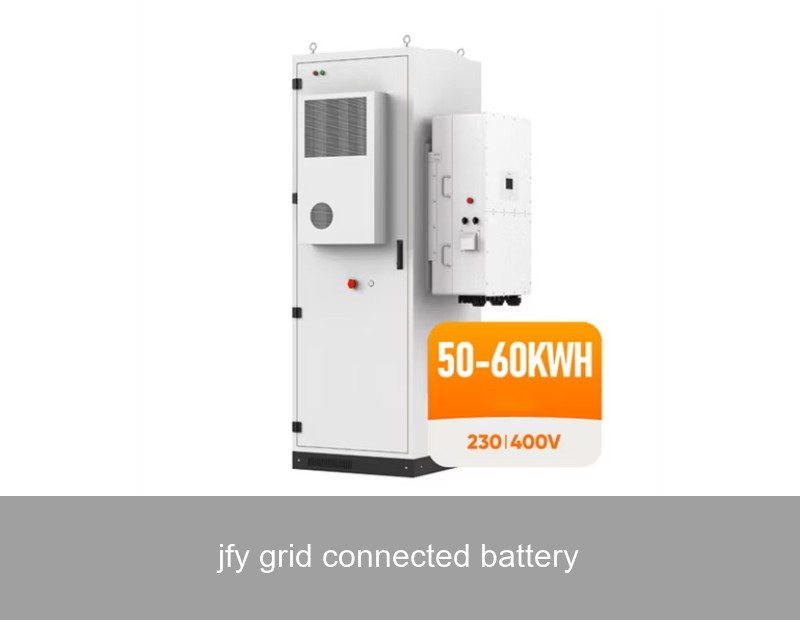
Have you ever watched your electricity meter spin and wondered if there's a smarter, more resilient way to power your home or business? You're not alone. Across Europe and the US, a quiet revolution is happening in basements, garages, and utility rooms. Homeowners and facility managers are turning to JFY grid connected battery systems to take control of their energy, reduce bills, and contribute to a more stable grid. But what exactly are these systems, and how can they transform your relationship with electricity? Let's explore the technology that's turning energy consumers into proactive energy managers.
Table of Contents
- What is a JFY Grid Connected Battery System?
- The Problem: Intermittent Renewables and Grid Strain
- Real-World Impact: A Case Study from California
- Key Benefits Beyond Backup Power
- Choosing the Right System for Your Needs
What is a JFY Grid Connected Battery System?
At its core, a JFY grid connected battery (often called a grid-tied or AC-coupled battery system) is an advanced energy storage solution that sits between your solar panels (if you have them) and the utility grid. Unlike an off-grid system, it maintains a constant connection to the main electricity network. Its primary genius lies in its intelligence: it constantly decides the optimal time to store energy, use it directly, or sell it back to the grid, based on algorithms that maximize your economic and energy efficiency. Think of it as a sophisticated energy bank account for your property.

Image: A modern home energy setup featuring solar and storage. Source: Unsplash
The Problem: Intermittent Renewables and Rising Grid Demands
The push for decarbonization has led to an incredible surge in solar and wind power. However, the sun doesn't always shine, and the wind doesn't always blow. This intermittency creates a mismatch between when renewable energy is generated and when we need to use it. According to the International Energy Agency (IEA), this variability poses a significant challenge to grid stability, especially as renewable penetration grows.
For you, the consumer, this often translates to:
- High Time-of-Use Rates: Utilities charge significantly more for electricity during peak evening hours when solar production drops.
- Grid Instability: Increased risk of brownouts or blackouts during extreme weather or peak demand periods.
- Wasted Solar Energy: Without storage, excess solar power generated at midday is fed back to the grid for minimal compensation, leaving you drawing expensive power from the grid at night.
How a Grid-Tied Battery System Works: The Highjoule Approach
This is where intelligent systems from providers like Highjoule make all the difference. Founded in 2005, Highjoule has pioneered smart, modular battery storage solutions that seamlessly integrate with existing infrastructure. Here’s a simplified breakdown of the process in a Highjoule system:
- Energy Capture: Solar panels generate DC electricity, which is converted to AC for home use by an inverter.
- Smart Decision-Making: Highjoule's proprietary Energy Management System (EMS) acts as the brain. It analyzes weather forecasts, your consumption patterns, and real-time electricity prices.
- Optimal Storage & Dispatch: The system automatically stores excess solar energy in the JFY grid connected battery instead of sending it all to the grid. Later, during expensive peak hours, it powers your home from the battery, avoiding high tariff imports.
- Grid Services Mode: In some markets, with your permission, the system can provide grid support services, earning you additional revenue by helping to balance frequency or alleviate local congestion.
Highjoule’s HPS Series for residential and commercial applications exemplifies this intelligence. Its modular design allows for scalable capacity, while its robust safety features, including advanced thermal management and multi-layer protection, ensure reliable operation for decades. For larger industrial and microgrid applications, Highjoule's containerized solutions offer utility-scale power and energy management in a plug-and-play format.
| Model | Usable Capacity | Continuous Power | Ideal For |
|---|---|---|---|
| HPS-10 | 10 kWh | 5 kW | Average family home with solar |
| HPS-20 | 20 kWh | 10 kW | Larger home or small business |
| HPS Modular | Scalable from 30 kWh | Scalable from 15 kW | Commercial properties & microgrids |
Real-World Impact: A Case Study from California, USA
Let's move from theory to practice. Consider the case of a medium-sized winery in Sonoma County, California. The region faces Public Safety Power Shutoffs (PSPS) to prevent wildfires, alongside some of the highest electricity rates in the US. The winery had existing solar but was still vulnerable to outages that could spoil entire batches of wine and faced steep demand charges.
The Solution: In 2022, they installed a Highjoule commercial JFY grid connected battery system with 120 kWh of storage and 60 kW of power output, integrated with their existing solar array.
The Data-Driven Results (after 12 months):
- Energy Bill Reduction: By shifting energy use away from peak periods (4-9 pm), they reduced their monthly electricity costs by 68%.
- Demand Charge Savings: The system "peak shaved," reducing their maximum power draw from the grid and cutting demand charges by over $1,200 per month.
- Reliability: During three separate PSPS events, totaling 42 hours, the winery's critical cooling and fermentation control systems operated uninterrupted. California Energy Commission reports highlight storage as a key resiliency tool for businesses.
- ROI: The projected payback period for the system is under 6 years, thanks to combined savings and available state incentive programs.
This case illustrates that a JFY grid connected battery is not just a backup device; it's an active financial asset and risk mitigation tool.

Image: Example of a commercial battery storage installation. Source: Unsplash
Key Benefits Beyond Backup Power
While resilience is a major driver, the advantages of a sophisticated system like Highjoule's extend much further:
- Maximized Self-Consumption: Use more of the solar energy you produce, sometimes increasing the value of your solar investment by 50% or more.
- Arbitrage: Buy and store electricity when it's cheap (e.g., at night) and use it when prices are high.
- Future-Proofing: As grids evolve towards dynamic pricing, your system is already equipped to capitalize on it.
- Reduced Carbon Footprint: By enabling higher renewable consumption and supporting grid stability, you directly contribute to decarbonization. The EPA provides tools to quantify such environmental benefits.
Choosing the Right System for Your Needs
Not all battery systems are created equal. When evaluating a JFY grid connected battery, consider these factors aligned with Highjoule's design philosophy:
1. Intelligence and Software
The hardware stores energy, but the software creates value. Ensure the system has smart, forecast-based controls that can be updated as market rules change.
2. Safety and Longevity
Look for certifications (like UL 9540), robust thermal management systems, and a long warranty (Highjoule offers up to 15 years). Battery chemistry matters; Lithium Iron Phosphate (LFP), used in many Highjoule models, is renowned for its safety and cycle life.
3. Scalability and Integration
Can you start with a smaller system and expand later? Does it integrate seamlessly with major solar inverter brands and existing home energy management systems? Highjoule's modular platforms are designed for this very purpose.
4. Service and Support
Choose a provider with a proven global track record in installation, commissioning, and long-term maintenance. Highjoule's network of certified installers across Europe and North America ensures local expertise backed by global engineering standards.
So, as you look at your next electricity bill or consider the increasing frequency of extreme weather events in your region, ask yourself: Is my current energy setup merely a cost, or could it be transformed into a resilient, intelligent, and revenue-generating asset? What would the ability to control your power, rather than just consume it, mean for your home or business tomorrow?
 Inquiry
 Online Chat