


48V 35Ah Lithium Ion Battery: The Powerhouse for Modern Energy Independence
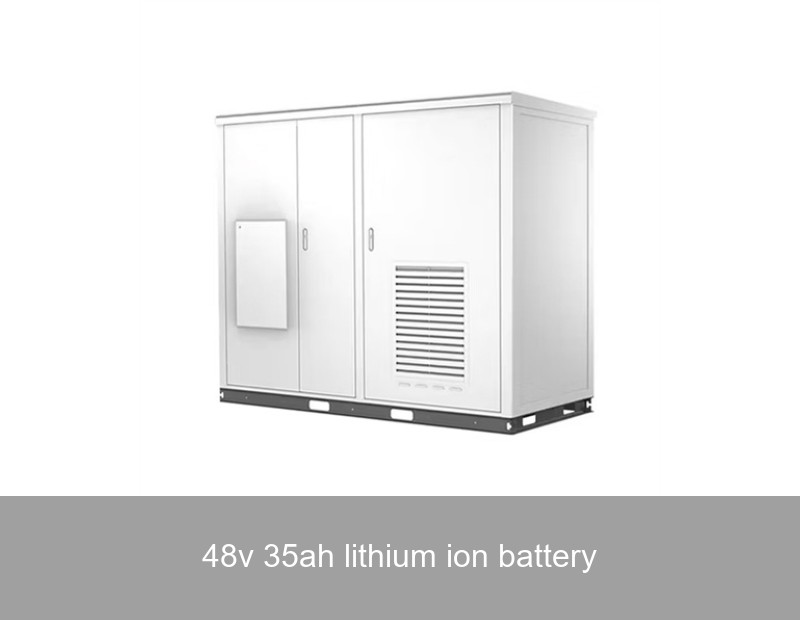
Have you ever experienced that moment of frustration when your critical backup power system fails during an outage, or your off-grid project hits a wall due to limited runtime? You're not alone. Across homes, businesses, and remote sites, the quest for reliable, long-lasting, and safe energy storage is more pressing than ever. This is where the specific engineering of a 48V 35Ah lithium ion battery comes into play, emerging as a cornerstone for efficient and scalable power solutions. But what makes this particular voltage and capacity combination so effective, and how can you leverage it to achieve true energy resilience? Let's unpack the technology that's quietly powering a more sustainable and independent energy future.
Table of Contents
- Why 48V? The Sweet Spot for System Efficiency
- Understanding the 35Ah Capacity: Runtime and Scalability
- Lithium-Ion Chemistry: The Backbone of Performance & Safety
- Real-World Application: A Case Study from Bavaria
- Choosing the Right 48V 35Ah Battery System
- Highjoule's Intelligent Energy Storage Solutions
Why 48V? The Sweet Spot for System Efficiency
Voltage isn't just a number on a spec sheet; it's the fundamental force that drives your entire energy system. For decades, 12V and 24V systems dominated. However, as power demands have grown, their limitations became clear: higher currents, thicker (and more expensive) copper wiring, and greater energy losses due to heat. The shift to a 48V lithium ion battery architecture is a direct response to these challenges.
Here’s the simple physics: Power (Watts) = Voltage (Volts) x Current (Amps). For the same power output, doubling the voltage halves the current. A 48V system dramatically reduces electrical current compared to a 12V system. This translates to:
- Lower System Costs: Reduced current means you can use thinner gauge wiring, saving significantly on material and installation costs, especially for longer cable runs.
- Higher Efficiency: With lower current, resistive losses (I²R losses) are minimized. More of the stored energy from your battery actually powers your appliances, not lost as heat in the cables.
- Compatibility with Modern Inverters: Most modern, high-efficiency inverters and hybrid solar inverters for residential and commercial use are optimized for 48V DC input, making integration seamless.
In essence, 48V has become the industry-standard backbone for serious solar-plus-storage systems, microgrids, and larger backup power applications, striking the perfect balance between safety, cost, and performance.
Understanding the 35Ah Capacity: Runtime and Scalability
While voltage is the "pressure," capacity (Ampere-hours, or Ah) is the "tank size." A 35Ah lithium ion battery at 48V stores a specific amount of energy. To understand what it can power, we calculate its energy in Watt-hours (Wh): 48V x 35Ah = 1,680 Wh or 1.68 kWh.
This 1.68 kWh is the usable energy from a single battery module. But the real beauty of systems built with modules like a 48V 35Ah lithium ion battery is scalability. You are not limited to a single, rigid unit.
| Appliance | Approximate Power (Watts) | Estimated Runtime on 1.68kWh (100% DoD) |
|---|---|---|
| LED Lighting (Whole Home) | 200W | 8.4 hours |
| Refrigerator | 150W | 11.2 hours |
| Internet Router & Laptop | 50W | 33.6 hours |
| Microwave (short use) | 1000W | ~1.7 hours |
For longer runtime or higher power demands, multiple 48V battery modules can be connected in parallel to increase the total capacity (Ah and kWh) while keeping the system voltage at a stable 48V. This modular approach allows for custom-sized systems, from a basic 1.68kWh backup to a 20kWh+ whole-home energy solution.
Lithium-Ion Chemistry: The Backbone of Performance & Safety
Not all lithium-ion is created equal. The term covers a family of chemistries, with Lithium Iron Phosphate (LiFePO4 or LFP) emerging as the clear leader for stationary energy storage. When you choose a quality 48V 35Ah lithium ion battery, you're likely getting an LFP-based system, and for good reason.
- Superior Safety: LFP chemistry is inherently more stable than other lithium variants (like NMC). It is far more resistant to thermal runaway, a critical factor for peace of mind when batteries are installed in your home or business. The U.S. Department of Energy notes its strong safety profile.
- Long Cycle Life: A high-quality LFP battery can deliver 6,000+ charge/discharge cycles while retaining 80% of its original capacity. That translates to well over 15 years of daily use, far outperforming lead-acid batteries.
- Efficiency & Depth of Discharge: LFP batteries offer round-trip efficiency often above 95% and can be regularly discharged to 90-100% of their capacity without damage, unlike lead-acid which suffers if discharged beyond 50%.

Image Source: Wikimedia Commons (Description: The olivine structure of LFP contributes to its thermal and chemical stability).
Real-World Application: A Case Study from Bavaria
Let's move from theory to practice. Consider a mid-sized, family-run dairy farm in Bavaria, Germany. Their challenges were twofold: skyrocketing energy costs and the critical need for an uninterrupted power supply for refrigeration and milking systems. A power cut would spell financial disaster.
The Solution: They installed a 15 kW solar PV array coupled with a 48V battery storage system. The storage was built using modular, rack-mounted 48V 35Ah lithium ion battery units. Four of these modules were connected in parallel, creating a total storage capacity of 48V / 140Ah, or approximately 6.7 kWh.
The Data-Driven Outcome (12-month period):
- Self-Consumption of Solar Power Increased from 30% to 85%: Excess daytime solar energy was stored and used at night, drastically reducing grid imports.
- Grid Energy Costs Reduced by 73%: The system provided nearly full power during high-tariff evening hours.
- Reliable Backup: During two grid outages (totaling 11 hours), the battery system seamlessly provided backup power to critical loads, preventing spoilage and operational halt.
- The system's modular design allows the farm to easily add more 48V 35Ah units in the future as they expand operations.
This case exemplifies the tangible benefits of a well-sized, 48V LFP battery system in a demanding commercial environment. The International Energy Agency highlights storage as key to renewable integration, a reality this Bavarian farm is living daily.
Choosing the Right 48V 35Ah Battery System
Specs on paper are one thing; real-world performance and longevity are another. When evaluating a 48V 35Ah lithium ion battery, look beyond the basic numbers:
- Integrated Battery Management System (BMS): A smart BMS is the brain of the battery. It ensures cell balancing, protects from over-charge/discharge, manages temperature, and provides communication data (SoC, SoH) to your inverter and monitoring platform.
- Modular & Stackable Design: Can you easily add more identical units in parallel to grow your capacity without complex reconfiguration?
- Warranty & Cycle Life: Look for a clear warranty that guarantees both a duration (e.g., 10 years) and a throughput (e.g., 10,000 cycles or a retained capacity percentage).
- Thermal Management: Passive cooling might suffice for low-power applications, but active cooling (like a quiet internal fan) ensures optimal performance and lifespan under high, sustained loads.
Highjoule's Intelligent Energy Storage Solutions
At Highjoule, we've been engineering advanced energy storage solutions since 2005, precisely to meet the demands highlighted in the case study above. Our products are designed with the principles of efficiency, safety, and scalability at their core.
Our EcoVolt Rack-M Series is a prime example of this philosophy in action. Each module in this series is a self-contained, intelligent 48V 35Ah lithium ion battery unit built with premium LiFePO4 cells. They are engineered for seamless parallel connection, allowing you to start with a single 1.68kWh module and scale up to 20+ modules for massive storage capacity. Each unit features:
- High-precision BMS with CAN/RS485 communication for compatibility with major inverter brands.
- Active balancing and integrated thermal management for consistent performance from -10°C to 50°C.
- Plug-and-play installation, dramatically reducing setup time and complexity for integrators.
For residential and commercial clients across Europe and the U.S., Highjoule provides more than just hardware. We offer complete system design support, smart energy management software for optimizing self-consumption and grid interactions, and professional installation partnerships. Our goal is to deliver a turnkey energy storage system that provides decades of reliable service.

Image Source: Unsplash (Representative image of a modern home energy system with solar and storage).
So, as you contemplate your next step towards energy independence—whether it's to cut bills, increase resilience, or integrate more renewables—ask yourself this: Is your current power solution a limiting factor, and what would it mean for your home or business to have a scalable, intelligent energy foundation that grows with your needs?
 Inquiry
 Online Chat