


Unlocking Energy Independence: The Power of a 1000 Watt Grid Tie Battery System
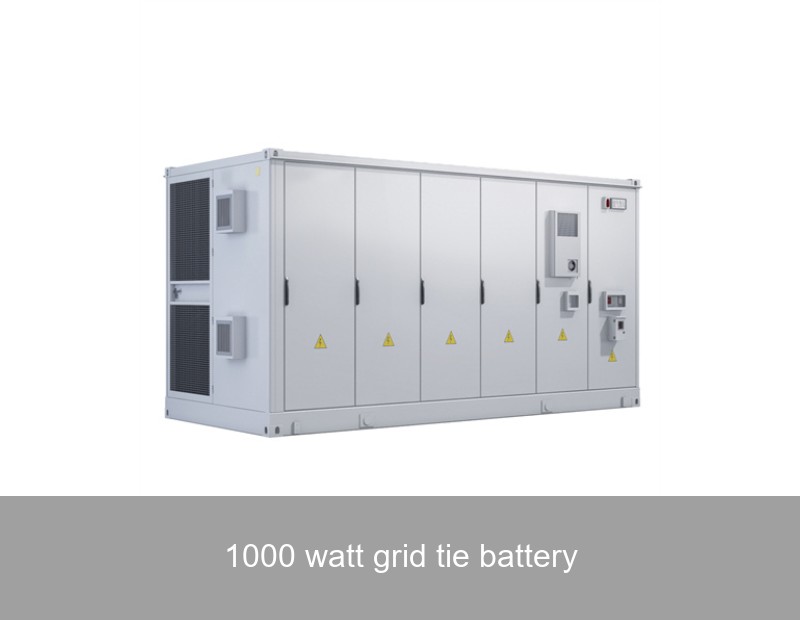
Imagine your home or business not just consuming electricity, but actively participating in the energy grid. As electricity prices fluctuate and the call for sustainability grows louder, a powerful solution is emerging for proactive energy users: the 1000 watt grid tie battery. This isn't just a backup power source; it's an intelligent energy manager for your property. In this article, we'll demystify how these systems work, explore their tangible benefits with real-world data, and show you how integrating a solution like Highjoule's can transform your relationship with energy.
Table of Contents
- The Grid-Tied Revolution: More Than Just Backup
- Why 1000 Watts? Understanding Capacity and Capability
- The Highjoule Advantage: Intelligent Energy Orchestration
- Case Study: A California Homeowner's Journey to Resilience
- Key Components of a Robust Grid-Tie Battery System
- Is a 1000 Watt Grid Tie Battery Right for You?
The Grid-Tied Revolution: More Than Just Backup
For years, home batteries were synonymous with off-grid living or emergency generators. The modern grid tie battery flips this script. It remains connected to the utility grid but operates with a new level of sophistication. Its primary job? To store excess energy—often from solar panels—and release it when it's most valuable. This could be during peak rate periods when electricity costs are high, during a brief grid outage to keep essential loads running, or at night when your solar panels aren't producing. The 1000-watt rating specifically refers to the continuous power output it can deliver, making it suitable for running a significant portion of a typical home's critical circuits simultaneously.

Think of it as having a personal energy savings account. You "deposit" cheap, clean energy and "withdraw" it to avoid buying expensive, grid-powered electricity. According to the U.S. Department of Energy, pairing storage with solar maximizes the use of your generated electricity, increasing energy independence and utility bill savings.
Why 1000 Watts? Understanding Capacity and Capability
Let's break down the specs. A 1000 watt grid tie battery system has two key metrics: power (kW) and energy (kWh).
- Power (1000W or 1kW): This is the system's "muscle." It determines what you can run at once. A 1000W output can comfortably power your refrigerator (150-400W), lighting (100-300W), WiFi, and a TV simultaneously.
- Energy (kWh): This is the system's "stamina." It's determined by the battery's capacity (e.g., 5 kWh, 10 kWh). It tells you how *long* you can run those appliances. A 5kWh battery could theoretically power a 1kW load for 5 hours.
This combination is ideal for managing daily energy shifts and providing meaningful backup. It's substantial enough to make a real dent in peak shaving (reducing use during expensive hours) but typically more compact and cost-effective than larger commercial systems.
| Appliance | Typical Power Draw (Watts) | Estimated Runtime on a 5kWh Battery |
|---|---|---|
| Refrigerator | 150-400 | 12.5 - 33 hours |
| LED Lighting (Whole Home) | 100-300 | 16 - 50 hours |
| Laptop & WiFi Router | 50-100 | 50 - 100 hours |
| Furnace Fan | 300-800 | 6 - 16 hours |
The Highjoule Advantage: Intelligent Energy Orchestration
At Highjoule, we believe a battery is only as smart as the system controlling it. Since 2005, we've evolved from a component provider to a global leader in intelligent, integrated energy storage solutions. Our EcoSphere series of residential and commercial battery systems is designed precisely for the grid-tied application we're discussing.
What sets a Highjoule system apart is its Adaptive Learning Inverter and Energy Management System (EMS). The hardware provides the reliable 1000W+ power output, but the software is the brain. It continuously learns your energy consumption patterns, integrates with local utility rate schedules (like time-of-use rates common in California or the UK), and automatically decides the most economical moment to charge or discharge. You're not just storing energy; you're optimizing its financial and operational value every minute of the day.

Case Study: A California Homeowner's Journey to Resilience
Let's look at a real example. The Johnson family in Sacramento, California, installed a 6 kW solar array in 2020. While their solar credits were helpful, they were still vulnerable to Public Safety Power Shutoffs (PSPS) and steep peak rates from 4-9 PM. In early 2023, they integrated a Highjoule EcoSphere 1.5 system (1.5kW continuous output, 10kWh capacity) with their existing solar.
- Bill Savings: By discharging during peak periods, they reduced their grid consumption during the most expensive hours by over 85%. Their average monthly electric bill dropped from ~$120 to ~$15, a 87.5% reduction.
- Resilience: During two brief grid outages (one lasting 5 hours), the system seamlessly kicked in, powering all essential loads without interruption. The family didn't even realize the grid was down until they received a notification from their utility.
- Self-Consumption: Their solar self-consumption rate—the percentage of solar energy used directly in the home—jumped from 35% to nearly 70%, making much better use of their clean energy investment.
This case echoes findings from the National Renewable Energy Laboratory (NREL), which notes that pairing PV with storage significantly increases on-site consumption and bill savings, especially under time-varying rates.
Key Components of a Robust Grid-Tie Battery System
Understanding the ecosystem is crucial. A functional 1000 watt grid tie battery setup isn't a single product; it's a symphony of components:
- The Battery Module: The core storage unit, using advanced Lithium Iron Phosphate (LiFePO4) chemistry for safety and long life (like in Highjoule's EcoSphere).
- The Hybrid Inverter: The heart of the system. It converts DC from solar/batteries to AC for your home, manages grid connection, and enables seamless backup. It must be UL 1741 SA certified (in the US) for safe grid interconnection.
- The Energy Management System (EMS): The brain. This software controls charge/discharge cycles based on your settings, utility signals, and weather forecasts.
- Critical Loads Panel (Optional but Recommended): A sub-panel that ensures your backup power is directed to essential circuits, extending battery runtime during an outage.
Is a 1000 Watt Grid Tie Battery Right for You?
This technology is compelling, but its value depends on your context. Ask yourself these questions:
- Do I have time-of-use electricity rates or demand charges?
- Is my grid reliability poor, or am I in an area prone to weather-related outages?
- Do I have (or plan to install) solar panels?
- Is my primary goal bill savings, backup power, environmental sustainability, or a combination?
For many homeowners and small business owners in Europe and the US, the answer to several of these is "yes." The initial investment is offset by long-term savings, increased property resilience, and the satisfaction of contributing to a more stable, green grid. The International Energy Agency (IEA) highlights that behind-the-meter storage is a key pillar for future energy security and decarbonization.
So, what's the first step in your energy independence journey? Could a smart, Highjoule-powered 1000 watt grid tie battery system be the key to turning your home from an energy consumer into an energy hub?
 Inquiry
 Online Chat