


EM Power Energy for Sale: A New Era of Proactive Energy Management
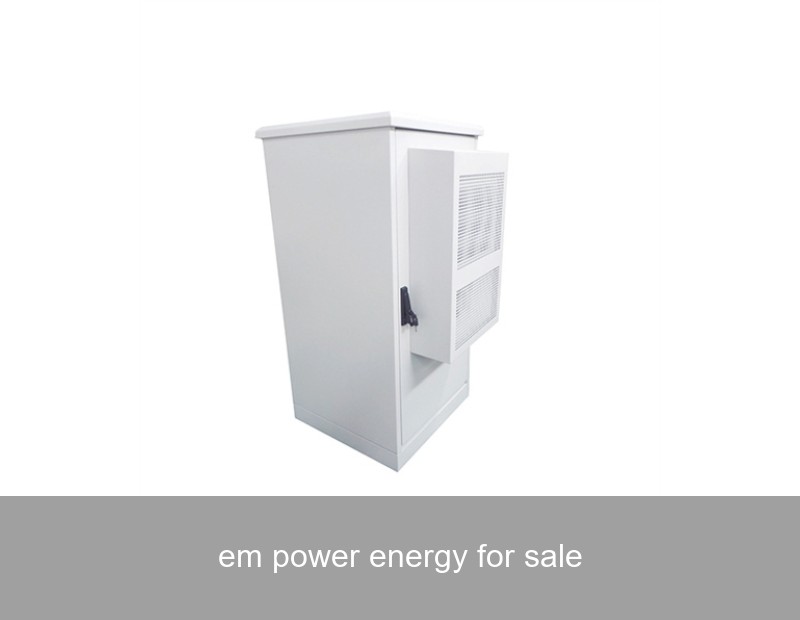
Imagine your business not just consuming electricity, but strategically selling it back to the grid during peak hours, turning a cost center into a revenue stream. This isn't a distant future concept; it's the reality of "EM power energy for sale." EM, or Energy Management, has evolved from simple conservation to a dynamic, market-participating force. For facility managers, energy directors, and homeowners across Europe and the US, the ability to treat stored energy as a tangible asset is revolutionizing financial and sustainability plans. This article explores how intelligent storage systems are enabling this shift, turning every kilowatt-hour into a potential source of resilience and income.
Table of Contents
- The Phenomenon: From Passive Consumer to Active Prosumer
- The Data: Quantifying the Value of Flexibility
- The Technology Enabler: Beyond Simple Storage
- Case Study: A German Manufacturing Plant's Success Story
- Implementing Your Strategy: Key Considerations
- The Future of Energy Transactions
The Phenomenon: From Passive Consumer to Active Prosumer
For decades, the energy flow was one-directional: from the utility to the meter. Your role was to pay the bill. The rise of distributed generation, like solar PV, created the "prosumer" – someone who both produces and consumes. Now, the next evolution is here: the commercial prosumer. With advanced battery energy storage systems (BESS), businesses can store excess solar generation or cheap off-peak grid power and then strategically decide when to use it or sell it. This "EM power energy for sale" model transforms energy from a commodity into a strategic asset. Market mechanisms like demand response programs, frequency regulation services, and wholesale energy arbitrage are now accessible, creating new revenue lines directly from your energy infrastructure.

Image Source: Unsplash - A modern industrial site integrating generation and storage, the foundation for selling energy.
The Data: Quantifying the Value of Flexibility
Why is this shift so compelling? The numbers speak for themselves. According to a Wood Mackenzie report, the front-of-the-meter (FTM) and behind-the-meter (BTM) energy storage market in the U.S. is set for exponential growth, driven by economic value. Consider these key data points:
- Price Spreads: In markets like California's CAISO, the difference between off-peak and on-peak wholesale electricity prices can regularly exceed $100 per MWh, creating prime arbitrage opportunities.
- Demand Response Value: Utilities and grid operators pay significant capacity payments to businesses that can reduce or supply power during grid stress. Payments can range from tens of thousands to hundreds of thousands of dollars annually per site.
- Ancillary Services: Providing frequency regulation can generate steady, high-margin revenue. PJM Interconnection, a major US grid operator, has a well-established market for this service.
For a typical medium-sized industrial facility, a well-designed BESS participating in multiple value streams can achieve a return on investment (ROI) in 4-7 years, after which it becomes a significant profit center.
The Technology Enabler: Beyond Simple Storage
Realizing this value requires more than just a battery in a box. It demands an integrated Energy Management System (EMS) with intelligent, forecast-driven software. This is where companies like Highjoule excel. Our systems are designed specifically for multi-revenue stream operation.
Highjoule's IntelliBESS Platform combines high-density, long-cycle-life lithium-ion battery hardware with an AI-powered EMS. The platform continuously analyzes:
- Local weather and solar generation forecasts
- Real-time and day-ahead electricity market prices
- Facility load patterns
- Grid operator signals for ancillary services
It then automatically optimizes the battery's charge/discharge schedule to maximize economic return, all while ensuring your operational energy needs are always met. Think of it as an autopilot for your energy assets, constantly navigating the market to sell your EM power energy at the most profitable times.
Case Study: A German Manufacturing Plant's Success Story
Let's look at a real-world example from Bavaria, Germany. A mid-sized automotive parts manufacturer with a 1.2 MW rooftop solar array faced volatile energy costs and sought to stabilize its budget and improve sustainability.
Challenge: High grid consumption during expensive peak periods, solar curtailment on weekends, and no participation in the German energy markets.
Solution: Highjoule deployed a turnkey 850 kWh / 1 MWh battery storage system integrated with the existing solar PV and our IntelliBESS EMS. The system was configured for three primary functions: solar self-consumption optimization, peak shaving, and participation in the German primary control reserve (PCR) market.
| Value Stream | Financial Benefit | Operational Benefit |
|---|---|---|
| Peak Shaving & Arbitrage | €68,000 saved on demand charges & energy costs | Reduced grid dependency by 35% |
| PCR Market Revenue | €42,000 in new income | Contributes to national grid stability |
| Increased Solar Self-Consumption | €15,000 equivalent value | Raised solar usage from 55% to over 90% |
Within the first year, the project generated over €125,000 in combined savings and revenue, putting it on track for a compelling ROI. The plant manager noted, "We now view our energy setup as a dynamic asset. The Highjoule system handles the complexity, and we simply watch the benefits accrue."

Image Source: Unsplash - Technician monitoring a modern BESS, the engine for energy sales.
Implementing Your Strategy: Key Considerations
Embarking on your own "EM power energy for sale" journey requires careful planning. Here are critical steps:
- Market Analysis: Understand the specific programs and market structures in your region (e.g., FERC Order 2222 in the US, or Balancing Mechanism participation in the UK).
- Technology Partner Selection: Choose a provider with proven hardware and, more importantly, sophisticated software and market access. Highjoule, for instance, offers both the technology and the ongoing market-optimization services.
- Financial Modeling: Model the stackable value streams (arbitrage, demand charge reduction, ancillary services) for your specific load profile.
- Future-Proofing: Ensure your system can adapt to evolving market rules and can integrate with other on-site assets (like EV charging fleets).
Highjoule's approach is to provide a comprehensive assessment, designing a system that is not just a capital expense but a revenue-generating investment from day one.
The Future of Energy Transactions
The trend is clear: the grid is becoming more decentralized and transactive. With the rise of virtual power plants (VPPs), where hundreds of distributed assets are aggregated to act as a single power plant, the opportunity for individual sites to profit from their flexibility will only grow. The question is no longer if you should participate, but how soon you can start.
What specific energy cost or sustainability challenge could transforming your stored power into a sellable asset solve for your organization in the next fiscal year?
 Inquiry
 Online Chat