


Finding the Right Solar System for Sale: Your Guide to Modern Energy Independence
So, you're searching for a "solar system for sale." A decade ago, that search likely led to quotes for rooftop panels and an inverter. Today, it represents a far more powerful proposition: the key to true energy independence, resilience, and intelligent home management. The modern residential solar system is a sophisticated, integrated ecosystem designed not just to generate power, but to store it, manage it, and optimize it for your lifestyle and wallet. Let's explore what you should really be looking for when investing in your home's energy future.
Beyond the Panels: What a Modern Solar System for Sale Really Includes
Gone are the days when a solar installation was a one-way street to the grid. A contemporary, high-performance solar system for sale is a multi-faceted solution comprising several core components that work in concert:
- Solar Photovoltaic (PV) Panels: The visible generators on your roof, converting sunlight into direct current (DC) electricity.
- Inverter(s): The brain of the power conversion. Modern systems often use a combination of a central string inverter or more granular microinverters to convert DC to usable alternating current (AC).
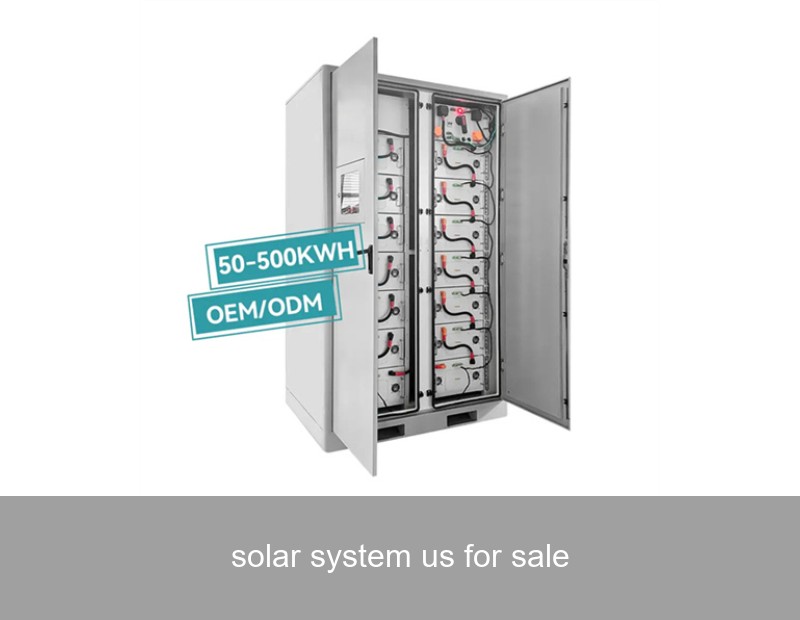
- Battery Energy Storage System (BESS): The heart of energy independence. This stores excess solar energy for use at night, during peak rate periods, or during grid outages.
- Energy Management System (EMS): The nervous system. This intelligent software monitors production, consumption, grid conditions, and weather forecasts to autonomously optimize energy flow.
- Smart Meter & Grid Interface: The point of connection, allowing for safe interaction with the utility grid, enabling net metering where available.

Image Source: Unsplash - A modern home energy system integrates generation, storage, and smart management.
The Modern Home Energy Puzzle: It's More Than Just Generation
Many homeowners experience a common phenomenon: they install solar, see their daytime utility imports drop to zero, but remain frustrated by persistent evening energy bills and vulnerability to blackouts. This is the generation-storage gap. Solar panels produce abundantly when the sun shines, but household demand often peaks in the early morning and evening—times when solar production is low or nonexistent. Without storage, you're forced to buy expensive power from the grid precisely when you need it most, undermining your system's financial and resilience benefits.
The Data: Why Smart Storage is the Heart of the Modern Solar System
The value proposition of adding storage is backed by compelling data. According to the U.S. Department of Energy's Solar Energy Technologies Office, pairing storage with solar can increase a homeowner's consumption of self-generated electricity from 20-40% to 50-90%. Furthermore, regions like California, Hawaii, and across Europe are rapidly moving towards Time-of-Use (TOU) rate structures, where electricity costs 2-3 times more during peak evening hours. A system with intelligent storage can automatically dispatch cheap, stored solar energy during these expensive windows, delivering direct and automated savings.
| System Type | Self-Consumption of Solar | Grid Independence During Outage | Peak Rate Bill Savings |
|---|---|---|---|
| Solar Only | 20-40% | None | Limited |
| Solar + Basic Battery | 50-70% | Partial (Backup Essentials) | Moderate |
| Solar + Intelligent Storage System | 80-95% | Whole-Home or Prioritized Backup | Maximum |
A Real-World Case: The Smith Family's Solar & Storage Journey in California
Consider the real example of the Smith family in Sacramento, California. In 2021, they installed a 8kW solar-only system. While it reduced their annual bill by 60%, they still paid significant charges due to Pacific Gas & Electric's steep TOU rates (over $0.45/kWh from 4-9 PM). In 2023, they retrofitted a Highjoule Harmony 10 battery storage system. The results after one year were transformative:
- Bill Savings: Their net annual electricity cost decreased from an average of $800 post-solar to a credit of $150, effectively making their energy cost negligible.
- Self-Consumption: Increased from 35% to 88%.
- Resilience: The system provided seamless backup during three public safety power shutoff (PSPS) events, totaling 42 hours, keeping their lights, refrigeration, and home office operational.
- Payback: The combined system payback period, with available federal tax credits (ITC), was projected to fall from 9 years to under 7 years.
This case underscores that the right solar system for sale today is inherently an integrated solar-plus-storage solution.
Choosing Your Solar System for Sale: Key Components Checklist
When evaluating offers, use this checklist to ensure you're getting a modern, capable system:
- Storage Capacity & Power: Does the battery have enough usable energy (kWh) to cover your critical nighttime load, and enough continuous power (kW) to run your essential appliances simultaneously?
- Depth of Discharge & Warranty: What percentage of the battery's total capacity can you safely use? A 95% DoD is superior to 80%. Look for a warranty guaranteeing at least 70% capacity retention after 10 years.
- System Intelligence: Can the EMS integrate with local weather data and utility rate schedules to optimize for savings and self-consumption automatically?
- Scalability & Integration: Can the system be easily expanded if your needs grow (e.g., adding an EV)? Does it use standard communication protocols for easy integration with other smart home devices?
- Installation & Service: Is the provider a certified, experienced partner who can handle the full system design, permitting, and long-term support?
Highjoule's Integrated Approach: The Harmony Series
At Highjoule, with nearly two decades of experience in advanced energy storage, we design our residential solutions around this integrated principle. Our Harmony Series is not just a battery add-on; it's the core of a complete solar system for sale. The Harmony hybrid inverter seamlessly integrates solar production, battery storage, and grid connection into a single, sleek unit. Its AI-driven energy management software, accessible via an intuitive app, allows homeowners to set preferences—maximize savings, ensure backup, or optimize for carbon footprint—and lets the system execute automatically.

Image Source: Unsplash - A sleek, modern battery storage unit like Highjoule's Harmony Series.
For homeowners, this means a simplified, future-proof solution. Whether you're building a new system or retrofitting storage to existing panels, the Harmony Series provides the intelligence to navigate complex utility tariffs, like those common in the EU and US, and the resilience to provide peace of mind during increasingly common grid disturbances.
Future-Proofing Your Investment: The Intelligent Energy Hub
The next evolution of the home solar system is already here: the Intelligent Energy Hub. This vision, which guides Highjoule's product development, sees your home not as a passive consumer but as an active node in a flexible energy network. Future systems will automatically coordinate electric vehicle (EV) charging, heat pump operation, and even allow participation in utility Virtual Power Plant (VPP) programs—earning you revenue by allowing the grid to use a tiny portion of your stored energy during times of peak demand. According to a report by the International Energy Agency, such distributed, flexible resources are critical to decarbonizing the global power grid.
When you next evaluate a solar system for sale, ask yourself and your provider: Is this just a collection of parts, or is it an intelligent, adaptive ecosystem designed for the energy challenges and opportunities of the next 20 years? What specific energy goals—financial savings, uninterrupted power, environmental impact—are most critical for your household, and how does the system's intelligence actively work to achieve them every single day?
 Inquiry
 Online Chat