


10000mAh Lithium Battery: Your Portable Power Hub and Beyond
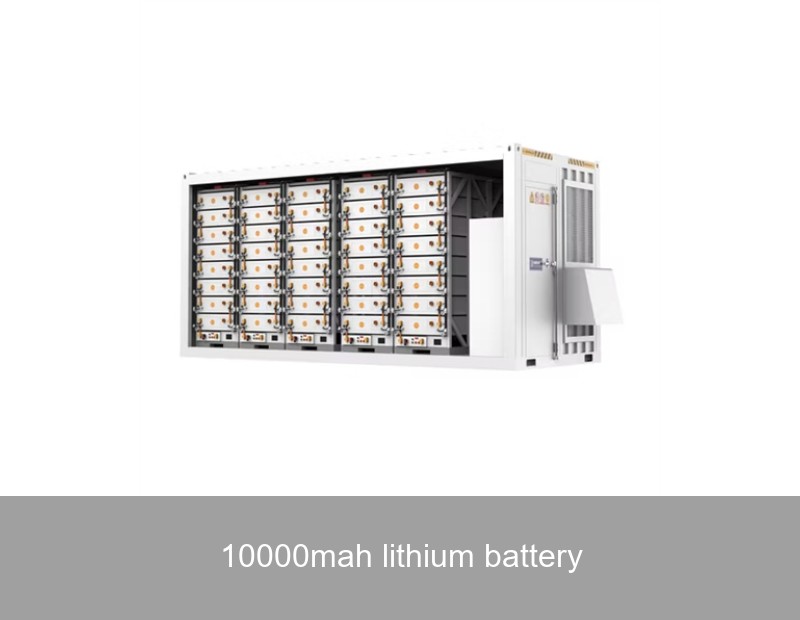
You've probably seen it on a power bank or your latest gadget: "10000mAh." It's become a gold standard for portable power, promising to keep your phone charged for days. But what if I told you that the same core technology powering your pocket-sized charger is fundamentally reshaping how we power our homes and businesses? The humble 10000mAh lithium battery is a microcosm of a much larger energy revolution. At Highjoule, we see beyond the pocket. Since 2005, we've been scaling this intelligent, reliable energy storage technology to create resilient and sustainable power systems for a world in transition.
Table of Contents
From Pocket to Property: The Scalable Magic of Lithium
Let's break down that 10000mAh (milliamp-hour) rating. In simple terms, it represents a battery's energy capacity. A 10000mAh power bank can, theoretically, deliver 1000 milliamps of current for 10 hours. It's perfect for USB devices. Now, imagine stacking thousands of these advanced lithium-ion cells together in an intelligent, climate-controlled enclosure. Suddenly, you're not talking about milliamps and phones; you're talking about kilowatt-hours (kWh) and homes.
This scalability is the cornerstone of modern energy storage. The lithium-ion chemistry prized for its high energy density, long cycle life, and decreasing cost in your consumer electronics is the same foundation for large-scale Battery Energy Storage Systems (BESS). The core principles—managing charge/discharge, maintaining safe temperatures, ensuring longevity—are just engineered for a much grander scale. What fits in your palm and what powers a factory are technological cousins.
The Core Chemistry Driving the Change
Whether in a small cell or a massive rack, modern lithium batteries for storage typically use variations like Lithium Iron Phosphate (LFP). LFP is a champion for stationary storage due to its exceptional thermal stability, long lifespan (often over 6000 cycles), and use of abundant, less controversial materials. It's the safe, durable workhorse, perfectly suited for the daily charge-discharge cycles needed in renewable energy integration.

Image Source: Unsplash (Representative image of battery cells)
The Grid Under Pressure: Why We Need More Than Generators
Here's the phenomenon: Our energy diet is changing fast. We're adding variable renewable sources like solar and wind at an unprecedented rate, while electrifying everything from vehicles to heating. This creates a dual challenge: managing the intermittent nature of green power and increasing overall demand on an aging grid infrastructure. The result? More frequent grid instability and the risk of outages.
Let's look at the data. According to the U.S. Energy Information Administration, the U.S. experienced a record high of 1.3 billion customer-hours of power interruptions in 2020. Meanwhile, Europe's push for energy independence is accelerating renewable deployment. The traditional answer—peak-demand fossil-fuel "peaker" plants—is increasingly seen as a costly and carbon-intensive band-aid.
This is where large-scale lithium battery storage enters as a transformative solution. Think of it not as a simple backup, but as an intelligent energy buffer. It can:
- Store Excess Solar: Capture midday solar surplus for use in the evening peak.
- Provide Grid Services: Stabilize frequency and voltage in milliseconds, something generators simply cannot do.
- Defer Infrastructure Upgrades: Act as a local "shock absorber," delaying costly grid upgrades.
Case Study: A California Winery's 1000x Power-Up
Let's move from theory to a tangible case. Consider a family-owned winery in Sonoma County, California. Their pain points were classic: high time-of-use electricity rates, a critical need for uninterrupted cooling during fermentation, and a desire to be more sustainable.
The Problem: Their electricity bill was spiking daily during the 4-9 pm peak period. A power outage during harvest could ruin an entire vintage. Their existing rooftop solar was underutilized, exporting power cheaply at noon while buying it back expensively at night.
The Solution: They installed a integrated solar-plus-storage system featuring a Highjoule H-Ion Commercial 150 battery storage unit. This system isn't measured in milliamps; it's a robust 150 kWh system—equivalent to the capacity of roughly 15,000 standard 10000mAh power banks, but integrated into a single, smart system.
| Metric | Result |
|---|---|
| Peak Demand Charge Reduction | Over 40% |
| Self-Consumption of Solar | Increased from ~30% to over 80% |
| Backup Power for Critical Loads | Up to 10 hours for fermentation tanks & cold storage |
| ROI Period | Estimated under 5 years with state incentives (SGIP) |
The winery now operates with remarkable resilience. The Highjoule system's intelligent energy management software automatically shifts energy use, storing the midday solar bounty and discharging it during the expensive, carbon-intensive evening peak. It's a perfect example of how the principle of the 10000mAh battery—right-time, right-place energy delivery—is applied at a business-saving scale.
Highjoule's Smart Energy Storage: The Industrial-Grade Power Hub
So, how do we at Highjoule translate a cell's potential into grid-ready power? Our approach goes far beyond just packaging cells. We build integrated, intelligent energy ecosystems. For our commercial and industrial clients, like the winery, our H-Ion Series provides modular, scalable storage from 50 kWh to multi-megawatt installations. Its built-in AI-driven energy management platform optimizes every kilowatt-hour for maximum financial return and resilience.
For residential applications, our Home Energy Vault brings this same grid-smart technology to homeowners. Paired with solar, it allows families to maximize self-consumption, protect against outages, and reduce their carbon footprint. It's the ultimate evolution of the "power bank" concept for your entire home.
Our systems are designed with safety and longevity at their core, utilizing LFP chemistry and featuring comprehensive, multi-layered protection systems. We handle everything from initial site assessment and financial modeling to installation, grid interconnection, and ongoing performance monitoring—a true end-to-end service.

Image Source: Unsplash (Representative image of a technician with a battery system)
Microgrids: The Ultimate Expression of Storage
The most advanced application is in microgrids. Here, a Highjoule BESS acts as the heart, orchestrating solar arrays, wind turbines, and sometimes backup generators to form a self-sufficient energy island. This is crucial for remote communities, critical infrastructure like hospitals, and industrial campuses seeking ultimate energy independence. A report by the National Renewable Energy Laboratory (NREL) highlights how battery storage is the key enabler for resilient, renewable-based microgrids.
Choosing Your Energy Future: Key Questions to Ask
The journey from a 10000mAh battery to a 150 kWh storage system is one of scale and intelligence. It represents a shift from passive consumption to active energy management. Whether you're a homeowner with solar panels or a facility manager overseeing a large plant, the principles are similar.
As you consider your own energy resilience and sustainability, what's the first step? It begins with asking the right questions: What are your critical loads during an outage? How does your utility's rate structure (time-of-use, demand charges) impact your bottom line? What are your long-term sustainability goals?
We believe the future is not just electric; it's intelligently stored. The technology is here, proven, and ready to scale. What will you power with your next kilowatt-hour?
 Inquiry
 Online Chat