


Demystifying BESS Installment Payment: Your Path to Affordable Energy Independence
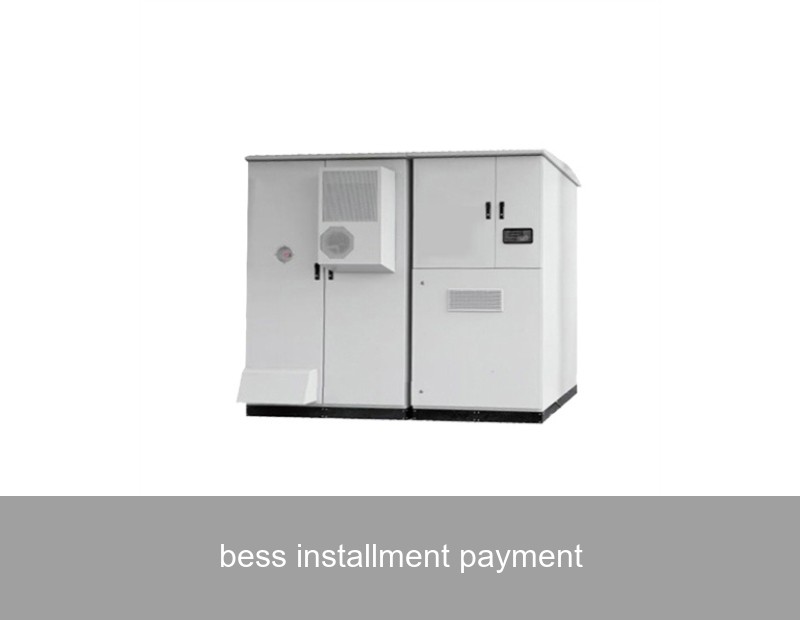
Let's talk about a common hurdle for businesses and homeowners eyeing a Battery Energy Storage System (BESS): the upfront cost. You've likely heard about the benefits—energy bill savings, backup power, and sustainability—but that initial investment can give anyone pause. This is where understanding BESS installment payment options becomes a game-changer. It's not just about buying a product; it's about financing a strategic asset that starts paying you back from day one. At Highjoule, we believe financial flexibility should empower, not hinder, your transition to resilient and intelligent energy management. Let's explore how modern payment structures are making advanced storage accessible to all.
What is a BESS Installment Payment Plan?
Simply put, a BESS installment payment plan is a financing agreement that allows you to spread the cost of your energy storage system over a period of time, typically 3 to 10 years, through regular monthly or quarterly payments. Think of it like a mortgage for your energy independence. Instead of a large, one-time capital expenditure (Capex), you convert it into a manageable operational expense (Opex).
These plans are often offered in partnership with financial institutions or directly through providers like Highjoule. They can take various forms:
- Equipment Financing Loans: You own the system outright but pay for it over time.
- Lease Agreements: You pay a monthly fee to use the system, with potential options to purchase at the end of the term.
- Power Purchase Agreements (PPAs) for Storage: You pay only for the stored energy you use (per kWh), with little to no upfront cost.

Image Source: Unsplash - Representative image of planning energy investments.
Why Consider an Installment Payment Plan for Your BESS?
The phenomenon is clear: energy prices are volatile, and grid reliability is a growing concern. The data tells a compelling story. According to the U.S. Energy Information Administration (EIA), commercial electricity prices in the U.S. have seen significant fluctuations, while extreme weather events continue to cause costly outages. A BESS directly addresses these issues, but the financing model is key to adoption.
Here’s the logical progression of benefits with an installment plan:
- Immediate Positive Cash Flow: Your monthly savings on energy bills (from peak shaving and solar self-consumption) often exceed the monthly financing payment from day one. This creates instant net positive cash flow.
- Preservation of Capital: Your business or household retains its capital for core operations, investments, or emergency funds.
- Hedging Against Inflation: You lock in today's price for energy storage technology and future electricity savings, protecting against rising future costs.
- Tax Benefits and Incentives: In many regions like the U.S. and parts of Europe, ownership through financed models may allow you to capitalize on investment tax credits (ITC) or accelerated depreciation, significantly improving the economics.
Calculating the True Cost: Capex vs. Financing
Let's break it down with a simplified table. Assume a commercial BESS project with a total installed cost of $150,000.
| Financial Model | Upfront Cost | Monthly Payment (Est. 5%, 7 yr) | Estimated Monthly Energy Savings | Net Monthly Cash Impact |
|---|---|---|---|---|
| Outright Purchase (Capex) | $150,000 | $0 | $2,200 | +$2,200 (after recouping capex) |
| Installment Plan (Loan) | $0 | $2,120 | $2,200 | +$80 from Day One |
As you can see, the installment model frees up $150,000 in capital while still generating a positive return immediately. This liquidity is crucial for business resilience.
Real-World Case Study: A California Winery's Success
Let's move from theory to practice. A mid-sized winery in Sonoma County, California, faced two major challenges: crippling peak demand charges from their utility and frequent preventative power shutoffs during wildfire season. Their goal was to install a 250 kWh / 500 kWh BESS paired with their existing solar array.
The Problem: The total project cost was approximately $280,000. Paying this upfront would have strained their operational budget for the year.
The Solution: They opted for a tailored BESS installment payment plan through Highjoule's financing network. The structure included a 20% down payment and a 6-year loan term.
- Monthly Financing Payment: ~$3,650
- Monthly Savings (Demand Charge Reduction + Solar Optimization): ~$4,100
- Immediate Net Monthly Gain: $450
- Additional Value: Uninterrupted operation during 12+ grid outages in the first year, preserving thousands of dollars in perishable inventory and production continuity.
The winery now enjoys reliable, clean power, improved profitability, and protected their capital—all thanks to a flexible payment strategy. This mirrors the solutions Highjoule provides daily across commercial and industrial sectors.
Highjoule's Flexible Solutions: Powering Your Transition
At Highjoule, our expertise goes beyond engineering superior battery storage systems like our H-Series Commercial ESS and Nexus Home Battery. We understand that a brilliant technical solution needs an equally smart financial pathway. That's why we partner with leading green energy financiers to offer a spectrum of BESS installment payment options.
Our process is consultative:
- Energy Audit & Custom Design: We analyze your energy usage patterns to right-size the system.
- Financial Modeling: We provide clear projections of savings versus different payment plan options.
- Seamless Support: From permitting and installation to financing paperwork and after-sales service, we manage the complexity for you.

Image Source: Unsplash - Representative image of a technical site assessment.
Whether you're a factory manager in Germany looking to stabilize energy costs or a homeowner in Texas seeking backup power, our models are designed to align with your cash flow and long-term energy goals.
How to Choose the Right Installment Plan for You
Selecting a plan isn't one-size-fits-all. Ask yourself and your provider these key questions:
- What are my primary goals? (Maximize savings, ensure backup, achieve sustainability targets?)
- What is my credit profile? This will affect interest rates and terms.
- Are there local/regional incentives? (e.g., EU energy storage initiatives or the U.S. Investment Tax Credit). A good provider will help you navigate these.
- Who is responsible for maintenance? Clarify this in your contract.
- What are the terms at the end of the agreement? Is there a balloon payment? Can you upgrade the technology?
We've seen how BESS installment payment plans transform energy storage from a daunting capital project into an accessible, cash-flow-positive investment. The technology is ready. The financial models are proven. The question is, what could your first month of energy independence and positive cash flow look like? We invite you to connect with a Highjoule energy specialist to model a scenario specific to your last utility bill. What's the one energy cost on your statement you'd most like to eliminate?
 Inquiry
 Online Chat