


Demystifying the 1000kV Solar Panel Price: Your Guide to Real Solar System Value
If you've started researching solar power for your home or business, you might have stumbled upon a search term like "1000kV solar panel price." It's a curious phrase, and as a renewable energy expert, it immediately tells me two things: you're looking for powerful solar solutions, and there's some crucial industry context you need to know. Let's clear the air first: in the solar industry, we typically talk about watts (W) and kilowatts (kW) for panel power output, and volts (V) for system voltage. A "1000kV" (1000 kilovolt) panel isn't a standard product; it likely stems from a mix-up with high-voltage system architectures. But that search term points to a very real and important question: What does a high-performance, future-ready solar and storage system truly cost, and where does the real value lie? This article will guide you beyond the sticker price to understand the complete picture of modern energy independence.
The 1000kV Solar Panel: Myth vs. Reality
The quest for a "1000kV solar panel" often reflects a desire for maximum efficiency and power. While you won't find a single panel rated at 1000 kilovolts, the underlying concept is valid in the form of high-voltage string inverter systems. Modern residential and commercial solar arrays can operate at system voltages reaching 600V to 1500V DC. This high voltage reduces energy loss in wiring, allows for longer strings of panels, and can improve overall system efficiency. So, when you're asking about "1000kV," you're intuitively asking about a high-efficiency, professionally designed system setup. The real investment isn't in a mythical panel, but in a sophisticated system where components—panels, inverters, and critically, battery storage—work in concert.
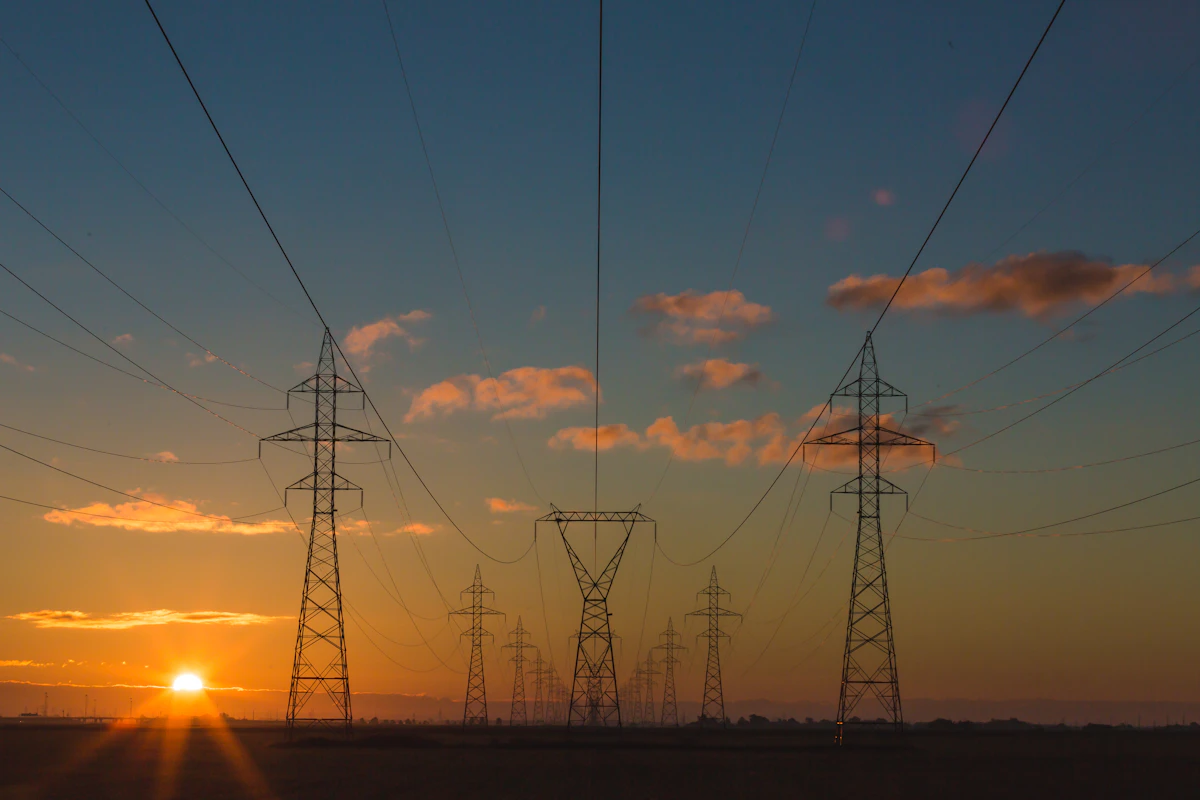
Image Source: Unsplash - A modern solar installation is a system, not just panels.
Breaking Down the True Cost of a Solar Power System
Focusing solely on a per-panel price is like buying a car based only on the tire cost. The total installed cost encompasses several key components:
- Solar Panels: High-efficiency monocrystalline panels (typically 400W-500W each) are the standard. The cost here is usually quoted per watt ($/W).
- Inverter(s): This is the brain of your system, converting DC solar power to usable AC power. You'll choose between string inverters, microinverters, or hybrid inverters designed for battery integration.
- Mounting & Racking: The hardware that securely attaches your panels to the roof or ground.
- Balance of System (BOS): Wiring, conduits, switches, and safety disconnects.
- Professional Installation: Labor, permitting, and interconnection fees with your utility.
- The Critical Add-On: Battery Storage. This is the component that transforms a solar system from a daylight-only saver into a 24/7 energy asset.
According to the National Renewable Energy Laboratory (NREL), while solar panel costs have plummeted over 80% in the last decade, the "soft costs" like installation, permitting, and customer acquisition remain a significant portion of the total price. This highlights why choosing an integrated solution provider is often more cost-effective than sourcing components piecemeal.
The Missing Piece: Why Your Solar Investment Needs a Battery
Let's talk about a common phenomenon for solar owners without storage: the sun sets, your panels stop producing, and you're forced to buy expensive electricity from the grid. Your solar system might be offsetting your daytime usage, but what about the evening peak when demand and rates are highest? This is where the conversation about "price" evolves into one about "value." A standalone solar system captures value. A solar-plus-storage system maximizes and protects that value.
- Energy Time-Shift: Store cheap solar energy from the afternoon to use during expensive evening hours.
- Backup Power: Keep essential loads running during grid outages—a growing concern in many regions.
- Grid Services & Incentives: In some markets, you can participate in utility programs that pay you for grid support.
A Real-World Case: Maximizing ROI in California
Consider a real-world scenario from California, a leader in solar adoption with time-of-use (TOU) rates and frequent grid challenges. A mid-sized commercial facility installed a 250 kW solar array. While it reduced their overall bill, they were still paying over $0.45/kWh during the 4-9 PM peak period because their solar production had dwindled.
The Data-Driven Solution: They partnered with Highjoule to integrate a 500 kWh HES-G2 Commercial Battery System. The system was programmed to discharge strategically during the daily peak window.
| Metric | Before Storage | After Highjoule Storage |
|---|---|---|
| Peak Period Electricity Cost | $0.48/kWh (purchased from grid) | $0.08/kWh (discharged from battery) |
| Monthly Demand Charge Reduction | Baseline | 40% |
| Grid Independence During Outages | 0 hours | Critical loads supported for 6+ hours |
This case, based on aggregated customer data, shows that the addition of intelligent storage didn't just add a cost; it supercharged the ROI of the entire solar investment. The payback period for the combined system was actually shorter than for solar alone when factoring in full bill savings and available federal investment tax credits (ITC) for storage.
Future-Proofing Your Energy: Beyond the Panel Price
The energy landscape is shifting from a one-way grid to a dynamic, two-way network. With policies like the EU's Green Deal and the US Inflation Reduction Act, the focus is on resilience and smart management. Your energy system should be an asset that adapts. This means choosing storage that is:
- Scalable: Can you easily add more capacity as your needs grow?
- Software-Driven: Does its intelligence update to leverage new rate structures or grid programs?
- Technology-Agnostic: Can it work seamlessly with different brands of solar panels and inverters, both new and existing?
The Highjoule Solution: Intelligent Energy Storage
This is where Highjoule's expertise comes into play. Since 2005, we've moved beyond just providing batteries to delivering intelligent energy platforms. We understand that the question behind "1000kV solar panel price" is about achieving true energy security and economic efficiency.
For residential clients, our HES-H Series home energy storage systems are designed for seamless integration with new or existing solar. Their compact design, advanced lithium iron phosphate (LFP) chemistry for safety and longevity, and smart energy management software allow homeowners to automatically optimize their self-consumption and backup readiness.
For commercial and industrial (C&I) applications, our HES-G2 Containerized Storage System offers a turnkey solution. These scalable, plug-and-play units can be deployed alongside large-scale solar arrays to manage demand charges, provide backup power for essential operations, and even participate in grid-balancing services. Our systems are designed with an open protocol architecture, ensuring they can integrate into diverse project ecosystems, whether you're building a new microgrid or upgrading an existing facility.

Image Source: Unsplash - Containerized battery storage systems for commercial scale.
So, the next time you think about the price of a solar panel, ask yourself a more powerful question: What is the value of a resilient, efficient, and intelligent energy system that will serve my needs for decades to come? The most cost-effective choice is often the one that solves the whole problem, not just a part of it.
Is your current solar setup leaving value on the table by not including storage, and how might your local utility's rate structure be impacting your potential savings?
 Inquiry
 Online Chat