


Unlocking Solar Independence: Is a 100Ah Battery for Solar Panel the Right Choice for You?
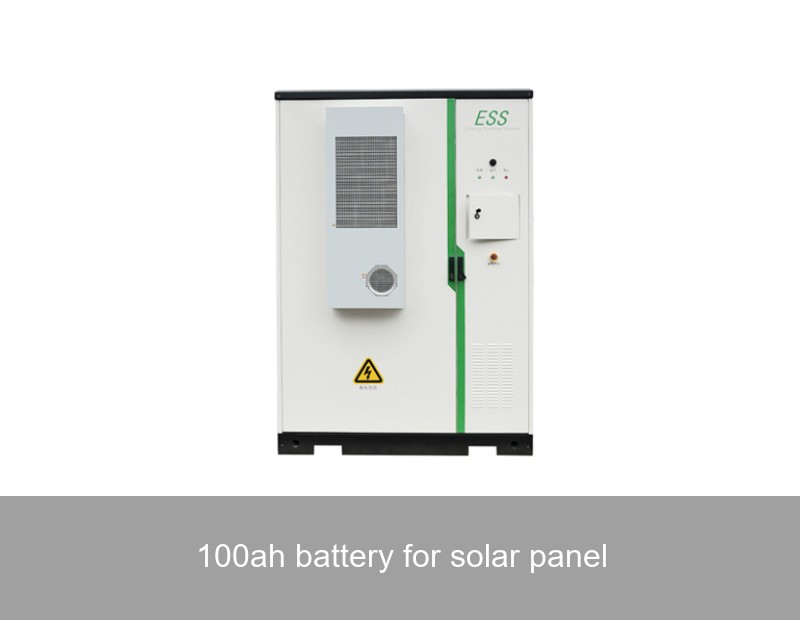
You've made the smart decision to invest in solar panels. Those sleek, shiny rectangles on your roof are capturing the sun's free energy, slashing your electricity bills, and reducing your carbon footprint. But what happens when the sun goes down, or during those stretches of cloudy weather? This is where the conversation turns from solar panels to solar storage, and you'll likely encounter a term like "100Ah battery for solar panel." It sounds technical, but understanding this simple specification is the key to true energy independence. Let's demystify what it means and how it can power your life, sustainably.
What Does "100Ah Battery for Solar Panel" Really Mean?
Think of your solar battery like a water tank for electricity. The "Ah" stands for Amp-hour, and it's the unit that measures the tank's capacity. A 100Ah battery can, in theory, deliver 100 amps of current for one hour, 10 amps for 10 hours, or 1 amp for 100 hours before it's considered "empty."
However, for solar storage, the more practical number is kilowatt-hours (kWh)—the same unit your utility bill uses. To convert, you need the battery's voltage. Most home solar batteries operate at 12V, 24V, or 48V.
- A 12V 100Ah battery stores roughly 1.2 kWh of usable energy (12V x 100Ah = 1200Wh, minus system losses).
- A 24V 100Ah battery stores about 2.4 kWh.
- A 48V 100Ah battery, common in modern systems, stores around 4.8 kWh.
So, is 1.2-4.8 kWh a lot? For context, an average European household uses between 8-10 kWh per day. A single 100Ah battery might run your fridge for a day or power essential lights and devices for an evening, but for whole-home backup, you'd typically need a bank of several batteries. This is where professional design becomes critical.

Image: A modern home battery storage system. Source: Unsplash
Why Battery Capacity (Ah) is a Game-Changer for Solar
The shift from just solar panels to solar-plus-storage is transformative. It changes your relationship with the grid and turns your home into a personal power station.
| Situation | Without a 100Ah Battery | With a 100Ah Solar Battery |
|---|---|---|
| Evening & Night | You buy expensive grid power. | You use your stored, free solar energy. |
| Power Outage | You're in the dark until utility fixes it. | Essential circuits stay on seamlessly. |
| Time-of-Use Rates | You pay peak rates for evening use. | You avoid peak charges by using your battery. |
| Cloudy Days | Solar production drops, grid use rises. | Battery bridges the gap, maintaining self-consumption. |
Key Considerations When Choosing a 100Ah Solar Battery
Not all 100Ah batteries are created equal. Here’s what truly matters:
- Battery Chemistry: The era of lead-acid is fading. Lithium Iron Phosphate (LiFePO4) is now the gold standard for solar. It offers longer lifespan (6,000+ cycles vs. 1,200 for lead-acid), deeper safe discharge (90%+ vs. 50%), requires no maintenance, and is inherently safer. A 100Ah LiFePO4 battery delivers its full capacity reliably for over a decade.
- Depth of Discharge (DoD): You can't use 100% of a battery's rated capacity. A quality LiFePO4 battery allows a DoD of 95%, meaning your 100Ah battery gives you 95Ah of usable energy. Always plan with usable kWh in mind.
- Scalability: Your needs may grow. Can you easily add more 100Ah modules later? A modular system is a future-proof investment.
A Real-World Case: Off-Grid Living in Scandinavia
Let's look at a concrete example. A family in rural Norway decided to build a fully off-grid cabin. Their calculated daily energy need for lighting, a small fridge, a water pump, and electronics was 3.5 kWh. They installed 4 kW of solar panels and needed a battery to get through long winter nights.
Their Solution: They opted for a scalable 48V battery system. They started with a bank of two 48V 100Ah LiFePO4 batteries, providing roughly 9.6 kWh of total capacity (48V x 100Ah x 2 = 9.6kWh). With a 90% DoD, this gave them ~8.6 kWh of usable energy—more than double their daily need, ensuring comfort even on low-sun days.
The Result: Over two years, the system has performed flawlessly. Data from their inverter showed they achieved 99.7% energy self-sufficiency, only needing a backup generator during a rare week of heavy snow cover. The 100Ah battery modules proved to be the perfect building block, offering the right balance of capacity, size, and cost for their modular design.
Beyond the Battery: The Importance of a Complete System
A battery is just one component. Its performance is dictated by the intelligence of the system around it. The Battery Management System (BMS) is the brain, protecting each cell. The hybrid inverter is the heart, managing energy flow between panels, battery, home, and grid. Choosing components that communicate seamlessly is crucial for safety, efficiency, and lifespan.
The Highjoule Approach: Intelligent Energy Storage
At Highjoule, with nearly two decades of experience, we understand that a successful solar storage system is more than just connecting a 100Ah battery to your solar panel array. It's about delivering a reliable, intelligent, and user-friendly energy solution.
Our HPS (Highjoule PowerStack) Series exemplifies this philosophy. These modular LiFePO4 batteries are designed as the perfect building blocks for residential and commercial storage. While a single module offers substantial capacity, its true power lies in seamless scalability. You can start with what you need today and add more 100Ah-equivalent modules as your energy demands grow.
More importantly, every HPS battery is governed by our proprietary Adaptive Core BMS, which provides cell-level monitoring, advanced thermal management, and state-of-health diagnostics. Paired with our smart hybrid inverters, the system doesn't just store energy—it optimizes it. Our software learns your consumption patterns, weather forecasts, and utility rate schedules (like California's complex time-of-use rates) to automatically charge and discharge your battery for maximum savings and resilience.
For larger applications, such as commercial facilities or microgrids, our containerized MegaJoule solutions integrate thousands of these proven battery cells with utility-grade management, providing grid-scale stability and backup power.

Image: A technician performing maintenance on a large-scale commercial battery system. Source: Unsplash
Making the Right Choice for Your Home or Business
So, is a 100Ah battery the right choice for you? The answer depends entirely on your "energy fingerprint." A detailed audit of your daily kWh consumption, peak load requirements, and backup goals is the essential first step. A small off-grid cabin might thrive on a single 48V 100Ah unit, while a suburban home aiming for backup power might need a 20-30 kWh system (equivalent to several such modules).
The key is to think in terms of a complete, intelligent system, not just a battery specification. The right partner will help you navigate these choices, ensuring your investment delivers energy security and savings for years to come.
What's the first appliance you would want to keep running during a power outage, and how does that priority shape the capacity of the solar battery system you dream of?
 Inquiry
 Online Chat