


Deye Hybrid Off Grid Inverter: Your Ultimate Guide to Energy Independence
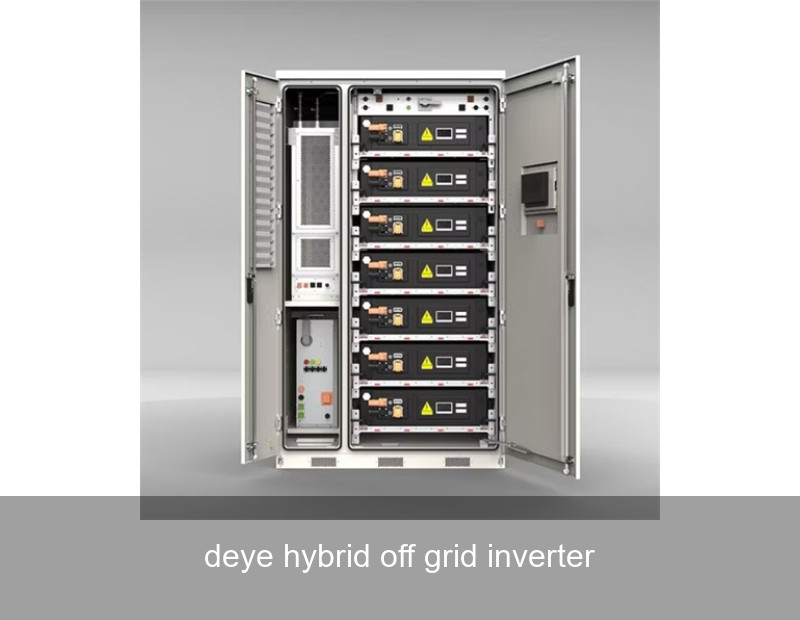
Imagine a storm knocks out the power grid in your area. For most, it means darkness and disruption. But for a growing number of homeowners and businesses across Europe and the US, it's merely a seamless switch to a personal, resilient power supply. This shift is powered by a critical piece of technology: the Deye hybrid off grid inverter. More than just a component, it's the intelligent brain of a modern energy storage system, managing solar panels, batteries, and grid power to ensure you have electricity when you need it most. In this guide, we'll demystify this technology and explore how it's unlocking true energy autonomy.
Table of Contents
- What is a Deye Hybrid Off Grid Inverter?
- How Does It Work? The Magic Behind the Scenes
- Key Benefits: Beyond Just Backup Power
- A Real-World Case Study: Resilience in the Swiss Alps
- Choosing the Right System: Highjoule's Integrated Approach
- The Future of Energy Management
What is a Deye Hybrid Off Grid Inverter?
Let's break down the name. "Hybrid" means it can handle multiple power sources—typically solar panels, battery storage, and the traditional utility grid. "Off Grid" indicates its capability to completely disconnect from the main grid and power your home or business independently. The "inverter" part is the core: it converts the direct current (DC) electricity from your solar panels and batteries into the alternating current (AC) that powers your appliances.
In essence, a Deye hybrid off grid inverter is an all-in-one energy manager. It doesn't just convert power; it makes smart decisions in real-time. Should it charge the batteries with solar excess? Should it draw from the grid during low-rate periods? Should it isolate the property and run on battery power during an outage? It handles all this automatically, making it the cornerstone of a self-sufficient energy system.
How Does It Work? The Magic Behind the Scenes
The operation can be visualized as a sophisticated energy traffic controller. Here’s a simplified step-by-step:
- Solar Harvesting: During the day, solar panels generate DC electricity.
- Primary Consumption: The inverter converts this DC to AC for immediate use in your home.
- Battery Charging: Any excess solar energy is directed to charge your battery bank (like the high-capacity lithium-ion systems Highjoule integrates).
- Grid Interaction: If solar and battery are insufficient (e.g., at night), it draws from the grid. Conversely, if batteries are full and solar production is high, it can feed surplus back to the grid where permitted (for feed-in tariffs).
- Islanding (Off-Grid Mode): Upon a grid failure, the inverter instantly disconnects within milliseconds and forms an independent "island" or microgrid, powering critical loads solely from solar and batteries.

Image source: Unsplash - A modern solar and storage installation.
Key Benefits: Beyond Just Backup Power
The advantages of deploying a system with a capable hybrid inverter like Deye's extend far beyond emergency backup.
- Maximized Self-Consumption: You use more of the solar energy you produce, slashing your electricity bills. Industry data suggests a well-designed hybrid system can increase self-consumption from a typical 30-40% to over 70-80%.
- Energy Bill Optimization: In regions with time-of-use (TOU) pricing, the system can be programmed to use cheap grid power to charge batteries at night and then use that stored energy during expensive peak hours.
- Uninterrupted Power Supply (UPS): Critical for home offices, medical equipment, and security systems. The transition during a blackout is seamless.
- Grid Support & Stability: Advanced models can provide grid services, helping to stabilize frequency and voltage, which is becoming increasingly valuable to network operators (U.S. Department of Energy).
A Real-World Case Study: Resilience in the Swiss Alps
Theory is great, but real-world performance is what counts. Consider a chalet in a remote valley of the Swiss Alps. The homeowner faced two challenges: unreliable grid connection during heavy snowfall and a desire to reduce reliance on diesel generators.
The Solution: A turnkey system featuring a Deye 8kW hybrid off-grid inverter, 15kWh of Highjoule's proprietary lithium iron phosphate (LiFePO4) battery storage, and a 10kWp solar array. Highjoule's team handled the full design, permitting, and installation.
| Metric | Before Installation | After Installation |
|---|---|---|
| Grid Dependency | ~90% (with generator use) | <10% (grid used only in prolonged poor weather) |
| Annual Fuel Cost | ~€1,200 | €0 |
| Carbon Footprint | ~4.8 tonnes CO2e/year | ~0.6 tonnes CO2e/year |
| System Availability (Power Uptime) | ~94% | 99.98% |
This case, documented in Highjoule's project portfolio, shows how the right technology transforms energy from a vulnerability into an asset. The system paid for itself in under 7 years, considering avoided fuel costs and grid charges, while providing peace of mind through harsh winters.
Choosing the Right System: Highjoule's Integrated Approach
An inverter is only as good as the ecosystem it's part of. That's where Highjoule's nearly two decades of expertise comes in. We don't just sell components; we deliver performance-guaranteed energy solutions.
When you choose Highjoule for your hybrid or off-grid system, you get:
- Expert System Design: Our engineers model your energy consumption, solar potential, and resilience needs to perfectly size the Deye inverter, battery capacity, and solar array.
- Seamless Integration: We ensure our Highjoule battery racks, with their superior thermal management and battery management systems (BMS), communicate flawlessly with the Deye inverter for optimal safety and longevity.
- Smart Energy Management: Our proprietary monitoring platform gives you real-time insights into energy flows, savings, and system health via a user-friendly app.
- Full Service & Support: From obtaining local permits to installation by certified technicians and long-term maintenance, we provide a single point of responsibility.

Image source: Unsplash - Professional installation of a battery system.
Key Technical Considerations
When evaluating a Deye hybrid off grid inverter system, discuss these points with your provider:
- Power Rating: Ensure the inverter's continuous output (e.g., 5kW, 8kW, 12kW) can handle your home's peak load.
- Battery Compatibility & Voltage: The inverter must match the battery bank's voltage (e.g., 48V). Highjoule systems are pre-configured for perfect compatibility.
- Efficiency: Look for peak efficiency ratings above 97%. Every percentage point matters for your annual energy harvest.
- Warranty & Local Support: A 10-year product warranty is standard, but having a local expert like Highjoule for support is invaluable.
The Future of Energy Management
The role of the hybrid inverter is evolving from a behind-the-meter asset to a grid-interactive one. With the rise of virtual power plants (VPPs), a fleet of home systems with inverters like Deye's can be aggregated to act as a single, dispatchable power plant, supporting the grid during times of high demand (NREL). This could open new revenue streams for system owners.
Furthermore, integration with electric vehicle (EV) charging is the next frontier. Imagine your inverter managing bi-directional charging, using your EV battery as an additional storage resource during a blackout or peak period—a concept already being piloted in California and parts of Europe (IEA Global EV Outlook 2023).
Ready to Take Control of Your Energy?
The journey to energy independence starts with understanding the core technology. A Deye hybrid off grid inverter, paired with high-quality components and expert design from a provider like Highjoule, is more than an upgrade—it's a fundamental shift in how you power your life. It provides security, savings, and a tangible step towards a sustainable future.
What's the first question you would ask an energy specialist when designing your own resilient power system?
 Inquiry
 Online Chat