


Understanding the 100Ah Lithium Battery Energy Storage Cabinet: Your Power Hub for the Future
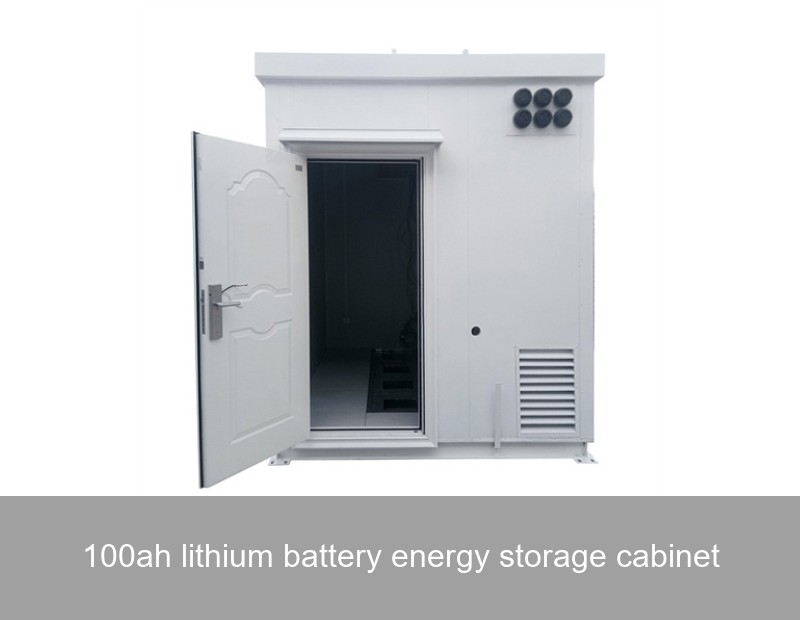
Have you ever wondered how businesses manage to keep the lights on during a grid outage, or how a homeowner with solar panels uses their own clean energy at night? The answer often lies in a powerful, unassuming unit: the 100Ah lithium battery energy storage cabinet. This isn't just a big battery; it's the intelligent core of a modern energy system. As electricity prices become more volatile and the push for energy independence grows, understanding this technology is key for any business owner, facility manager, or homeowner in Europe and the US looking to take control of their power.
Table of Contents
- What is a 100Ah Lithium Battery Energy Storage Cabinet?
- Why Does a 100Ah Capacity Matter? The Power of Scalability
- Key Benefits: Beyond Just Backup Power
- A Real-World Case Study: Retail Resilience in Bavaria
- Choosing the Right System: What to Look For
- The Highjoule Approach: Engineered for Intelligence and Durability
- Future Trends and Your Next Step
What is a 100Ah Lithium Battery Energy Storage Cabinet?
Let's break down the name. "100Ah" (Ampere-hour) is a unit of electrical charge. Think of it as the size of your energy "fuel tank." A 100Ah battery can, in theory, deliver 100 amps of current for one hour, 50 amps for two hours, and so on. However, the real story is in the voltage. When these 100Ah lithium iron phosphate (LiFePO4) cells are combined into a system, typically at 48V or higher, you get substantial energy capacity. For instance, a 48V system with 100Ah cells provides roughly 4.8 kilowatt-hours (kWh) of usable energy per module.
The "cabinet" is the critical part. It's not a simple box. It's an integrated system housing the lithium battery modules, a sophisticated Battery Management System (BMS), thermal management, safety disconnects, and often an integrated inverter/charger. This all-in-one design ensures safety, efficiency, and seamless communication with your solar panels, generator, or the main grid.

Companies like Highjoule have perfected this cabinet approach. Since 2005, we've evolved from providing basic battery solutions to delivering fully integrated, smart energy storage systems. Our cabinets are designed for scalability, allowing commercial and industrial users to start with a foundational 100Ah-based unit and expand capacity by adding additional modules as their needs grow, creating a truly future-proof investment.
Why Does a 100Ah Capacity Matter? The Power of Scalability
The 100Ah module has become a cornerstone in commercial and larger residential storage because it strikes an ideal balance between energy density, manufacturability, and scalability. It's a building block. Need to power a small office through a two-hour outage? A single 5-10kWh cabinet (based on 100Ah cells) might suffice. Need to run a manufacturing line for peak shaving? You can link multiple cabinets to create a 100kWh, 500kWh, or even larger system.
This modularity is crucial. According to data from the U.S. Department of Energy, the levelized cost of energy storage has fallen dramatically, driven in part by standardized, scalable lithium-ion solutions. The 100Ah form factor is at the heart of this trend, enabling cost-effective deployment across diverse applications.
Key Benefits: Beyond Just Backup Power
A modern 100Ah lithium battery cabinet delivers a multi-faceted return on investment:
- Energy Bill Savings (Peak Shaving): The system intelligently discharges during periods of high, expensive grid demand, cutting your peak power charges—often the largest portion of a commercial utility bill.
- Enhanced Solar Self-Consumption: Store excess solar energy generated during the day for use in the evening, increasing your clean energy usage from 30-40% to over 80%.
- Uninterruptible Power Supply (UPS): Provides seamless, sub-20ms backup power during outages, protecting sensitive equipment and operations.
- Grid Services & Revenue: In some markets, aggregated systems can participate in grid-balancing programs, creating a new revenue stream.
- Safety & Longevity: LiFePO4 chemistry, used in Highjoule's cabinets, is inherently more stable than other lithium types, offers a longer cycle life (6,000+ cycles), and operates efficiently across a wide temperature range with integrated thermal management.
A Real-World Case Study: Retail Resilience in Bavaria
Consider the challenge faced by a medium-sized supermarket chain in southern Germany. Their goals were clear: reduce soaring energy costs, ensure refrigeration never failed during grid instability, and improve their sustainability footprint.
Solution: Highjoule deployed a tailored 120kWh energy storage system, built around scalable 100Ah LiFePO4 cabinet units, integrated with their existing rooftop solar array. The system was configured for peak shaving and solar optimization.
| Metric | Result | Impact |
|---|---|---|
| Peak Demand Charges | Reduced by 28% | Direct, recurring cost savings |
| Grid Energy Consumption | Reduced by 41% | Lower base energy costs & carbon footprint |
| Solar Self-Consumption | Increased from 35% to 89% | Maximized ROI on solar panels |
| Power Outage Protection | 8+ hours of backup for critical loads | Eliminated risk of spoiled goods |
This case, documented in a broader industry report by IRENA, highlights the tangible multi-benefit impact of a well-designed storage cabinet system.
Choosing the Right System: What to Look For
Not all cabinets are created equal. When evaluating a 100Ah lithium battery energy storage cabinet, focus on these core aspects:
- Intelligent BMS: The brain of the system. It must provide cell-level monitoring, balancing, and safety protocols.
- Thermal Management: Active liquid or air cooling/heating is essential for performance and lifespan in varying climates.
- Scalability & Ease of Installation: Can you add modules easily? Is it a plug-and-play design?
- Grid & Generator Integration: Seamless compatibility with your existing infrastructure is non-negotiable.
- Warranty & Cycle Life: Look for a 10-year warranty and a cycle life specification that matches your daily usage needs.

The Highjoule Approach: Engineered for Intelligence and Durability
At Highjoule, our IntelliCabinet Series embodies this full-spectrum philosophy. We start with premium-grade, UL-certified 100Ah LiFePO4 cells for safety and longevity. Our proprietary, AI-enhanced BMS doesn't just protect; it learns your energy patterns to optimize charging and discharging schedules for maximum financial return.
Our cabinets feature a modular, "building-block" architecture. You can start with a single 5kWh unit for a pilot project and scale to multi-megawatt-hour installations without changing the core technology. This is particularly valuable for businesses and microgrids with evolving energy needs. Furthermore, our systems come with the Highjoule Energy Cloud platform, providing remote monitoring, control, and performance analytics from any device.
For industrial applications, our Industrial PowerPack series builds on the same 100Ah module reliability but is housed in ruggedized, IP54-rated cabinets designed for harsher environments, ensuring durability in manufacturing plants or remote microgrid sites.
Future Trends and Your Next Step
The landscape is moving towards virtual power plants (VPPs), where thousands of distributed storage units, like 100Ah cabinets, are aggregated to act as a single, grid-stabilizing power plant. The technology you choose today should be ready for this participatory energy future.
So, the question isn't just "Do I need a battery?" It's, "What specific energy challenges—cost, resilience, sustainability—am I trying to solve, and how can a scalable, intelligent storage system be designed to address them?"
What is the first energy goal you would tackle if you had a reliable, scalable power hub at your disposal?
 Inquiry
 Online Chat