


Your Solar System Scheme for 2025: A Strategic Blueprint for Energy Independence
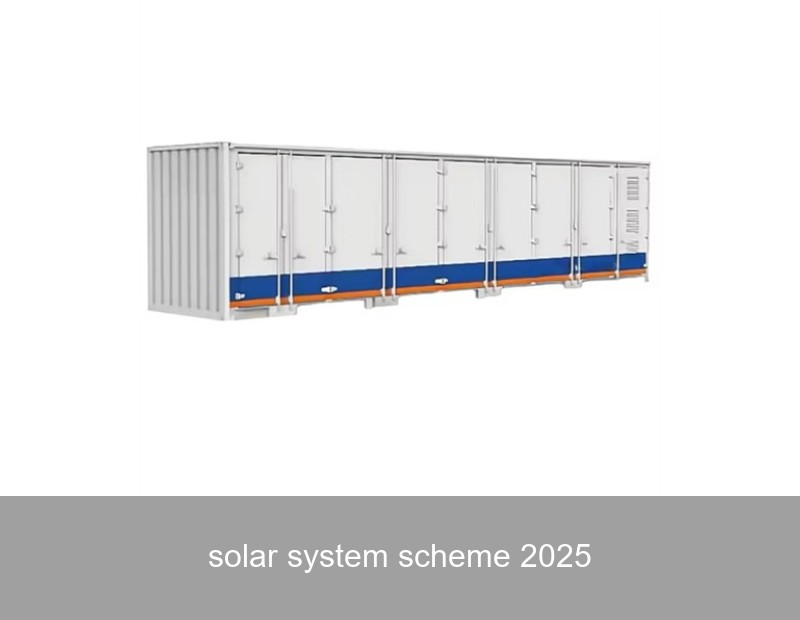
As we approach 2025, a significant shift is underway. Homeowners and business leaders across Europe and the US aren't just asking about solar panels anymore; they're asking for a comprehensive solar system scheme. Why? Because the energy landscape is changing rapidly. Grid instability, rising electricity costs, and ambitious sustainability goals are no longer future concerns—they're today's reality. A piecemeal approach to solar energy is becoming obsolete. What's needed is a strategic, integrated plan designed for the specific demands and opportunities of the mid-2020s. This article will serve as your blueprint, breaking down the essential elements of a forward-thinking solar system scheme for 2025 and how it translates into real-world resilience and savings.
What Exactly is a Solar System Scheme for 2025?
Think of it as a master plan, not just a purchase. A solar system scheme for 2025 is a holistic strategy that integrates solar generation, intelligent storage, and smart energy management into a single, cohesive system. It's designed with the next decade in mind, anticipating technological trends, regulatory changes, and your evolving energy needs. The goal isn't just to offset your daytime grid consumption. It's to maximize self-consumption, provide backup power, and potentially create a new revenue stream, all while building a fortress of energy independence around your home or business.
Image Source: Unsplash - A modern solar and storage setup, a key part of any 2025 scheme.
Key Components of a Modern 2025-Ready Solar Scheme
A robust scheme moves beyond basic panels. Let's unpack the essential layers:
1. High-Efficiency Solar Panels
The foundation. By 2025, panel efficiency is expected to see incremental but crucial gains, with premium models consistently exceeding 22-23%. This means more power from the same rooftop footprint, a critical factor for space-constrained installations.
2. The Heart of the Scheme: Advanced Battery Storage
This is the game-changer. Batteries transform solar from a daytime supplement to a 24/7 power solution. For a 2025 solar system scheme, lithium iron phosphate (LFP) chemistry is becoming the standard for safety, longevity (often over 6,000 cycles), and performance across a wide temperature range. Capacity is key—systems are being sized not just for nightly use, but for multi-day grid outages.
3. The Brain: Smart Energy Management System (EMS)
Hardware alone isn't intelligent. The EMS is the software brain that orchestrates everything. It learns your consumption patterns, weather forecasts, and utility rate schedules (like time-of-use tariffs) to autonomously decide when to store solar energy, power your home, charge from the grid at cheap rates, or even feed energy back strategically.
4. Future-Proofing with EV Charging Integration
With electric vehicle adoption soaring, your 2025 scheme must consider your EV as another major household battery on wheels. The most advanced systems allow for bi-directional charging, enabling your EV to power your home during an outage (vehicle-to-home or V2H) or to store excess solar energy.
The Financial Blueprint: Incentives and ROI in 2025
The economics are compelling. While upfront costs exist, a well-designed scheme leverages powerful financial mechanisms:
- Enhanced ROI: By storing excess solar and avoiding peak grid prices, you can achieve a much faster payback period, often between 6-10 years depending on location and utility rates.
- Government Incentives: In the US, the Residential Clean Energy Credit (26% in 2024, 22% in 2025) applies to both solar and storage. In Europe, countries like Germany, Italy, and Spain offer various tax deductions, grants, or favorable loans for integrated systems.
- Increased Property Value: Studies, including one from the Lawrence Berkeley National Laboratory, consistently show that solar installations increase home resale value.
| Component | Estimated Cost | Federal Tax Credit (2025) | Net Cost After Credit |
|---|---|---|---|
| 8 kW Solar Array | $24,000 | $5,280 | $18,720 |
| 15 kWh Battery Storage | $12,000 | $2,640 | $9,360 |
| Smart EMS & Installation | $8,000 | $1,760 | $6,240 |
| Total System | $44,000 | $9,680 | $34,320 |
*Table is illustrative. Actual costs and savings vary by location, system size, and installer.
Real-World Blueprint: A Case Study from Bavaria
Let's look at a concrete example. A medium-sized manufacturing workshop in Bavaria, Germany, implemented a comprehensive solar system scheme in early 2023, designed with the 2025 horizon in mind.
- Challenge: High daytime energy costs, unreliable grid power during storms, and a corporate mandate to reduce carbon footprint.
- Solution: A 100 kWp rooftop solar array coupled with a 120 kWh containerized battery storage system, managed by a sophisticated EMS.
- Results (12-month period):
- 85% reduction in grid electricity consumption during peak price hours.
- Complete operational continuity during three separate grid outages, saving an estimated €15,000 in potential production losses.
- Attained 72% energy self-sufficiency, putting them on track to meet 2025 sustainability targets ahead of schedule.
This case highlights how a strategic scheme addresses cost, resilience, and sustainability in one fell swoop.
How Highjoule Powers Your 2025 Solar System Scheme
This is where expertise meets execution. At Highjoule, with nearly two decades of experience since 2005, we don't just sell components; we design and deliver the integrated solar system scheme you need for 2025 and beyond. Our approach is built on three pillars:

Image Source: Unsplash - Representative of industrial energy management, core to Highjoule's expertise.
- Intelligent Storage Solutions: Our flagship product, the Highjoule Hive, is a modular battery storage system built with ultra-safe LFP cells. Its modular design means you can start with what you need and expand capacity as your needs grow—a core principle of a future-proof scheme. For commercial and microgrid applications, our containerized Highjoule Matrix systems provide utility-scale power and stability.
- Advanced Energy Management: The Highjoule Harmony OS is the intelligent brain that unifies solar inverters, battery storage, grid connections, and even backup generators. It optimizes every kilowatt-hour for your financial and operational benefit, learning and adapting over time.
- End-to-End Partnership: From initial consultation and custom scheme design to professional installation, commissioning, and ongoing monitoring, Highjoule provides a single point of responsibility. We ensure your system is not only installed correctly but is performing optimally for years to come.
Whether for a robust residential setup, a resilient industrial facility, or a community microgrid, Highjoule provides the technology and the strategic partnership to make your 2025 energy vision a reality.
Getting Started with Your 2025 Plan
Developing your solar system scheme for 2025 begins with a clear assessment. Ask yourself: What are my primary drivers—lowering bills, achieving backup power, or meeting sustainability goals? What is my current energy consumption pattern, and how might it change (e.g., adding an EV, a heat pump, or expanding a business)? The answers will shape the scale and priorities of your scheme.
Consulting with a specialist who understands the interplay of technology, policy, and finance is crucial. They can help you navigate local incentives, like those detailed by the Database of State Incentives for Renewables & Efficiency (DSIRE), and design a system that captures the full value available.
So, as you look toward the rest of this decade, what will be the first step you take to secure your own energy independence and build a resilient, cost-effective power solution for the future?
 Inquiry
 Online Chat