


Unlocking Energy Independence: The Power and Potential of a 10kWh Smart Lithium Battery
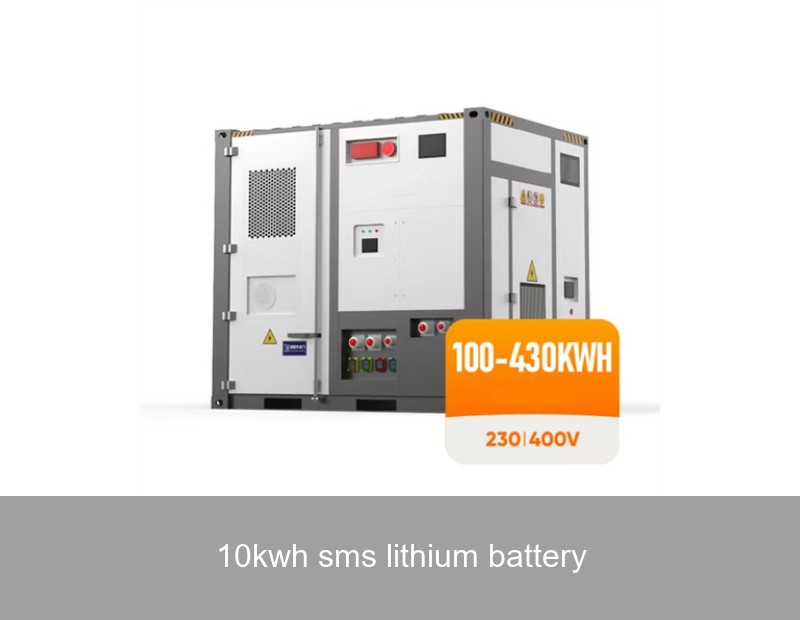
Have you ever watched your electricity meter spin after sunset and wondered, "Where is this power coming from, and at what cost?" For homeowners and businesses across Europe and the US, this nightly ritual is becoming a relic of the past. The catalyst? Intelligent energy storage, specifically the rise of the 10kWh smart lithium battery. This isn't just a bigger battery; it's the brain of a modern, resilient, and cost-effective energy system. Let's explore why this particular capacity is becoming the gold standard for energy independence and how smart technology is revolutionizing the way we power our lives.
Table of Contents
- Why 10kWh? The Sweet Spot for Daily Energy Shifting
- Beyond Storage: What Makes a Battery "Smart"?
- From Theory to Reality: A Case Study in Solar Optimization
- The Highjoule Advantage: Engineered for Performance and Longevity
Why 10kWh? The Sweet Spot for Daily Energy Shifting
The 10-kilowatt-hour (kWh) capacity isn't an arbitrary number. It's a data-driven response to typical household and small business energy consumption patterns. In the US, the average home uses about 29 kWh per day, with a significant portion consumed in the evening peak hours. In Europe, daily consumption is often lower, averaging between 8-12 kWh for efficient households. A 10kWh battery system is perfectly sized to cover the critical "non-solar" hours—from late afternoon through the night—using clean energy generated during the day.
Think of it this way: a 10kWh battery can power essential loads (refrigeration, lighting, internet, critical appliances) for most homes for 12-24 hours during an outage. More importantly, for daily use, it allows you to store excess solar energy produced at noon and use it at 7 PM when grid electricity is most expensive and carbon-intensive. This process, called peak shaving, is where the real financial and environmental returns are realized.

Image Source: Unsplash - Representative image of a modern home with solar and storage.
Beyond Storage: What Makes a Battery "Smart"?
A standard battery stores energy. A smart lithium battery manages it. The "SMS" (Smart Management System) is the defining feature. This integrated intelligence continuously makes decisions to optimize performance, safety, and value.
- Advanced Battery Management (BMS): The core guardian. It monitors each cell for voltage, temperature, and state of charge, ensuring balanced operation and preventing conditions that lead to degradation or safety risks.
- Grid and Solar Communication: It talks to your solar inverter and the grid. It knows electricity prices (in deregulated markets), your consumption habits, and weather forecasts. It can decide to store solar energy, charge from the grid during off-peak cheap rates, or even sell a small amount back during high-price peaks if permitted.
- User-Centric Control: Through a simple app, you can set preferences. Want to maximize self-consumption? Ensure backup power for a storm? Or minimize your carbon footprint? The smart system executes your strategy autonomously.
This intelligence transforms a passive storage unit into an active financial asset. For instance, in Germany, where time-of-use tariffs are expanding, a smart 10kWh system can automatically avoid drawing power during the 6-8 PM peak, saving hundreds of euros annually.
From Theory to Reality: A Case Study in Solar Optimization
Let's look at a concrete example from California, USA. A typical suburban home with a 7kW solar array was generating surplus energy midday but purchasing expensive power from the grid every evening. Their net monthly bill, despite having solar, was still around $80.
The Solution: Installation of a 10.2kWh smart lithium battery system with integrated energy management software.
The Data-Driven Outcome (12-month period):
| Metric | Before Installation | After Installation |
|---|---|---|
| Grid Electricity Import (Evening Peak) | ~300 kWh/month | ~15 kWh/month |
| Solar Self-Consumption Rate | 35% | 92% |
| Average Monthly Bill | $80 | -$5 (Credit) |
| Grid Independence During Outages | 0 hours | Critical load backup for 18+ hours |
The system paid for itself in under 7 years through bill savings and a state storage incentive. More importantly, it provided tangible resilience during planned public safety power shutoffs. This case exemplifies the triple win: financial savings, increased renewable utilization, and guaranteed backup power.
The Highjoule Advantage: Engineered for Performance and Longevity
As a global leader in advanced energy storage since 2005, Highjoule designs systems with these exact real-world challenges in mind. Our ResiCore 10 smart battery solution is not just a 10kWh lithium-ion pack; it's a fully integrated power ecosystem.
What sets the Highjoule ResiCore 10 apart in a competitive market?
- Ultra-Safe LiFePO4 Chemistry: We utilize lithium iron phosphate (LFP) cells, renowned for their thermal and chemical stability, offering a longer cycle life and superior safety profile compared to other lithium-ion types.
- All-Climate Resilience: Engineered with an active thermal management system, the ResiCore 10 maintains optimal performance from -20°C to 50°C (-4°F to 122°F), a critical feature for both Scandinavian winters and Arizona summers.
- Modular & Future-Proof Design: Starting at 10kWh, the system can be expanded in 5kWh increments up to 30kWh. Our smart gateway uses advanced grid-forming technology, providing seamless backup power and compatibility with both new and existing solar installations.
- Global Service & Smart Monitoring: With operations across Europe and North America, Highjoule provides professional installation support and 24/7 system monitoring via the Highjoule Energy OS platform, which offers actionable insights and proactive health checks.

Image Source: Unsplash - Example of a sleek, modern battery installation.
Choosing and Integrating Your 10kWh Energy Solution
Selecting the right system involves more than just capacity. Here’s a quick guide:
- Audit Your Energy Use: Analyze your utility bill. Focus on your daily kWh usage and the timing of your peak consumption.
- Evaluate Your Solar Production: If you have solar, how much excess are you producing? A 10kWh battery is ideal for capturing that surplus.
- Define Your Primary Goal: Is it bill savings, backup power, or maximizing green energy? This will guide the configuration of the smart system's settings.
- Professional Installation is Key: A certified installer will ensure proper electrical integration, safety compliance (like adhering to NFPA 855 standards in the US), and system commissioning.
Integration with your home is seamless. The system connects between your solar inverter and your main electrical panel. The smart gateway becomes the new energy traffic controller, directing flows between solar, battery, home loads, and the grid based on the algorithms you've chosen.
Your Energy Future, Today
The transition from a passive consumer to an active energy manager is no longer a futuristic concept. A 10kWh smart lithium battery like the Highjoule ResiCore 10 makes it an immediate, practical reality. It represents a conscious step towards controlling costs, contributing to grid stability, and building personal resilience. The question is no longer if this technology is viable, but how soon you can harness its benefits for your home or business. What would you power first with your own reliable, clean energy reserve?
 Inquiry
 Online Chat