


Thermochemical Energy Storage: The Next Frontier in Long-Duration Energy Storage
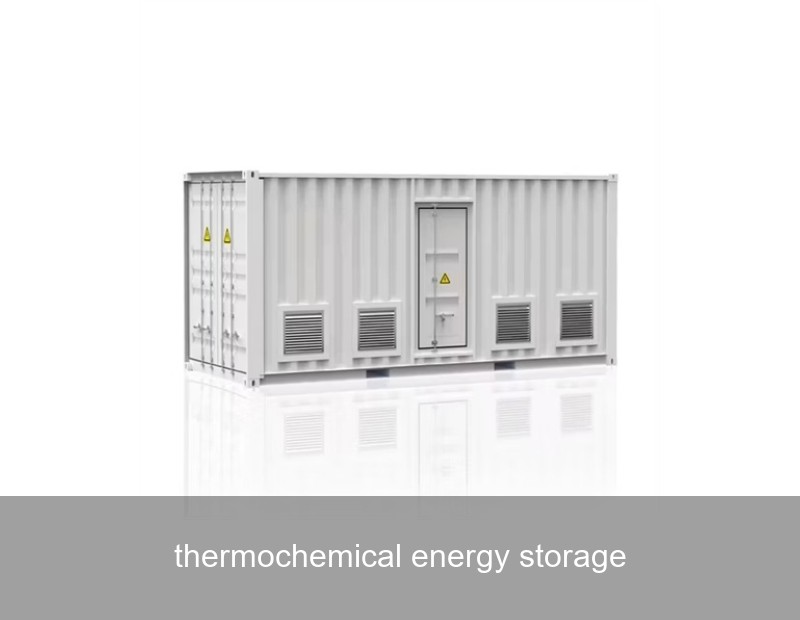
As the world accelerates its transition to renewable energy, a critical question emerges: how do we keep the lights on when the sun doesn't shine and the wind doesn't blow? While lithium-ion batteries dominate headlines for short-term storage, a powerful but less-known technology is gaining traction for solving the long-duration challenge. This technology is thermochemical energy storage (TCES). Unlike conventional methods that store heat physically, TCES captures energy in chemical bonds, offering unprecedented storage duration and density. For industries, utilities, and communities seeking true energy independence, understanding thermochemical energy storage is key to building a resilient, 100% renewable future.
Table of Contents
- What is Thermochemical Energy Storage?
- How TCES Works: A Tale of Two Reactions
- TCES vs. Other Storage Technologies
- A Real-World Case Study: The German Aerospace Center (DLR) Project
- Challenges and Future Opportunities
- Highjoule's Role in the Evolving Storage Landscape
What is Thermochemical Energy Storage?
At its core, thermochemical energy storage is a process that uses reversible chemical reactions to store and release thermal energy. Think of it not as a battery, but as a "heat battery." When you add heat (from excess solar or wind power, for example) to certain materials, they undergo an endothermic reaction, breaking down into separate components and storing the energy chemically. To retrieve the energy, you simply recombine the components, triggering an exothermic reaction that releases high-grade heat on demand. The "magic" lies in the reversibility and the fact that the stored energy doesn't degrade over time—it can be held for months or even years with minimal losses.
How TCES Works: A Tale of Two Reactions
The process typically involves a storage medium (like a salt hydrate or a metal oxide) and a dedicated reactor. Let's break it down into two main phases:
- Charging (Energy Input): Excess renewable electricity or direct solar heat is used to drive an endothermic reaction. For instance, heating calcium hydroxide (Ca(OH)₂) to decompose it into calcium oxide (CaO) and water vapor (H₂O). The energy is now locked in the chemical separation of these products.
- Discharging (Energy Output): When heat is needed, the separated products (CaO and H₂O) are brought back together. They react to re-form calcium hydroxide, releasing the stored heat at high temperatures, often exceeding 500°C. This heat can then be used directly for industrial processes or to generate electricity via a steam turbine.

Image Source: German Aerospace Center (DLR) - Illustrating the basic principle of TCES.
TCES vs. Other Storage Technologies: A Comparative View
To appreciate TCES's potential, let's compare it with more familiar storage solutions.
| Technology | Energy Density | Storage Duration | Typical Use Case | Key Limitation |
|---|---|---|---|---|
| Lithium-Ion Batteries | Medium (200-300 Wh/kg) | Hours to a few days | Frequency regulation, short-term backup, EV charging | Cost for long duration, cycle life degradation, resource constraints |
| Pumped Hydro | Low (0.5-1.5 Wh/kg) | Days to weeks | Large-scale grid balancing | Geographic limitations, high upfront cost, environmental impact |
| Molten Salt (Sensible Heat) | Low to Medium | Hours to ~15 hours | Concentrated Solar Power (CSP) plants | Heat loss over time, lower temperature ceiling |
| Thermochemical (TCES) | Very High (500-1000+ Wh/kg theoretical) | Months to years (no inherent loss) | Seasonal storage, high-temperature industrial heat, grid-scale long-duration | Technology maturity, system complexity, reactor design challenges |
The table highlights TCES's standout feature: its ability to store vast amounts of energy in a compact form for exceptionally long periods without losses. This makes it the prime candidate for seasonal energy storage—capturing summer's solar abundance to heat homes in winter.
A Real-World Case Study: The German Aerospace Center (DLR) Project
While commercial-scale TCES plants are still emerging, pioneering research projects provide compelling evidence of its viability. A standout example is the work by the German Aerospace Center (DLR). Their pilot facility uses a system based on calcium oxide/calcium hydroxide (CaO/Ca(OH)₂).
- Scale: The reactor is designed to store approximately 1 MWh of thermal energy.
- Performance: The system can achieve discharge temperatures above 500°C, suitable for high-efficiency power generation or direct industrial use.
- Efficiency: Laboratory-scale round-trip efficiencies (electricity to heat to electricity) have approached 45-50%, competitive with other storage pathways when considering the long duration.
- Significance: This project, funded by the German government and EU, demonstrates the technical feasibility of using TCES for interseasonal storage. It's a critical step toward proving that renewable energy can provide baseload power and heat year-round.
This case shows we are moving beyond theory. The challenge now is scaling these pilot systems into reliable, cost-effective commercial solutions.
Challenges and Future Opportunities
Despite its promise, TCES isn't without hurdles. The technology requires sophisticated reactor and heat exchanger design to manage the solid-gas reactions efficiently. Material stability over thousands of charge-discharge cycles is also a key research focus. Furthermore, the overall system integration and balance-of-plant costs need to be optimized to achieve economic competitiveness.
However, the opportunities are massive. The U.S. Department of Energy's Long-Duration Storage Shot initiative aims to reduce the cost of grid-scale storage lasting 10+ hours by 90% within a decade. Technologies like TCES are central to this goal. In Europe, the push for industrial decarbonization creates a huge demand for green, high-temperature process heat—a perfect application for TCES charged by solar thermal or renewable electricity.
Highjoule's Role in the Evolving Storage Landscape
At Highjoule, we are passionate about delivering intelligent, sustainable power solutions for today's needs while actively shaping tomorrow's energy ecosystem. Our core expertise in advanced battery energy storage systems (BESS) for commercial, industrial, and microgrid applications gives us a front-row seat to the evolving needs of the market. We see the immense potential of long-duration storage technologies like thermochemical energy storage to complement our existing lithium-ion-based solutions.
While TCES matures for widespread commercial use, Highjoule provides the critical bridge technology. Our IntelliBESS Platform offers smart, efficient short- to medium-duration storage, seamlessly integrating solar PV and managing energy flows to maximize self-consumption and grid stability. For projects that require resilience over days or need high-power discharge, our industrial-grade BESS solutions are unmatched.
Looking ahead, we are committed to a multi-technology approach. We actively monitor and assess innovations like TCES, understanding that the future grid will require a portfolio of storage solutions—from fast-responding batteries to weekly or seasonal storage. For a manufacturing plant looking to decarbonize its high-temperature heat processes, or a remote community aiming for year-round renewable energy, Highjoule is positioned as the partner that can integrate the right mix of technologies, both present and future, to build a truly sustainable and resilient energy system.
Ready to Future-Proof Your Energy Strategy?
Thermochemical energy storage represents a paradigm shift in how we think about managing renewable energy over the long term. It asks us to imagine a world where summer sun can power winter industries and where industrial decarbonization is not just possible but practical. As this technology progresses from lab to market, the question for energy-intensive businesses and forward-thinking utilities is: How will you prepare to integrate these next-generation solutions into your operations, and what mix of storage technologies will deliver both your immediate and long-term sustainability goals?
 Inquiry
 Online Chat