


Energy for House for Sale: A Modern Seller's Most Valuable Upgrade
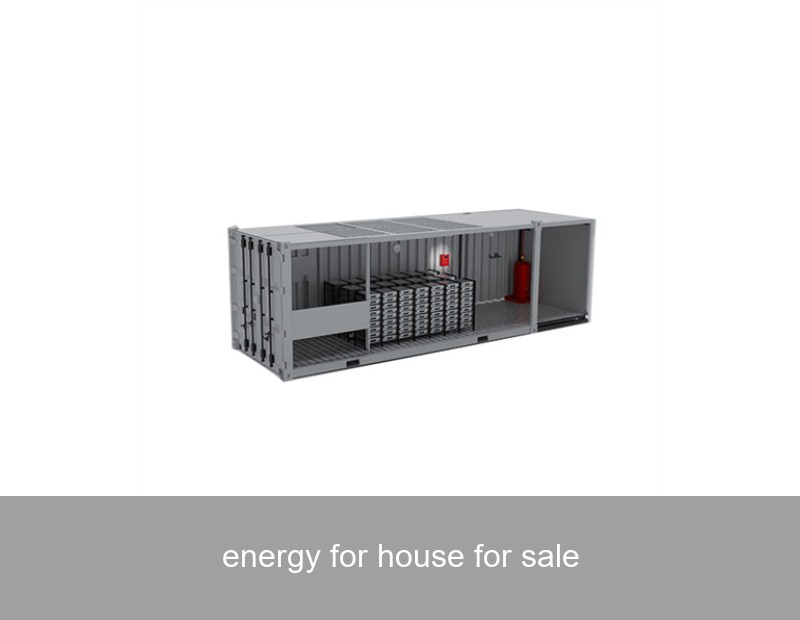
When you list your house for sale, you're not just selling bricks and mortar; you're selling a lifestyle, a sense of security, and a financial future. Today, a critical component of that package is energy for house for sale. Prospective buyers, especially in markets like Europe and the U.S., are increasingly prioritizing homes that offer energy independence, lower utility bills, and a smaller carbon footprint. This isn't just a niche trend—it's a fundamental shift in what constitutes value in real estate. In this article, we'll explore how intelligent energy systems, particularly solar and battery storage, are transforming properties from mere dwellings into resilient, cost-efficient assets that command attention and higher offers.
Table of Contents
- The New Reality: Energy Costs as a Deal-Breaker
- The Data: What Buyers Want and What They'll Pay
- Beyond Solar: The Game-Changing Role of Home Battery Storage
- Case Study: Selling Faster in a Competitive California Market
- The Highjoule Solution: Intelligent Energy for Modern Homes
- Making It Happen: A Practical Guide for Sellers
The New Reality: Energy Costs as a Deal-Breaker
Imagine two identical houses on the same street. One has a standard utility connection. The other boasts a sleek, integrated system that captures solar energy, stores it for use day or night, and can power the home during grid outages. Which one piques your interest? For a growing number of homebuyers, the choice is clear. The phenomenon is simple: volatile energy prices and climate-conscious living have moved energy performance from the back page of the listing sheet to the front and center. A home's energy profile is now a direct reflection of its operational cost, comfort, and resilience. Sellers who understand this are not just selling a house; they are offering a solution to a pressing concern.
The Data: What Buyers Want and What They'll Pay
The evidence is compelling and quantifiable. Studies consistently show that energy-efficient homes, particularly those with solar photovoltaic (PV) systems, sell faster and at a premium. According to research from the U.S. Department of Energy's Lawrence Berkeley National Laboratory, homes with solar panels sell for about 4.1% more on average than comparable homes without. In absolute terms, that can translate to a premium of $15,000 or more. But here's the evolving insight: the premium is even more significant and attractive when energy for house for sale includes storage. A battery storage system transforms solar from a daytime saver into a 24/7 asset. It provides backup power—a feature whose value became starkly clear during recent grid instability events in Texas and across Europe. This combination directly addresses three buyer anxieties: cost, reliability, and environmental impact.

Image Source: Unsplash. A home with solar panels is visually appealing and signals modern efficiency to potential buyers.
Beyond Solar: The Game-Changing Role of Home Battery Storage
Solar panels are fantastic for offsetting energy use when the sun shines. But what about the evening peak when everyone is home, or during a storm-induced blackout? This is where the complete energy solution comes into play. A home battery storage system, like a Highjoule residential energy storage system, stores excess solar energy for later use. This means:
- Maximized Self-Consumption: You use more of the cheap, clean energy you produce, reducing reliance on the grid by up to 80% or more.
- Uninterrupted Power Supply: Critical circuits stay on during outages, a powerful selling point for families and remote workers.
- Grid Services & Savings: In some regions, systems can participate in utility programs that provide financial rewards for supporting grid stability.
For a seller, installing a system like Highjoule's HES Series isn't just an upgrade; it's a strategic move to future-proof the property. It answers the buyer's unspoken question: "How will this home protect and serve me in the years to come?"
Case Study: Selling Faster in a Competitive California Market
Let's look at a real-world example from Sacramento, California, a market with high electricity rates and strong sun exposure. A 2023 pre-sale renovation project involved a 2,800 sq. ft. family home built in the 1990s. The owners made a key decision: instead of a costly kitchen overhaul, they invested in a 10 kW solar PV array coupled with a 15 kWh Highjoule HES battery system.
| Metric | Before Upgrade | After Upgrade |
|---|---|---|
| Estimated Monthly Electric Bill | $220 - $280 | $12 (grid connection fee only) |
| Home Backup Capability | None | Essential loads for 24+ hours |
| Days on Market (DOM) | Neighborhood Avg: 32 days | This Home: 8 days |
| Sale Price vs. Comps | At par with comparable homes | 4.7% Premium Achieved |
The listing explicitly highlighted the "fully integrated solar and battery storage system providing energy independence." Real estate agent feedback noted that this feature was the primary reason for over half of the viewing requests. The sale wasn't just faster; it was smoother, as the energy upgrade provided a clear, quantifiable value narrative that appraisers and lenders are increasingly recognizing.
The Highjoule Solution: Intelligent Energy for Modern Homes
As a global leader in advanced energy storage since 2005, Highjoule understands that the right energy for house for sale must be intelligent, reliable, and seamlessly integrated. Our residential solutions are designed to be a seller's secret weapon and a buyer's dream come true.
Our HES (Home Energy System) Series is more than just a battery. It's a complete energy management platform:
- Scalable Design: Modular capacity from 10 kWh to 30+ kWh to match any home's needs and solar production.
- Advanced Inverter Technology: High efficiency ensures you get the most out of every kilowatt-hour generated, whether from solar or the grid.
- Smart Energy Management: The intuitive Highjoule app allows homeowners (and potential buyers during viewings) to monitor energy flow, track savings, and control system modes, showcasing the home's smart technology.
- Professional Installation & Support: Our network of certified installers ensures a clean, code-compliant setup that enhances the property's aesthetics and safety.
For sellers, partnering with an established provider like Highjoule adds credibility. It assures buyers they are getting a system backed by nearly two decades of expertise in commercial, industrial, and residential storage—not a DIY experiment.

Image Source: Unsplash. A sleek, wall-mounted battery storage unit like Highjoule's HES Series adds a high-tech feel to a utility space.
Making It Happen: A Practical Guide for Sellers
Considering an energy upgrade to boost your sale? Here's a logical step-by-step approach:
- Consultation & Audit: Engage with a Highjoule-certified installer for a home energy audit. They will analyze your roof space, current consumption (past utility bills are key), and local incentives.
- System Design & Financing: Design a system focused on maximizing ROI for sale. Many providers offer financing options, and the system cost can often be factored into the home's asking price. Remember, according to the National Renewable Energy Laboratory (NREL), the cost of solar and storage continues to fall, making the investment more accessible than ever.
- Professional Installation: A quick, tidy installation is crucial. The goal is to have the system operational for several months before listing, allowing you to showcase real usage data and savings.
- Market the Benefit: Work with your real estate agent to craft the listing narrative. Use clear language: "Energy Independent Home," "Ultra-Low Utility Bills Guaranteed," "Backup Power Included." Provide the data from your monitoring app as proof.
The Final Walkthrough Advantage
During the final walkthrough, don't just show the granite countertops. Open the Highjoule app on your tablet. Show the prospective buyer the real-time energy flow, the history of net-zero bills, and demonstrate the seamless switch to backup power mode. You're not showing off a gadget; you're transferring a legacy of low-cost, reliable living.
As you prepare to put your home on the market, ask yourself this: In a sea of similar listings, will your home be the one that offers a proven solution to rising energy costs and uncertainty, or will it be the one that leaves that question unanswered? What specific energy feature do you think would most capture a buyer's attention in your neighborhood today?
 Inquiry
 Online Chat