


1MW Solar Energy Storage Cabinet: The Powerhouse Behind Modern Energy Independence
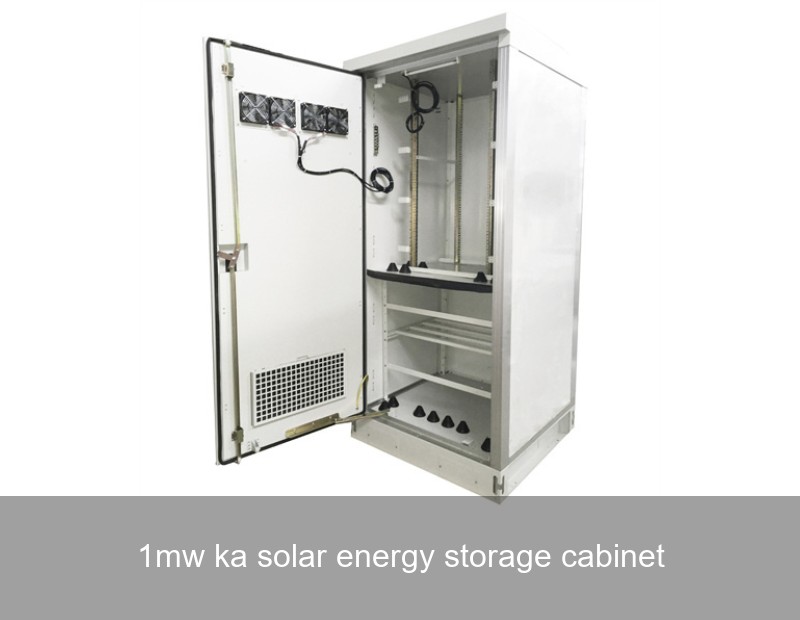
Imagine a bright, sunny day at a bustling industrial facility. The solar panels are working at peak capacity, but the grid is unstable, and energy prices are volatile. This is a common scene across Europe and the US, where the push for renewables is met with the challenge of integrating them reliably. The solution? A 1MW solar energy storage cabinet. This isn't just a big battery; it's the central nervous system for managing solar power at scale, turning intermittent sunshine into a dependable, around-the-clock asset. For businesses, communities, and utilities, mastering this technology is key to unlocking true energy resilience and cost savings.
Table of Contents
- What is a 1MW Solar Energy Storage Cabinet?
- Why a 1MW System? The Data Behind the Demand
- Inside the Cabinet: Key Components and Technology
- Highjoule's Expertise: Engineering Confidence into Every MW
- Future Trends and Your Next Step
What is a 1MW Solar Energy Storage Cabinet?
Let's break it down. A 1MW (megawatt) solar energy storage cabinet is a containerized, all-in-one unit designed to store one million watts of electrical power. Think of it as a massive, intelligent power bank for commercial, industrial, or community-scale solar installations. It typically houses advanced lithium-ion battery racks, sophisticated power conversion systems (PCS), thermal management, and safety controls—all pre-integrated into a single, robust enclosure. The primary job? To store excess solar energy generated during the day and dispatch it when needed most: during peak tariff periods, grid outages, or when the sun isn't shining.
For over 18 years, Highjoule has been at the forefront of this technology. Our MegaCube C&I Series of containerized energy storage systems is engineered precisely for this 1MW+ range. We don't just sell hardware; we provide turnkey, intelligent power solutions that seamlessly integrate with your existing solar PV infrastructure, ensuring you maximize self-consumption and gain unparalleled control over your energy profile.

Credit: Unsplash - Representation of a containerized energy storage system.
Why a 1MW System? The Data Behind the Demand
The shift to this scale isn't arbitrary. It's driven by hard economics and grid realities. According to the International Renewable Energy Agency (IRENA), the global weighted average levelized cost of electricity (LCOE) for utility-scale solar PV fell by 89% between 2010 and 2022. This explosive growth creates a new problem: curtailment, where excess solar is wasted because the grid can't absorb it.
Here's where the 1MW cabinet becomes a financial engine:
- Demand Charge Management: For many businesses in the US, demand charges can make up 30-50% of their electricity bill. A 1MW storage system can strategically discharge during short periods of peak demand, slashing these charges significantly.
- Grid Services: In markets like California (CAISO) or parts of Europe, storage systems can provide frequency regulation and capacity services, creating a new revenue stream.
- Energy Arbitrage: Buy low-cost energy (or store your own solar) at noon, use it during high-cost evening peaks. The price differential, especially in Europe's recent energy crisis, makes this immensely valuable.
| Application | Primary Benefit | Typical Payback Period* |
|---|---|---|
| Peak Shaving (C&I) | Reduces demand charges by 20-40% | 4-7 years |
| Solar Self-Consumption Maximization | Increases onsite use of solar PV from ~40% to 70%+ | 5-8 years |
| Backup Power for Critical Loads | Ensures operational continuity during outages | Varies (value beyond ROI) |
*Estimates based on current market conditions in Germany and Texas; actual periods vary by location, incentives, and use case.
Inside the Cabinet: Key Components and Technology
So, what makes a high-performance 1MW cabinet tick? It's a symphony of advanced engineering.
- Battery Cells & Module Design: The heart of the system. Highjoule utilizes top-tier, UL-certified lithium iron phosphate (LFP) cells, known for their safety, long cycle life (often over 6,000 cycles), and thermal stability. Our proprietary module design ensures even temperature distribution and efficient packing density.
- Power Conversion System (PCS): This is the brain. The bi-directional inverter converts DC from the batteries to AC for your facility and vice versa. Highjoule's PCS features >98.5% efficiency and advanced grid-forming capabilities, allowing it to support microgrids independently if the main grid fails.
- Energy Management System (EMS): The strategy center. This AI-driven software platform forecasts energy production and consumption, analyzes tariff structures in real-time, and autonomously decides when to charge or discharge to optimize for your financial or resilience goals.
- Safety & Thermal Management: Non-negotiable. Our cabinets feature multi-level protection (cell, module, rack, system), active liquid cooling for consistent performance in all climates, and integrated fire suppression, adhering to the strictest international standards like UL 9540 and IEC 62619.
Case Study: A U.S. Manufacturing Plant's Success Story
Let's move from theory to practice. A mid-sized automotive parts manufacturer in Ohio faced crippling demand charges and frequent grid instability warnings. Their 2.5MW rooftop solar array was underutilized, often exporting power at low noon prices while buying it back expensively in the late afternoon.
The Solution: Highjoule deployed a 1.2MW/2.4MWh MegaCube system integrated with their solar PV and existing infrastructure. The system was configured for peak shaving, solar time-shift, and backup power for critical assembly lines.
The Results (12 Months Post-Installation):
- Demand Charge Reduction: Peak demand drawn from the grid was reduced by 28%, saving over $120,000 annually.
- Solar Self-Consumption: Increased from 48% to 81%, dramatically reducing reliance on the volatile grid.
- ROI & Incentives: With the federal Investment Tax Credit (ITC) and local utility rebates, the project's calculated payback period is under 5 years.
- Resilience: The plant has seamlessly weathered three grid disturbances, keeping critical operations online without interruption.
This tangible example, mirrored by similar successes in European industrial parks, highlights the transformative impact of a well-engineered 1MW storage solution.
Credit: Unsplash - Engineer monitoring an industrial control system.
Highjoule's Expertise: Engineering Confidence into Every MW
At Highjoule, we understand that a 1MW solar energy storage cabinet is a major capital investment. Our approach goes beyond supplying a container. We offer end-to-end partnership:
- Customized Design & Simulation: We model your load profile, solar generation, and local tariffs to right-size the system and accurately project its financial returns before you commit.
- Turnkey Project Delivery: From permitting and grid interconnection support to installation, commissioning, and ongoing maintenance, we manage the complexity.
- Intelligent Software Platform: Our cloud-based Highjoule OS provides you with real-time visibility and control, while our algorithms handle the complex optimization automatically.
- Service & Support: With a global network of service technicians and 24/7 monitoring, we ensure your system delivers peak performance for its entire 15+ year lifespan.
Our systems are designed for the future—modular and scalable, so your 1MW installation today can grow with your needs tomorrow.
Future Trends and Your Next Step
The landscape is evolving rapidly. We're moving towards virtual power plants (VPPs), where thousands of distributed storage systems like 1MW cabinets are aggregated to act as a single, grid-stabilizing power plant. The technology is also becoming more agile, participating in fast-response markets that reward speed and precision.
This brings us to a crucial question for any business leader or energy manager: Is your organization merely generating solar energy, or are you strategically controlling and optimizing its value? The difference between the two is often a robust, intelligently managed energy storage system.
What specific energy challenge—be it unpredictable costs, reliability concerns, or sustainability goals—is holding your operation back from achieving complete energy independence?
 Inquiry
 Online Chat