


CC Energy Storage Cabinet: The Modular Powerhouse for Modern Energy Needs
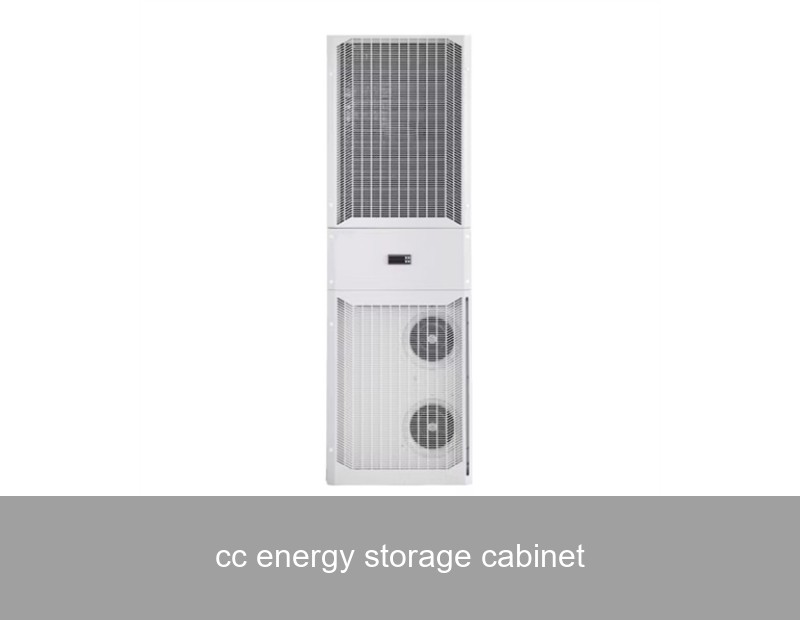
Have you ever wondered how businesses and communities can reliably harness the power of the sun and wind, even when the sun sets or the wind stops? The answer increasingly lies in a sophisticated, yet often overlooked, piece of technology: the CC energy storage cabinet. These compact, containerized units are revolutionizing how we store and manage electricity, moving us beyond the limitations of intermittent renewable sources. For over 18 years, Highjoule has been at the forefront of this revolution, engineering smart, efficient, and sustainable power solutions. This article will demystify the CC energy storage cabinet, exploring its critical role in our energy future and how it's being deployed across Europe and the U.S. today.
Table of Contents
- What is a CC Energy Storage Cabinet?
- The Urgency: Why We Can't Rely on Intermittency
- Data Drives the Shift: The Numbers Behind Storage
- Case Study: Stabilizing a German Industrial Park
- Highjoule's Role: Engineering Intelligence into Every Cabinet
- Key Components of a High-Performance Cabinet
- Future Horizons and Your Next Step
What Exactly is a CC Energy Storage Cabinet?
Let's break it down. "CC" often stands for "Containerized" or "Cabinet" in this context, describing a self-contained, modular energy storage system. Think of it as a powerful, smart battery in a robust, weatherproof enclosure—essentially a power bank on an industrial scale. Unlike scattered battery racks, a CC cabinet integrates all critical components: the battery modules (typically Lithium-Ion or LFP), a sophisticated Battery Management System (BMS), power conversion systems (PCS), thermal management, and safety systems into a single, plug-and-play unit.
This modular approach is key. Need more capacity? Simply link additional cabinets together. This scalability makes CC cabinets incredibly versatile, serving applications from backing up a hospital or data center to managing solar energy for a factory or an entire neighborhood microgrid.
The Urgency: Why We Can't Rely on Intermittency Alone
The phenomenon is clear: the world is rapidly adopting solar and wind. But here's the catch—solar generation plummets at night and on cloudy days, while wind power is, by nature, variable. This creates a mismatch between when energy is produced and when it's needed most, leading to grid instability, wasted renewable energy (curtailment), and continued reliance on fossil-fuel "peaker" plants during high-demand periods.
This isn't a future problem; it's happening now. Grid operators are grappling with the famous "duck curve," a deepening dip in net demand during sunny afternoons followed by a steep ramp-up as the sun sets. Without a buffer, this curve becomes harder and more expensive to manage.
Data Drives the Shift: The Numbers Behind Storage
The data is compelling and underscores the massive shift towards storage. According to the International Energy Agency (IEA), global energy storage capacity is set to multiply exponentially this decade, with grid-scale batteries leading the charge. In the U.S. alone, the Energy Information Administration (EIA) reported that battery storage capacity surged by over 80% in 2023. Europe is following a similar trajectory, driven by both climate targets and energy security concerns post-2022.
What does this mean for a business owner or community planner? It translates to tangible financial and operational benefits:
- Demand Charge Reduction: Commercial electricity bills often have high "demand charges" based on peak power draw. A CC cabinet can discharge during these short peaks, shaving 20-40% off this portion of the bill.
- Energy Arbitrage: Store cheap electricity (from solar or off-peak grid rates) and use it during expensive peak hours.
- Backup Power: Provide seamless, instantaneous power during outages, critical for manufacturing lines, cold storage, and sensitive facilities.
- Grid Services: For larger installations, cabinets can provide frequency regulation and grid stability services, creating a new revenue stream.
| Application | Primary Benefit | Typical System Size |
|---|---|---|
| Commercial Solar+Storage | Maximize self-consumption, reduce bills | 100 kWh - 2 MWh |
| Industrial Peak Shaving | Demand charge management | 500 kWh - 5 MWh+ |
| Microgrid / Community Resilience | Energy independence & backup | 1 MWh - 20 MWh+ |
Case Study: Stabilizing a German Industrial Park's Energy Costs
Let's look at a real-world example from Bavaria, Germany. A mid-sized manufacturing park with several tenants faced two major challenges: volatile and rising electricity costs, and grid connection constraints that limited their ability to expand operations. Their existing rooftop solar arrays were often curtailed on sunny weekends when factory consumption was low.
The Solution: The park management partnered with Highjoule to deploy a cluster of six Highjoule HyperCube CC energy storage cabinets, forming a 1.2 MWh / 600 kW system. These cabinets were strategically integrated with the park's existing solar infrastructure and main electrical distribution panel.
The Results (Data from 12-month operation):
- Demand Charge Reduction: Peak power draw from the grid was reduced by 28%, leading to an annual savings of over €85,000 on demand charges.
- Solar Self-Consumption: Increased from 55% to 92%, drastically reducing wasted solar energy.
- ROI Timeline: Projected payback period of just under 5 years, based on energy savings and available grid service incentives.
- Operational Bonus: The system provided a critical 4-hour backup for essential safety and IT infrastructure, a feature previously unavailable.
This case exemplifies how a modular CC cabinet system isn't just a cost center; it's a strategic asset for financial and operational resilience.

Image Source: Unsplash (Representative image of industrial energy integration)
Highjoule's Role: Engineering Intelligence into Every Cabinet
At Highjoule, we view a CC energy storage cabinet as more than just a container for batteries. It's an intelligent energy node. Our HyperCube series, for instance, is built on 18 years of field-proven expertise. What sets our solutions apart is the deep integration of our proprietary Energy Management System (EMS) platform, JouleMindTM.
While the cabinet houses the robust hardware—featuring UL1973/IEC62619 certified LFP battery cells for safety and longevity, a high-efficiency hybrid inverter, and liquid cooling for optimal thermal management—the true brain is in the cloud. JouleMindTM uses AI-driven algorithms to forecast energy generation (from solar/wind) and consumption patterns. It autonomously decides the most economically optimal times to charge or discharge, maximizing return on investment without requiring constant manual oversight.
Our services extend beyond hardware delivery. We offer comprehensive feasibility studies, system design, installation support, and long-term performance monitoring, ensuring our clients' energy storage assets deliver value for decades.
Key Components of a High-Performance Cabinet
Understanding the inside of a quality CC cabinet helps in making an informed decision:
- Battery Chemistry (LFP): We prioritize Lithium Iron Phosphate (LFP) for its superior thermal stability, long cycle life (often 6,000+ cycles), and absence of cobalt, making it a safer and more sustainable choice.
- Battery Management System (BMS): The guardian of the battery. Our multi-level BMS monitors every cell for voltage, temperature, and current, ensuring safety, balance, and longevity.
- Power Conversion System (PCS): This bi-directional inverter converts DC battery power to AC for your building and vice-versa. High efficiency (e.g., 98%+) is crucial to minimize energy losses.
- Thermal Management: Liquid cooling systems, like those in our HyperCube, are far more effective than air cooling at maintaining an ideal temperature range, which is vital for performance and lifespan, especially in harsh climates.
- Safety & Compliance: Look for certifications like UL 9540 for the overall system and NFPA 855 for fire safety guidance. Our cabinets include integrated fire suppression, gas venting, and seismic-rated designs where required.
Future Horizons and Your Next Step
The evolution of the CC energy storage cabinet is moving towards even greater intelligence and grid interactivity. Concepts like Virtual Power Plants (VPPs), where thousands of distributed storage units are aggregated to act like a single large power plant, are becoming a reality. Highjoule's platforms are already VPP-ready, allowing our clients to potentially participate in these revenue-generating programs.
The journey to a resilient, cost-effective, and sustainable energy setup begins with a single question. Have you analyzed your facility's energy load profile to see where a modular storage solution could start saving you money and securing your operations tomorrow?
 Inquiry
 Online Chat