


Understanding the 2 kW BESS Price in Sweden: A Smart Investment for Your Energy Independence
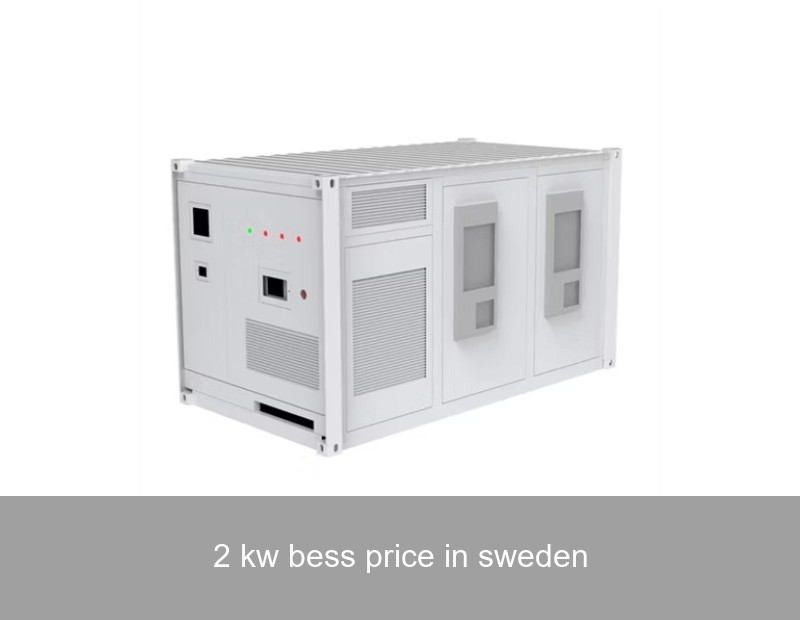
If you're a homeowner in Sweden looking at solar panels, you've likely encountered the term "BESS" – a Battery Energy Storage System. And a common starting point for many is the 2 kW BESS. But when you start searching for the 2 kW BESS price in Sweden, you quickly find a range of figures that can be confusing. Is it 30,000 SEK? 50,000? 80,000? The price tag alone doesn't tell the full story. This article will demystify the costs, components, and long-term value of a 2 kW battery system for the Swedish market, helping you make an informed decision that goes beyond the initial invoice.
Table of Contents
What is a 2 kW BESS and Is It Right for You?
A 2 kW BESS refers to a battery system with a continuous power output of 2 kilowatts. Think of it like this: it can simultaneously power appliances with a combined demand of up to 2,000 watts. This typically covers essential loads like refrigeration, lighting, internet, and a TV. Its capacity, measured in kilowatt-hours (kWh)—often between 5-10 kWh for such systems—determines how long it can supply that power.
This size is particularly popular for Swedish households with moderate electricity consumption, often as a complement to a 4-6 kW solar PV array. It's designed not to power your entire house indefinitely, but to maximize self-consumption of solar energy, provide crucial backup during grid outages, and help you navigate time-of-use electricity tariffs. For a family of three to four, it's a balanced entry point into energy independence.
The Real Price Breakdown: More Than Just a Battery
Quoting a single "2 kW BESS price in Sweden" is like quoting a car price without specifying the model, features, or if it includes delivery. The total cost is a sum of several components:
- The Battery Modules: The core energy storage cells (often Lithium Iron Phosphate or LFP in modern systems).
- The Hybrid Inverter or System Controller: The "brain" that manages energy flow between solar panels, battery, home, and grid.
- System Integration & Safety Gear: Includes wiring, switchgear, monitoring systems, and essential safety disconnects.
- Installation & Commissioning: Professional labor costs, which are significant and crucial for safety and warranty.
- VAT (Moms): In Sweden, 25% VAT applies to the total equipment and installation cost.
As of 2024, a fully installed, quality 2 kW / 5-6 kWh BESS in Sweden can range from 45,000 SEK to 85,000 SEK before potential subsidies. The wide range depends entirely on the factors we discuss next.
Key Factors Affecting the 2 kW BESS Price in Sweden
Let's look at what drives the cost within that range.
| Factor | Impact on Price | Why It Matters |
|---|---|---|
| Battery Chemistry & Brand | High | LFP batteries dominate for home use due to safety and longevity. Premium brands with proven track records command higher prices but offer better warranties and software. |
| System Scalability | Medium-High | Can you add more battery modules later? A modular system might have a higher upfront cost but offers a cheaper expansion path. |
| Inverter Compatibility | High | Are you integrating with new or existing solar panels? A DC-coupled system might be more efficient, while an AC-coupled system offers more flexibility. Retrofitting can add complexity. |
| Installation Complexity | Medium | Electrical panel upgrades, installation location (garage vs. basement), and home wiring can affect labor time and cost. |
| Smart Features & Software | Medium | Advanced energy management software that learns your habits and optimizes for electricity prices (like Swedish grid tariffs) adds value and cost. |

Image: A modern, wall-mounted BESS in a residential setting. Source: Unsplash
Case Study: The Andersson Family in Västerås (2023 Installation)
Let's make this concrete. The Andersson family lives in a detached house in Västerås with a 6 kWp solar array installed in 2021. They wanted to increase their self-consumption and have backup power for essentials.
- Goal: Store excess daytime solar energy for use in the evening and night.
- System Chosen: A modular 2 kW / 6.5 kWh LFP battery system with a hybrid inverter.
- Total Installed Cost: 68,000 SEK (including VAT).
- Results (First Year): Their self-consumption rate increased from 35% to 78%. They estimate saving approximately 4,200 SEK annually on their electricity bill by avoiding peak grid purchases. Furthermore, during a planned 8-hour grid outage, the system seamlessly powered their essentials.
"We stopped thinking of it as just a cost," says Anna Andersson. "It's a utility asset in our home that pays back monthly. The peace of mind during the winter outages is priceless." Their simple payback period, with current electricity prices, is calculated at just over 16 years, but the value in resilience and predictability started day one.
The Highjoule Approach: Smart Storage for Swedish Homes
At Highjoule, with nearly two decades of global energy storage experience, we view the 2 kW BESS price in Sweden through the lens of lifetime value. Our solution for the Nordic market isn't just hardware; it's an integrated energy management platform.
Our ResiCore 2.0 system is designed with Swedish conditions in mind. It's a modular, AC-coupled system starting at 2 kW / 5.3 kWh, easily expandable as your needs grow. What sets it apart is the Highjoule Harmony OS software. It integrates real-time data from Svenska Kraftnät and your local electricity provider to intelligently decide when to charge (from solar or the grid during off-peak hours), when to discharge, and when to export, maximizing your economic return.
For homeowners, this means our system actively works to optimize your investment against the variable electricity prices common in Sweden, going beyond simple solar self-consumption. Our certified installers across Sweden ensure a seamless process from quote to commissioning, with a clear, all-inclusive price that covers the full scope of a safe, compliant, and high-performing installation.

Image: Smart energy management interface monitoring solar production and battery usage. Source: Unsplash
Beyond the Price: Warranty and Support
Always compare warranty terms. A cheap battery with a 5-year warranty is often more expensive per year of service than a premium one with a 10-year warranty. Highjoule's ResiCore batteries come with a 10-year performance warranty, guaranteeing that the battery will retain at least 70% of its original capacity by the end of the decade. This long-term commitment is part of the total value proposition.
Making Your Investment: Key Questions to Ask
Before you fixate on a specific 2 kW BESS price in Sweden, arm yourself with answers to these questions:
- What is my primary goal? (Bill savings, backup power, environmental impact?)
- Is my existing solar inverter compatible, or do I need a new hybrid inverter?
- Does the quoted price include ALL components, installation, VAT, and commissioning?
- How user-friendly is the monitoring app? Can it integrate with future time-of-use tariffs?
- What is the total cost of ownership over 10 years, not just the upfront price?
The Swedish energy market is evolving rapidly. With the right system, your home battery can transition from a static storage unit to an active participant in a smarter grid. Could your household's energy decisions one day help stabilize the local network and create an additional revenue stream? The technology to explore this is already here.
Ready to move beyond a simple price quote and calculate the specific value a smart battery system could bring to your home? Let's start by analyzing your last 12 months of electricity bills and your solar production data.
 Inquiry
 Online Chat